
Another Unfortunate Setback
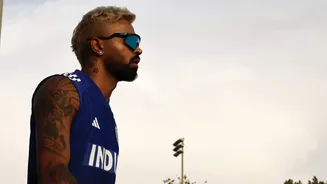
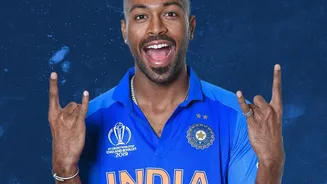
The Board of Control for Cricket in India (BCCI) confirmed that Pandya sustained a grade-one hamstring tear during a routine training session at the National Cricket Academy (NCA) in Bengaluru. While the injury is not severe, the recovery and rehabilitation
protocol requires a minimum of four to six weeks, making his participation in the three T20Is and two ODIs against New Zealand an impossibility. The timing is particularly frustrating, as the series was seen as a crucial preparatory ground for the team's upcoming assignments. This latest incident adds another chapter to the all-rounder's ongoing battle with his body, raising familiar questions about his durability.
A Timeline of Fitness Woes
To understand Pandya’s journey is to understand a cycle of spectacular performances punctuated by painful, lengthy absences. The most significant turning point was his acute lower back injury in 2019, which led to major surgery in the United Kingdom. He was out of action for the better part of a year and, upon his return, played largely as a specialist batsman, his bowling used sparingly to manage his workload. For a long time, the question was not if he would get injured, but when he could bowl his full quota again. Just as he seemed to have regained his rhythm as a genuine all-rounder, disaster struck during the 2023 ODI World Cup. A freak ankle injury while trying to stop a ball in his follow-through against Bangladesh ended his tournament prematurely. That injury kept him off the field for nearly six months, forcing him to miss crucial series and undergo an extensive rehabilitation process. This new hamstring issue is a stark reminder of the fragility that has unfortunately defined his post-surgery career.
The All-Rounder Void
Hardik Pandya’s absence creates a tactical nightmare that the Indian team management has repeatedly failed to solve. He is not just a player; he is a balancing act. His ability to bowl at over 140 km/h and finish games with the bat provides the captain with invaluable flexibility. With him in the side, India can afford to play an extra specialist bowler or batsman without compromising the team's structure. Without him, a difficult choice must be made. Do they play a sixth batsman and rely on five specialist bowlers, weakening the attack? Or do they bring in a bowler who can bat a bit, but who lacks Pandya's explosive power? Players like Shardul Thakur and Venkatesh Iyer have been tried in the role, but none have been able to replicate Pandya’s unique, high-impact contributions. His absence forces a fundamental rethink of the team's composition and often leaves them looking one-dimensional.
The Road Ahead for Pandya
At this stage in his career, the conversation around Hardik Pandya is shifting from immediate recovery to long-term preservation. The recurring nature of his injuries, especially in different parts of his body, suggests a deeper issue with workload and conditioning. The BCCI and the NCA staff will likely formulate an even more conservative plan for his return. This could involve a permanent focus on white-ball cricket, sacrificing the red-ball format to prolong his career. There will also be serious discussions about managing his bowling overs even more strictly. For Pandya, the mental toll of these repeated setbacks cannot be underestimated. The constant cycle of injury, rehabilitation, and return is draining for any athlete. His next comeback will be watched not just for the power of his shots or the speed of his bowling, but for any sign that his body can finally sustain the demands of his exceptional talent.