






Europe's Charm, Asia's Welcome
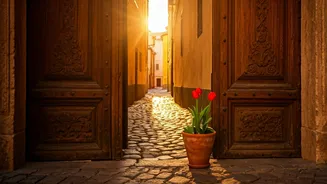
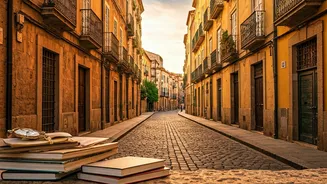
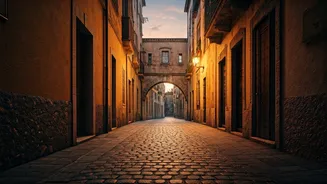
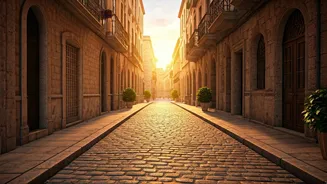
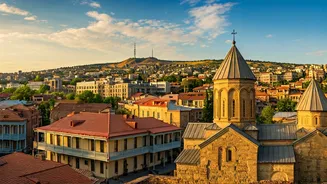
Step into Tbilisi’s Old Town, and you might think you’ve been teleported to Prague or a quiet corner of Italy. Balconies draped in grapevines overlook winding cobblestone streets, colourful old-world facades house trendy coffee shops, and the air hums
with a relaxed, bohemian energy. This is the “European vibe” everyone talks about. But Tbilisi is more than just a stand-in. It’s a city at the crossroads of continents, blending Eastern and Western influences into a culture that is uniquely its own. You’ll find ancient Orthodox churches standing near historic mosques and synagogues, a testament to centuries of diverse history. It’s this rich cultural tapestry, combined with its distinct architectural beauty, that makes Tbilisi so captivating.
Your Rupee Goes Further Here
The single best part about Tbilisi for an Indian traveller is its incredible affordability. A lavish meal for two at a good restaurant, complete with world-class Georgian wine, can cost you what you’d pay for a single main course in Paris. A clean, comfortable guesthouse or a modern Airbnb in the city centre is often cheaper than a budget hotel in a major Indian metro. Local transport is incredibly cheap; a ride on the city’s efficient metro costs just 1 Georgian Lari (about ₹30). Even popular ride-hailing apps like Bolt offer rides across town for just a few hundred rupees. From food to sightseeing, your travel budget stretches significantly further here, allowing for a longer, richer, and more relaxed holiday experience.
Walk Through Layers of History
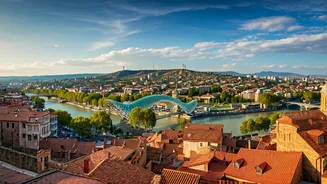
Tbilisi is a city best explored on foot. Start your journey in the Abanotubani district, famous for its historic domed sulphur baths. Legend has it the city was founded here after King Vakhtang Gorgasali’s falcon fell into a hot spring. For a few thousand rupees, you can book a private room and experience a traditional scrub. From there, wander up to the Narikala Fortress, which has loomed over the city since the 4th century. The climb is steep, but the panoramic views of the Mtkvari River and the cityscape are your reward. Don't miss the Holy Trinity Cathedral (Sameba), one of the largest Orthodox cathedrals in the world, and the modern, bow-shaped Bridge of Peace, which lights up spectacularly at night.
A Food Lover's Paradise
Be warned: you will come back from Georgia dreaming about the food. Georgian cuisine is hearty, flavourful, and utterly delicious. The star of the show is Khachapuri, a cheese-filled bread that comes in various regional styles. The most iconic is the Adjaruli Khachapuri, a boat-shaped bread filled with molten cheese and topped with a raw egg and butter. Then there's Khinkali, large, soupy dumplings typically filled with spiced meat (or mushrooms for vegetarians). Pair everything with a glass of Georgian wine. Georgia is one of the oldest wine-producing regions in the world, with a history stretching back 8,000 years. You can find excellent, inexpensive wine everywhere, from restaurants to corner shops.
Practical Tips for Indian Travellers
Getting to Georgia has become increasingly easy. Several airlines offer one-stop flights from major Indian cities like Delhi and Mumbai. For Indian passport holders, Georgia offers a straightforward e-visa process that is usually approved within a few days. Better yet, if you hold a valid visa or residence permit from countries like the USA, UK, or Schengen states, you may be able to enter visa-free for 90 days (always check the latest rules on the official Georgian e-visa portal). The best times to visit are during the spring (April-June) and autumn (September-October) when the weather is pleasant. English is widely spoken in tourist areas, but learning a few Georgian words like “Gamarjoba” (Hello) and “Madloba” (Thank you) will be warmly appreciated.