




Understanding the Power of the Base
In Indian cuisine, many iconic dishes are simply variations on a theme. A single, well-executed base can be the starting point for a dozen different meals. Think of it like a painter’s primary colours; once you have them, you can mix any shade you desire.
Restaurants use this 'base gravy' method to prepare dishes quickly without sacrificing flavour. By preparing a foundational dal, a universal gravy, or a perfect dough, you give yourself a head start. This approach simplifies the cooking process, builds confidence, and is the key to unlocking a vast repertoire of home-cooked classics.
The Soulful Dal: A Pot of Comfort
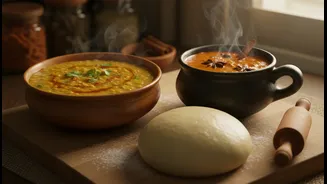
Dal is the cornerstone of Indian comfort food. At its simplest, it is a stew of cooked lentils, but its genius lies in its adaptability. A basic dal begins with rinsing lentils like toor (arhar) or masoor (red lentils) and simmering them with turmeric and salt until they are soft and creamy. The magic happens with the 'tadka' or tempering. This final flourish involves sizzling spices like cumin seeds, mustard seeds, garlic, and dried red chillies in hot ghee or oil and pouring it over the cooked dal. This step blooms the spices, releasing their essential oils and infusing the entire dish with a complex, aromatic finish that elevates it from simple sustenance to a truly soulful meal.
The Universal Gravy: One Sauce, Many Curries
The backbone of countless North Indian curries is a versatile onion-tomato masala. This gravy base is a slow-cooked blend of finely chopped or pureed onions, ginger, garlic, and tomatoes, along with foundational spices like coriander, cumin, and turmeric. The most critical step is patience. First, onions are sautéed until they are deeply browned and caramelized, which builds a sweet, rich flavour. Then, pureed tomatoes are added and cooked down until the mixture thickens and you can see the oil separating from the masala. This indicates that the raw taste is gone, leaving a deep, balanced flavour base. Once made, this gravy can be used to create dishes like chana masala, matar paneer, or a simple mixed vegetable curry.
The Perfect Dough: The Foundation for Breads
Soft, pliable dough is essential for making iconic Indian flatbreads like roti, chapati, and phulka. The process is a lesson in simplicity and technique. It starts with whole wheat flour (atta), salt, and warm water. Using warm water helps relax the gluten, which is a key step towards a softer bread. The real secret, however, lies in kneading and resting. The dough must be kneaded for at least five to seven minutes until it is smooth and elastic. Following this, a crucial resting period of at least 20-30 minutes allows the flour to fully hydrate and the gluten to relax. This two-step process of dedicated kneading and patient resting is non-negotiable for achieving chapatis that are easy to roll and puff up beautifully on a hot tawa.