





What Are Inflatable Habitats?
At its core, an inflatable space habitat is a pressurized structure that launches in a compressed form and is expanded to its full size once in orbit. Think of it less like a simple balloon and more like a high-tech, multi-layered tyre. These modules
are constructed from sophisticated, flexible materials, including interwoven layers of high-strength fabrics like Vectran and Kevlar. This softgoods approach allows a massive internal volume to be packed into a comparatively small and lightweight launch package. Once docked to a station, the module is inflated, and the pressure difference between the internal atmosphere and the vacuum of space provides its structural rigidity. The concept isn't new, with initial designs dating back to the 1960s, but modern materials and the urgent need for new orbital platforms have brought them to the forefront of space architecture. The Bigelow Expandable Activity Module (BEAM), attached to the International Space Station (ISS) since 2016, has served as a crucial testbed, proving the viability and durability of the concept in the harsh space environment.
The Packing-Efficiency Advantage
The primary advantage of inflatable modules is their incredible packing efficiency. A traditional rigid module, typically built from aluminum, is limited by the size of the rocket's payload fairing—the nose cone that protects the cargo during launch. This creates a hard limit on the diameter and volume of any single piece of a space station. Inflatables neatly sidestep this constraint. A module like Sierra Space's LIFE (Large Integrated Flexible Environment) habitat can launch in a compact form but expand to offer a vast interior, roughly one-third the entire pressurized volume of the ISS in a single launch. This ability to launch more usable space per kilogram is a game-changer, significantly reducing launch costs and the number of launches required to build a large orbital facility. This efficiency doesn't come at the cost of safety; the multi-layered shells are designed to offer superior protection against micrometeoroids and radiation compared to some traditional single-wall metal designs.
Powering a New Era of Orbital Science
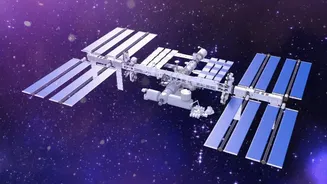
With the International Space Station scheduled for retirement around 2030, the race is on to develop commercial replacements to avoid a gap in America's crewed presence in low-Earth orbit. Inflatable modules are central to this transition. The sheer volume they provide is a boon for scientific research. More space means room for larger and more complex experiments, from pharmaceutical development and advanced materials manufacturing to biological studies that are only possible in microgravity. A larger habitat can also accommodate more astronauts, increasing the amount of human-led research that can be conducted simultaneously. Companies like Sierra Space are developing their LIFE modules for the Orbital Reef station, a planned "mixed-use business park" in space. Axiom Space, another key player, also plans to incorporate expandable modules into its own commercial station. These new platforms are being designed from the ground up to serve a diverse client base, including NASA, universities, private companies, and international space agencies.
The Companies Leading the Charge
Several companies are pioneering this technology. Sierra Space has emerged as a leader, conducting multiple successful burst pressure tests on its LIFE habitat prototypes, with one full-scale test withstanding pressures far exceeding NASA's safety requirements. The company is targeting a flight of a pathfinder version of LIFE as soon as the end of 2026. Lockheed Martin is also developing its own inflatable habitat technology, leveraging advanced materials like Vectran, a fiber noted to be five times stronger than steel. The field owes a great deal to the foundational work of Bigelow Aerospace, which purchased patents from NASA's canceled TransHab project in the early 2000s and successfully flew two prototype modules, Genesis I and II, before installing the BEAM module on the ISS. Though Bigelow ceased operations in 2020, its work validated the core principles that today's companies are building upon. Axiom Space has also contracted for the manufacture of an inflatable module, intended as a multipurpose entertainment and content studio, demonstrating the versatility of the technology beyond pure science.