



Prep Your Hair for Success
Before you begin weaving, a little preparation goes a long way. Start by brushing your hair thoroughly to remove any tangles or knots; snagging is the enemy of a smooth braid. While you can braid clean hair, many stylists find that second-day hair has
more grip and texture, making it easier to manage. If your hair is freshly washed or naturally silky, a light mist of texturizing spray or dry shampoo can add the grit needed to hold the style. This step prevents the braid from slipping loose too quickly. For those with curly or wavy hair, working with your natural texture can create a beautiful, bohemian look; just ensure it's detangled first, perhaps with a leave-in conditioner to add slip.
The Foundation: Just Two Sections
Here is the core technique that makes the fishtail so achievable. Unlike a standard or French braid that uses three, a fishtail requires you to divide your hair into only two equal sections. You can gather your hair into a low ponytail at the nape of your neck (a great trick for beginners) or simply let it hang. For a side-swept look, pull all your hair over one shoulder before splitting it. This position also has the added benefit of letting you watch your hands work, making the whole process easier. Hold one large section in each hand, keeping them separate and secure. This simple two-part foundation is the entire base of the braid.
The Weaving Motion: A Simple Criss-Cross
Now for the meditative weaving process. Take a thin strand of hair—about half an inch wide—from the outer edge of the left section. Cross this small piece over the top of the main left section and join it with the inside of the right section. Now, repeat the exact same motion on the other side: take a thin strand from the outer edge of the right section, cross it over the main right section, and add it to the inside of the left section. That's the entire pattern. Continue alternating sides, always taking small pieces from the outside and crossing them over to the opposite side. The key to a defined, fishbone look is using consistently small strands. Keep a gentle but firm tension as you go to ensure the braid is even.
Common Mistakes and Quick Fixes
If your fishtail starts looking more like a regular three-strand braid, you might be taking sections that are too large. Stick to smaller, more delicate pieces to maintain that intricate pattern. If the braid feels loose or is falling apart as you work, try to keep your hands closer to the braid itself to maintain consistent tension. For those with layers, it’s normal for shorter pieces to pop out. A few bobby pins can easily tuck them back into the braid once you're finished. If you get lost, just pause, hold the two main sections firmly, and remember the simple rule: a small piece from the outside of one section crosses over to join the inside of the other.
Finishing Touches for a Fuller Look
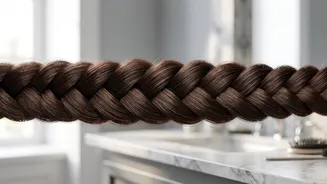
Once you’ve braided to the end, secure it with a clear elastic or a tie that matches your hair colour. Now you have a choice: a sleek, tight braid or a voluminous, romantic one. For the latter, it's time to 'pancake' the braid. Starting from the bottom, gently pull on the outer edges of each woven section. This loosens the weave and expands the braid, making it appear much thicker and fuller. Work your way up slowly, pulling each side evenly until you achieve your desired size. A final mist of hairspray will help set the style and tame any flyaways, ensuring your beautiful creation lasts all day.