


Earth's Hostile Twin
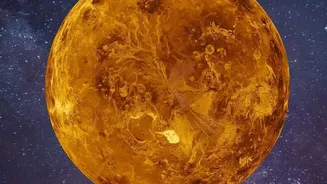
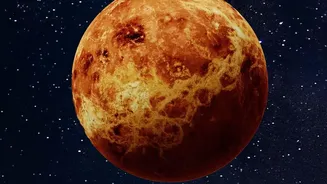
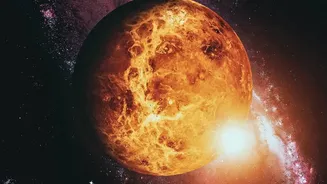
Venus is a tale of a sibling rivalry gone wrong. It’s nearly the same size as Earth and made of the same stuff, yet it’s the most hostile planet in our solar system. A runaway greenhouse effect has boiled its surface to a staggering 460°C, hot enough
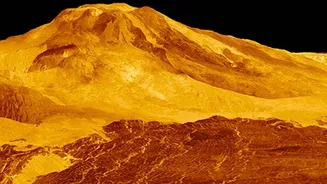
to melt lead. The atmospheric pressure is over 90 times that of Earth's at sea level, equivalent to being nearly a kilometre deep in the ocean. To top it off, its skies are filled with clouds of sulfuric acid. Yet, underneath this forbidding veil lies one of planetary science's most tantalizing mysteries. While the surface is dominated by volcanic features—more than any other planet—scientists have long debated whether these volcanoes are ancient relics or are still erupting today. Confirming active volcanism would completely change our understanding of Venus.
The Tools for the Task
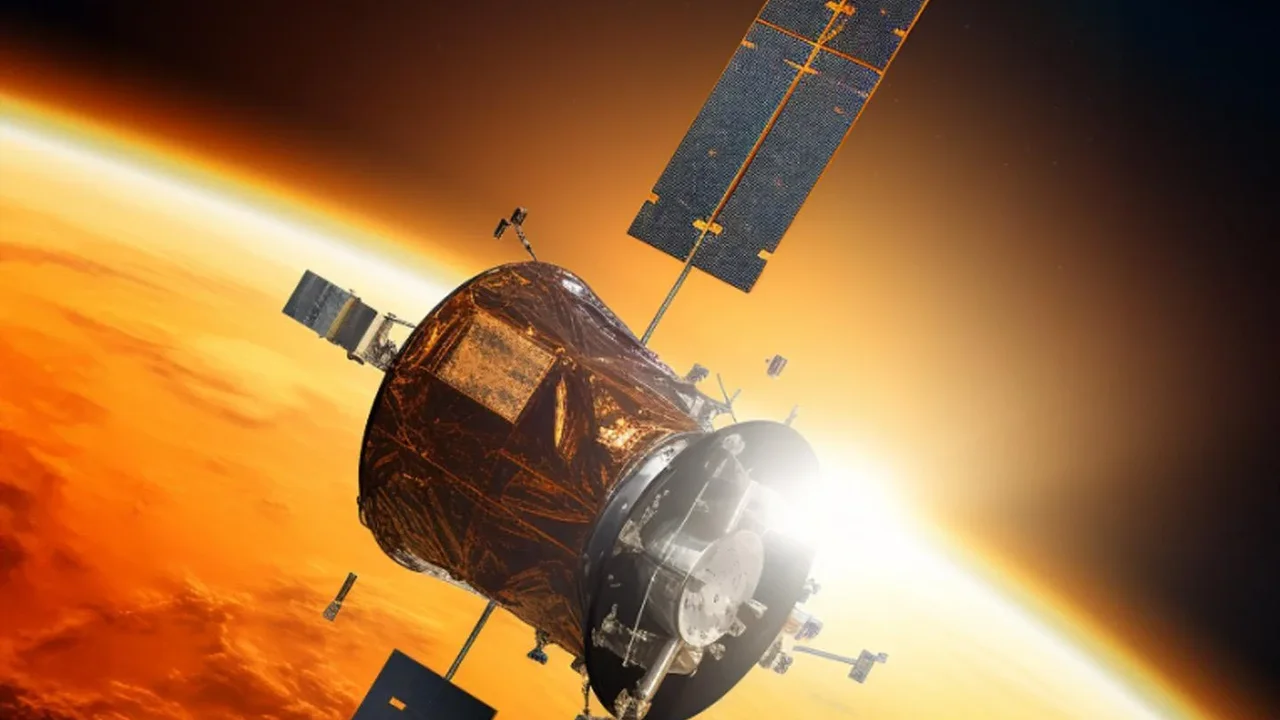
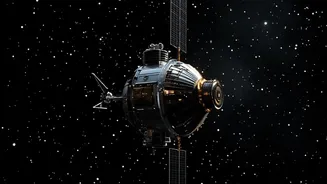
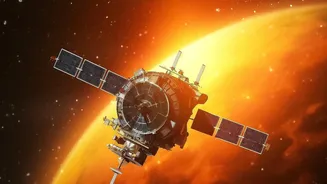
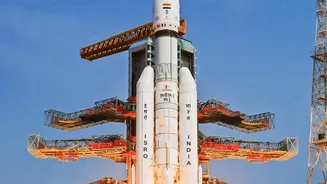
Peering through the thick, acidic clouds of Venus to spot a volcanic eruption is an immense technical challenge. This is where the ingenuity of ISRO's engineers comes into play for the upcoming Shukrayaan-1 mission, also known as the Venus Orbiter Mission (VOM). They are developing a suite of sophisticated instruments designed to find the tell-tale signs of volcanic activity. Among the key payloads will be a high-resolution Synthetic Aperture Radar (SAR), which can map the planet's surface in incredible detail, regardless of the cloud cover. This radar can identify fresh lava flows and changes in volcanic structures over time. Additionally, instruments like a thermal camera and various spectrometers will scan the atmosphere for clues. These can detect 'hot spots' on the surface—areas significantly warmer than their surroundings—and sniff the air for spikes in volcanic gases like sulphur dioxide, which would be a smoking gun for a recent eruption.
Why Hunt for Volcanoes?
Finding an active volcano on Venus is about more than just spectacular celestial fireworks. Active volcanism is a sign that a planet is geologically dynamic, with a hot interior that shapes its surface and influences its atmosphere. It would prove that Venus is not a dead planet but a living, breathing geological entity. Recent analysis of 30-year-old data from NASA's Magellan mission provided the first direct evidence of a volcanic vent changing shape, strongly suggesting an eruption occurred. This discovery has electrified the scientific community and raised the stakes for upcoming missions. By confirming ongoing volcanism, Shukrayaan-1 can help answer fundamental questions: How did Earth and Venus, which started so similarly, diverge so dramatically? Understanding Venus's evolution and its runaway greenhouse effect provides a crucial case study for understanding climate change on our own planet.
India's Celestial Ambition
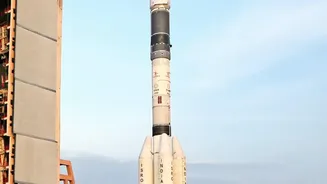
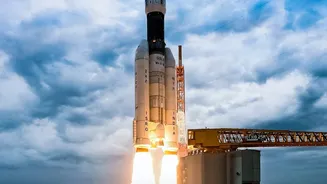
The Shukrayaan-1 mission, formally approved in 2024 and scheduled for a 2028 launch, places India at the forefront of a renewed global interest in Venus. After the landmark successes of Chandrayaan to the Moon and the Mangalyaan mission to Mars, Venus is the next logical frontier for ISRO. The mission is not a solo effort; it includes international collaborations with countries like Sweden and Germany, who are contributing instruments. This reflects a modern approach to space exploration where global cooperation accelerates scientific discovery. By developing these highly advanced instruments, ISRO is not just preparing for a single mission; it is building capabilities that will serve India's space ambitions for decades, cementing its position as a major player in planetary exploration.