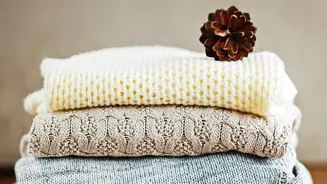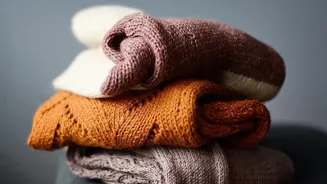





Wool is a winter staple, offering unparalleled warmth. But for many, that cosy feeling comes with an unwelcome itch. The good news is you don't have to choose between warmth and comfort. A few simple strategies can tame the scratchiness for good.
The Science of the Scratch
The itchiness
of wool is not necessarily an allergy; for most people, it's a simple mechanical issue. The culprit is the diameter of the wool fibres. Coarser, thicker fibres—typically those over 30 microns in diameter—are too stiff to bend when they press against your skin. Instead, they poke at nerve endings, creating a 'prickle factor' that your brain registers as an itch. Finer fibres, on the other hand, are more flexible and bend easily, which is why they feel soft to the touch. It's not the wool itself, but the thickness of its individual strands that makes the difference.
The Protective Power of a Base Layer
As the headline suggests, the easiest and most effective way to combat an itchy sweater is to create a barrier. Wearing a thin, smooth layer underneath your woollen garment prevents the coarse fibres from ever touching your skin. Cotton is a common choice, but for active or very cold days, look to high-performance fabrics. Synthetics like polyester are excellent at wicking moisture away to keep you dry. Fabrics like silk or Tencel offer a smooth, luxurious feel, while a thin merino wool base layer can provide the benefits of wool without the itch, as it's made from much finer fibres.
Not All Wool Is Created Equal
If you have sensitive skin, being selective about the type of wool you buy can save you a lot of discomfort. Merino wool is a popular choice because its fibres are exceptionally fine, usually well under the 22-micron irritation threshold. This makes it feel silky and soft against the skin. For ultimate luxury and softness, cashmere, sourced from the downy undercoat of goats, has even finer fibres and is considered one of the best choices for sensitive skin. Lamb's wool and alpaca are other fantastic, soft alternatives to the coarser wools often used in more rugged, traditional sweaters.
How to Wash and Soften Your Woollens
Proper care can significantly soften wool fibres over time. Always start by checking the care label. When washing, use lukewarm or cold water (never hot) and a gentle, wool-specific detergent. Aggressive standard detergents can strip the natural oils from the fibres, making them rougher. For an extra softening boost, you can try soaking the garment for 15 minutes in a solution of cold water and a few tablespoons of white vinegar, which helps dissolve any residue and relax the fibres. Some people also find success soaking wool in cool water with a small amount of hair conditioner, then rinsing thoroughly.
Drying and Storing for Longevity
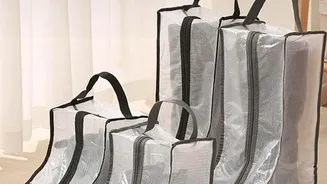
How you dry your wool is just as important as how you wash it. Never hang a wet wool sweater, as the weight of the water will stretch it out of shape. Instead, gently squeeze out excess water (do not wring it) and lay the garment flat on a clean, dry towel. Reshape it and let it air dry away from direct heat or sunlight. For longterm storage, always make sure your woollens are clean, as pests are attracted to dirt and food particles. Fold your sweaters rather than hanging them to prevent stretching, and store them in a cool, dry place. Using breathable cotton storage bags with cedar chips can help deter moths.