




Your Gateway: The Simple E-Visa Process
For Indian citizens, getting into Georgia is straightforward. You don't need to visit an embassy; instead, you can apply for an e-Visa online through the official government portal, evisa.gov.ge. The process involves filling out a form, uploading documents,
and paying a fee. Key documents include a valid passport, a passport-style photo, proof of accommodation, return flight tickets, travel insurance, and proof of sufficient funds. As of 2026, travel and health insurance are mandatory. The standard e-Visa costs around $20, plus service fees, and is typically processed within five to ten working days. This visa allows for a stay of up to 30 days. It's important to note that Georgia does not offer a visa on arrival for Indian passport holders, so you must secure your e-Visa before you travel.
Smart Budgeting: How Much Will It Cost?
Georgia is one of Europe's most budget-friendly destinations. A student backpacker can comfortably manage on a daily budget of about $30–$50 (around 80-135 Georgian Lari). This would cover a dorm bed, local meals, public transport, and visiting free sites. For a one-week trip, budgeting around $300–$400 per person is a realistic goal for a frugal traveller. Your biggest expenses will be flights and accommodation. Booking flights to Kutaisi International Airport, a hub for budget airlines, can sometimes be cheaper than flying into Tbilisi. Remember to exchange your money for the local currency, the Georgian Lari (GEL), upon arrival for the best rates.
Finding Your Home: Budget Accommodation
Georgia has a fantastic network of hostels and guesthouses perfect for students. In cities like Tbilisi, Batumi, and Kutaisi, you can find hostel dorm beds for as little as $8–$15 per night. Hostels like Fabrika in Tbilisi are popular for their vibrant atmosphere. For a more local experience, consider staying in a family-run guesthouse. These often cost around $25–$45 for a private room and sometimes include a delicious home-cooked breakfast or dinner, offering amazing value. Booking in advance on platforms like Hostelworld or Booking.com is recommended, especially during peak season, to get the best prices and locations.
Feast Like a Local Without Breaking the Bank
Georgian food is a highlight and, luckily for students, incredibly affordable. You must try Khachapuri, a cheese-filled bread, which can be a meal in itself for just a few dollars. Another must-have is Khinkali, hearty meat or vegetable dumplings that cost less than a dollar each. Bakeries are your best friend for cheap, delicious pastries like Lobiani (bean-filled bread). For a filling meal, visit local markets like the Dezerter Bazaar in Tbilisi or eat at 'family-style' restaurants like Samikitno or Shemomechama, where you can get a feast for under $10. Many restaurants offer vegetarian options, including mushroom khinkali and various eggplant dishes.
Exploring Georgia for Free (Or Almost Free)
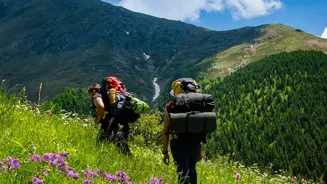
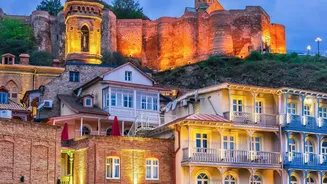
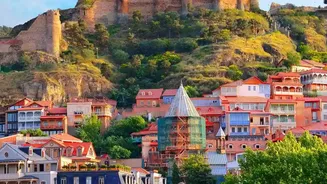
Much of Georgia's beauty is accessible for free. Spend your days wandering the historic cobblestone streets of Tbilisi's Old Town, where you can admire the unique architecture and vibrant street art. Visiting the country's stunning Orthodox monasteries and churches, such as the Gergeti Trinity Church, is usually free of charge. Nature is a huge draw, and hiking in the Caucasus Mountains around Kazbegi or Svaneti offers breathtaking views at no cost. In Tbilisi, you can take a free walking tour to get acquainted with the city or simply enjoy the atmosphere at public spaces like Rike Park. The cable car to Narikala Fortress offers panoramic city views for a minimal fee.
Getting Around on a Shoestring
Public transport is efficient and very cheap. In Tbilisi, the metro is a quick way to cross the city, with rides costing a fraction of a dollar. For travel between cities, the most common and affordable option is the marshrutka, or shared minibus. A marshrutka ride from Tbilisi to another major city like Kutaisi might only cost around 20-35 GEL. While not the most luxurious, they are a quintessential Georgian experience. Trains are also an option for major routes like Tbilisi to Batumi and offer a more comfortable journey. For short distances within cities, ride-hailing apps like Bolt are widely used and are generally cheaper than hailing a taxi on the street.