





The Dubai Detour
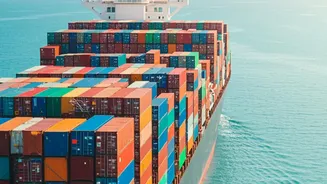
When the front door is closed, trade finds a side window. Following the suspension of direct trade ties, a robust, indirect route has emerged, primarily through the United Arab Emirates. Indian exporters ship their goods to ports in Dubai, where the products
are legally imported by local trading companies. These companies then re-invoice and re-export the same goods to Pakistan. While this adds logistical complexity and cost, it provides a legitimate channel for products of Indian origin to land in Karachi. This 'third-country' routing has become the primary mechanism sustaining this trade flow. It allows Pakistani importers to access Indian products without violating the direct trade ban, creating a functional, albeit inefficient, supply chain.
The In-Demand Goods
This indirect trade is not about luxury items; it is driven by necessity. The most sought-after products are industrial and essential goods. Pharmaceutical raw materials, or Active Pharmaceutical Ingredients (APIs), are at the top of the list. Pakistan's pharma industry has long relied on cost-effective APIs from India to produce affordable medicines. Other critical items include industrial chemicals, machinery parts, dyes, and certain types of textiles like raw cotton. These are not easily replaceable. Sourcing them from other markets like China or Europe would be significantly more expensive and time-consuming, threatening the competitiveness of several Pakistani industries. The continued demand underscores a deep-seated economic dependency built over decades.
Economics Over Politics
The fundamental driver of this persistent trade is simple economics. For a Pakistani manufacturer, sourcing a chemical or a machine part from India is often the most viable option. The geographical proximity means lower shipping costs and faster delivery times compared to sourcing from the West or even other parts of Asia. Even with the added margin for traders in Dubai, the final landed cost in Pakistan is frequently lower than the alternatives. This cost advantage is crucial for industries operating on thin margins. Business leaders in Pakistan have repeatedly, though often quietly, highlighted the economic pain caused by the trade suspension, arguing that it harms Pakistani businesses and consumers more than it achieves any political objective. The grey market is simply the market's response to these powerful economic incentives.
An Open Secret
This phenomenon is far from a clandestine operation; it is an open secret in business circles across South Asia and the Middle East. Trade bodies and industrialists on both sides are fully aware of the scale and mechanics of this indirect channel. While governments maintain their official political stances, there appears to be a tacit understanding that shutting down these routes entirely would cause significant economic disruption, particularly in Pakistan. The situation creates a strange paradox: while official diplomatic and trade channels are frozen, the commercial lifelines, though rerouted, remain active. It suggests that while political capital is spent on maintaining a hard-line stance, economic pragmatism is the order of the day for businesses fighting to survive and stay competitive in a challenging global market.