





The Sun’s Invisible Threat
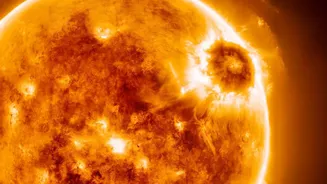
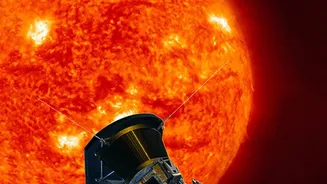
The Sun, while the source of life, constantly bombards the solar system with a stream of charged particles known as the solar wind. Most of the time, this is a steady flow, but the Sun also has violent outbursts. It can eject massive clouds of plasma
and magnetic fields, called Coronal Mass Ejections (CMEs), which travel across space at incredible speeds. When these solar storms are directed at Earth, they can have significant consequences for our technology-dependent society, creating a phenomenon known as space weather.
Satellites in the Firing Line
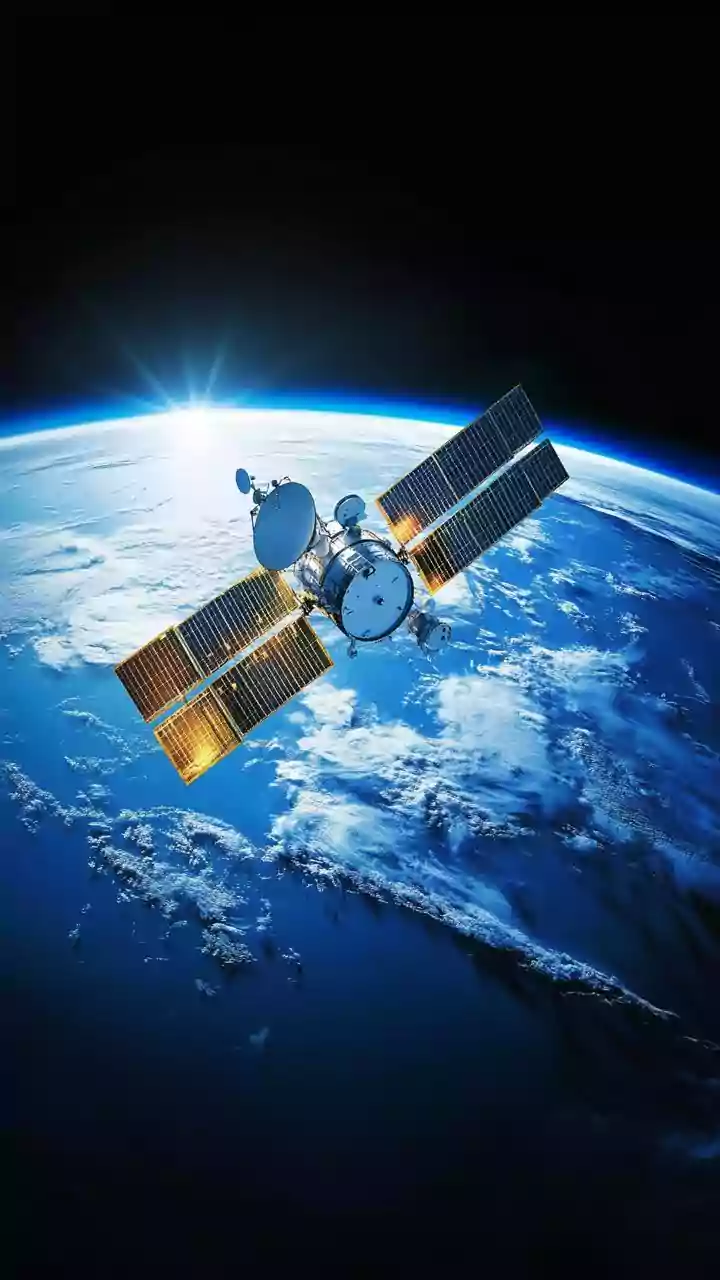
Orbiting satellites are particularly vulnerable to this onslaught. Energetic particles from solar storms can damage sensitive electronics and disrupt their operations. A surge of charged particles can cause on-board systems to fail, leading to malfunctions or even the complete loss of the satellite. Furthermore, these storms heat Earth's upper atmosphere, causing it to expand. This increased atmospheric drag can slow satellites down, causing their orbits to decay and pulling them out of their designated paths, which can shorten their operational lifespan and disrupt services.
A Unique Vantage Point
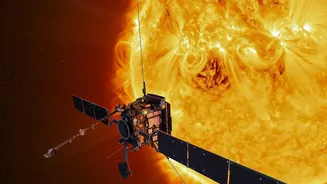
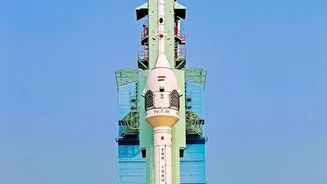
This is where Aditya-L1 provides a game-changing advantage. The spacecraft is positioned at Lagrange Point 1 (L1), about 1.5 million kilometres from Earth in the direction of the Sun. This unique location gives it an uninterrupted, continuous view of the Sun without any occultation or eclipses. More importantly, it sits 'upstream' of the Earth in the solar wind. This means it can detect solar storms and CMEs heading our way well before they reach our planet, acting as a crucial early warning system.
The Instruments on Watch
Aditya-L1 is equipped with seven sophisticated instruments to study the Sun and its environment. For satellite defense, some of the most critical are the in-situ payloads. The Plasma Analyser Package for Aditya (PAPA) and the Aditya Solar wind Particle Experiment (ASPEX) directly sample the solar wind, measuring the properties of its ions and electrons. These instruments can detect changes in the speed, density, and temperature of the particles, providing the raw data needed to forecast the arrival and intensity of a solar storm.
From Early Warning to Active Defense
The data from Aditya-L1 gives satellite operators a vital heads-up, providing an estimated warning time of 30 to 60 minutes before a solar storm hits. This window, though short, is critical. It allows operators to take protective measures, such as temporarily shutting down non-essential or sensitive electronic components, reorienting the spacecraft to protect vulnerable parts, or executing small orbital manoeuvres to counteract increased atmospheric drag. This proactive approach significantly reduces the risk of damage and helps ensure the continuity of services.
Securing India’s Digital Infrastructure
For India, Aditya-L1 is more than a scientific achievement; it's a strategic asset. With a rapidly growing digital economy and an expanding constellation of satellites for communication, navigation, and Earth observation, protecting these space-based assets is paramount. The insights from Aditya-L1 not only help safeguard India’s own infrastructure but also contribute to the global effort to understand and mitigate the effects of space weather, cementing ISRO's role as a key player in space science and safety.