



What is This Planetary Cluster?
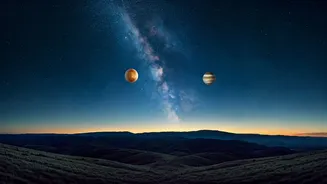
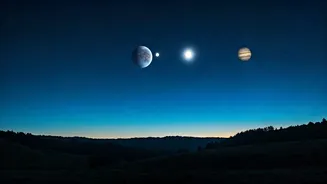
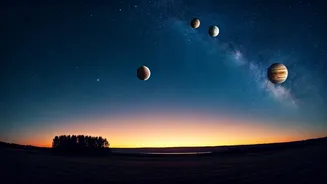
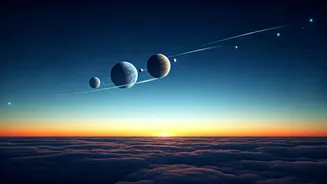
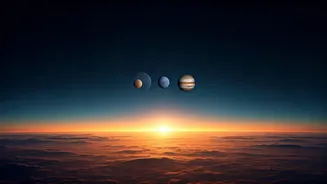
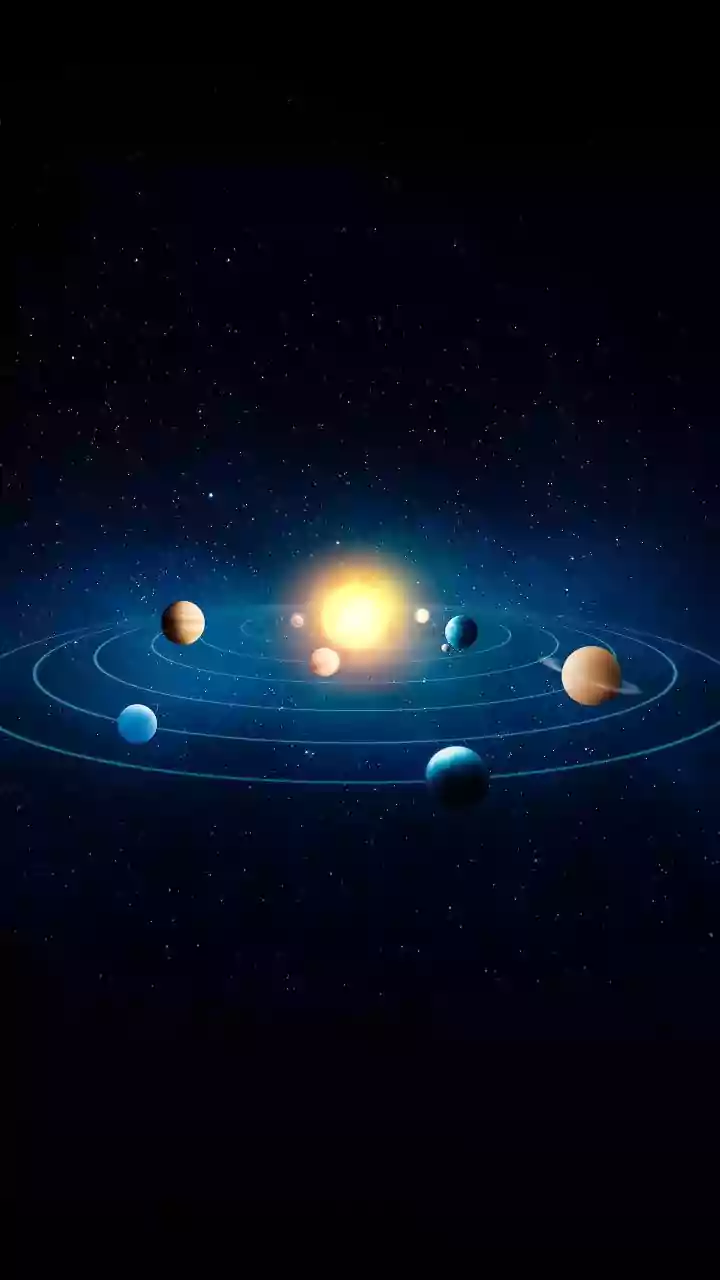
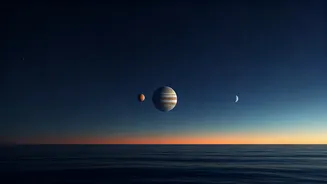
Don't worry, the planets aren't about to collide. What we’re seeing is a beautiful celestial illusion called a conjunction or, in this case, a planetary alignment. From our vantage point on Earth, Mercury, Venus, and Jupiter will appear to be very close
to each other in the sky. In reality, they remain hundreds of millions of kilometres apart, each following its own vast orbit around the Sun. This event is special because it involves three bright planets, making it a noticeable and memorable sight, even for casual observers without any special equipment.
Your Guide: When and Where to Look
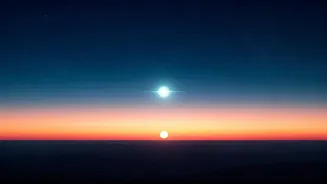
Timing and location are everything for this event. The best window for viewing will be shortly after sunset. Start looking about 30 to 45 minutes after the Sun has completely disappeared below the horizon. You’ll need to face the western sky, the same direction where the Sun just set. The key challenge, as the headline suggests, is that the planets will be very low on the horizon. This means you need a clear, unobstructed view. Trees, tall buildings, and even hills can easily block the show. If you can, find a spot with a flat western horizon, like a beach, the edge of a large field, or a high-rise balcony.
How to Identify Each Planet
Even if you’re new to stargazing, identifying these planets is straightforward. Your main signpost will be Venus. It will be the brightest object in that part of the sky, shining like a brilliant, unblinking star. You can't miss it. Once you’ve found Venus, look nearby for Jupiter. While not as dazzling as Venus, Jupiter will still be one of the brightest points of light in the sky. The trickiest one to spot is Mercury. It's the smallest of the three and will be the faintest, appearing very close to the horizon and possibly still shrouded in the evening twilight. Look for it as a tiny pinprick of light near the brighter Venus. Having Venus as a guide makes finding the elusive Mercury much easier.
Do I Need a Telescope?
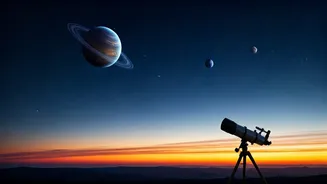
Absolutely not! This planetary gathering is a naked-eye event, which is part of its charm. The planets are bright enough to be seen without any optical aid. However, if you have a pair of binoculars, they will significantly enhance the experience. Binoculars will make Mercury much easier to resolve against the fading daylight and may even allow you to see Jupiter's four largest moons—Io, Europa, Ganymede, and Callisto—as tiny dots of light flanking the giant planet. A telescope would offer even more detail, but for simply enjoying the spectacle of the alignment itself, your eyes are more than enough.
Tips for Stargazers in the City
Living in a city like Delhi, Mumbai, or Bengaluru presents the obvious challenge of light pollution. The bright city glow can wash out fainter stars and make events like this harder to see. But don't be discouraged. Since the planets are low in the west, the most important factor is not necessarily a dark sky, but a clear horizon. Your best bet is to get as high up as possible. A rooftop terrace, a high-floor apartment with a western-facing window, or an overpass can work wonders. If you can get to a park or open space on the western edge of your city, even better. Give your eyes at least 10-15 minutes to adjust to the darkness to improve your chances of spotting all three planets.