





A Surprising Glimpse of the Dawn
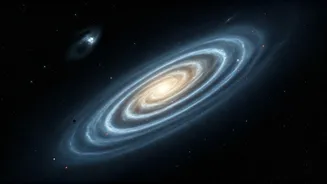
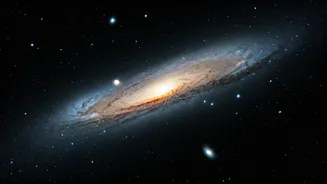
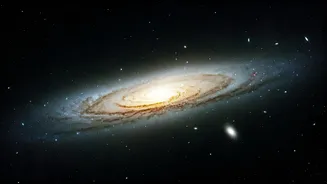
Astronomers using the Hubble Space Telescope, in collaboration with the James Webb Space Telescope and others, have detected ultraviolet light from an ancient galaxy cataloged as MXDFz4.4. This galaxy is seen as it was just 1.4 billion years after the Big
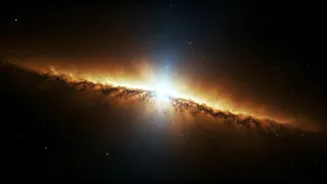
Bang, during a pivotal and mysterious period called the Era of Reionization. During this cosmic dawn, the universe was largely filled with an opaque fog of neutral hydrogen gas that blocked energetic light. Finding a galaxy from this era shining so clearly was something many researchers thought impossible, forcing a major revision of what the early cosmos was like.
The Little Galaxy That Could
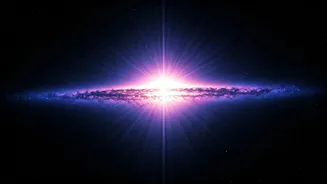
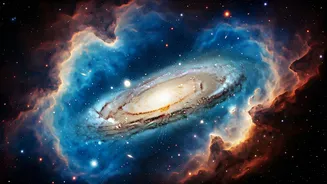
What makes MXDFz4.4 so remarkable is its combination of size and activity. It is about 100 times smaller than our own Milky Way, yet it is churning out new stars at a rate ten times faster. This furious star formation, packed into a very small space, created a powerhouse of young, massive stars. The intense combined energy from these stars was strong enough to essentially blast holes through the surrounding cosmic fog, allowing its ionizing light to escape and travel across the universe to be seen by Hubble. This small but mighty galaxy was essentially a pioneer, helping to clear the path for light to travel freely across the cosmos.
Making the Universe 'Younger'
The headline's paradox—an ancient find making space feel younger—comes from this unexpected maturity. The universe isn't physically younger, but our understanding of its developmental timeline has been radically compressed. The previous consensus was that galaxies formed slowly, like small streams gradually merging into a great river over billions of years. But MXDFz4.4 and other similar potential discoveries are more like fully-formed, powerful rivers appearing almost instantly. They show that complex, star-forming structures were in place much earlier than models predicted. The universe, it seems, grew up much faster than we gave it credit for. This discovery challenges estimates that didn't allow enough time for galaxies to reach such maturity so early.
A New Puzzle for Science
This discovery doesn't just answer questions; it creates exciting new ones. How did so many stars form so quickly? Were these hyper-active, compact galaxies the norm in the early universe? Scientists now believe that galaxies like MXDFz4.4 were instrumental in the great clearing event of the Era of Reionization, transforming the cosmos from opaque to transparent. This finding provides a crucial piece of evidence to explain how this transition happened. It’s a classic example of how a single observation can reshape entire theories, sending cosmologists and astrophysicists back to their models to account for this new, precocious player on the cosmic stage.
Hubble's Enduring Legacy
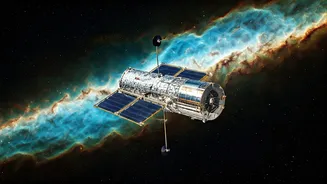
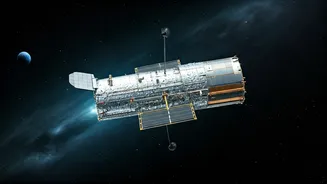
Even with the newer James Webb Space Telescope making its own headlines, this discovery highlights the enduring power and relevance of the Hubble Space Telescope. Launched in 1990, Hubble continues to be a cornerstone of modern astronomy, providing unique data and working in tandem with newer observatories to create a more complete picture of the universe. Discoveries like that of MXDFz4.4 are a testament to the value of long-term investment in scientific infrastructure. Decades after its launch, Hubble is still pushing the boundaries of our knowledge, proving that when it comes to exploring the cosmos, experience and cutting-edge technology are an unbeatable team.