
The Sun's One-Two Punch
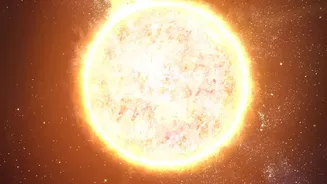
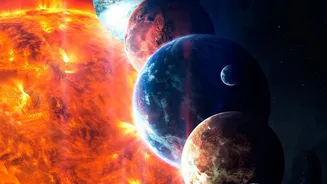
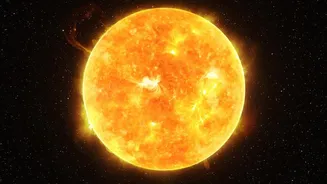
To understand the protection, we first need to understand the threat. The sun frequently releases energy in two major ways: solar flares and coronal mass ejections (CMEs). A solar flare is an intense burst of radiation. Traveling at the speed of light,
this radiation reaches Earth in about eight minutes. While generally not physically destructive to hardware on the ground, it can disrupt high-frequency radio communications on the sunlit side of Earth. The bigger threat often follows. Many powerful flares are accompanied by a CME, which is a massive cloud of magnetised plasma and charged particles hurled into space. If aimed at Earth, this particle cloud travels much slower, taking anywhere from 15 hours to several days to arrive. It is the impact of this CME on Earth’s magnetic field that poses the greatest risk to our infrastructure.
Our Grid's Vulnerability
Modern electrical grids are vast, interconnected networks of high-voltage transmission lines—essentially, extremely long metal wires. When a CME slams into Earth's magnetosphere, it causes rapid magnetic field fluctuations. This, in turn, creates powerful, uncontrolled electrical currents on the ground, known as geomagnetically induced currents (GICs). These currents can flow into power lines, overwhelming the system. The most vulnerable components are large, high-voltage transformers. GICs can cause them to overheat, and in extreme cases, melt or be permanently damaged. Replacing these custom-built transformers can take months or even years, leading to the potential for widespread, long-term blackouts.
Satellites in the Firing Line
Satellites orbiting outside the protection of most of Earth's atmosphere face a multi-pronged assault. The initial radiation from a solar flare can damage sensitive electronics and disrupt communications. The subsequent arrival of a CME and energetic particles presents further dangers. The influx of charged particles can cause electrical failures and interfere with GPS signals, introducing positioning errors or causing total signal loss. Another major issue, especially for satellites in Low-Earth Orbit (LEO), is atmospheric drag. A geomagnetic storm heats the upper atmosphere, causing it to expand. This increases the density of the air, creating more drag on satellites, which can cause them to lose altitude and even re-enter the atmosphere prematurely if they can't correct their orbit.
The Global Tripwire
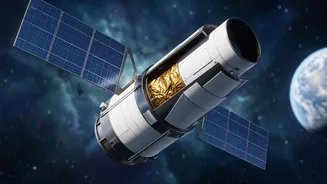
The key to protection is advance notice. Global agencies like the U.S. National Oceanic and Atmospheric Administration's (NOAA) Space Weather Prediction Center (SWPC) act as the world's space weather forecasters. They use a network of ground-based and space-based observatories, such as the GOES and DSCOVR satellites, to constantly monitor the sun. The DSCOVR satellite, positioned about 1.5 million kilometres from Earth, is a crucial early warning tool. It directly measures the solar wind—the stream of charged particles from the sun—providing about 15 to 60 minutes of warning before a CME hits Earth's magnetic field. Based on this data, the SWPC issues a tiered system of alerts, watches, and warnings, similar to how terrestrial weather is forecast.
From Warning to Action
That lead time, even if it's just an hour, is invaluable. When power grid operators receive a geomagnetic storm warning, they can take preventative measures. This might include reducing the load on the grid, redirecting power flows, postponing maintenance on critical lines, and bringing extra generation capacity online to ensure stability. Satellite operators also spring into action. In response to a forecast, they can put sensitive electronics into a protective 'safe mode' to prevent electrical damage. For satellites in LEO, they might use onboard propulsion to boost their orbit, counteracting the increased atmospheric drag to prevent orbital decay. Airlines, particularly those flying polar routes where Earth's magnetic protection is weakest, can reroute flights to lower latitudes to protect communication systems and minimise radiation exposure for crew and passengers.
The Future of Forecasting
As our reliance on technology grows, so does our vulnerability to space weather. Researchers and agencies are constantly working to improve forecasting. This includes developing new observation satellites like NOAA's Space Weather Follow On (SWFO) program to ensure there are no gaps in our monitoring capability. Scientists are also exploring the use of artificial intelligence and machine learning to analyse solar data more quickly and identify precursor signs of eruptions that might be missed by human analysts. The goal is to extend warning times from hours to days, giving infrastructure operators even more time to prepare for the impacts of a major solar storm.