
The Star of the Evening Show
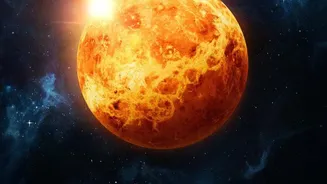
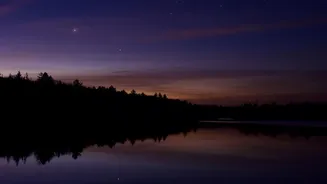
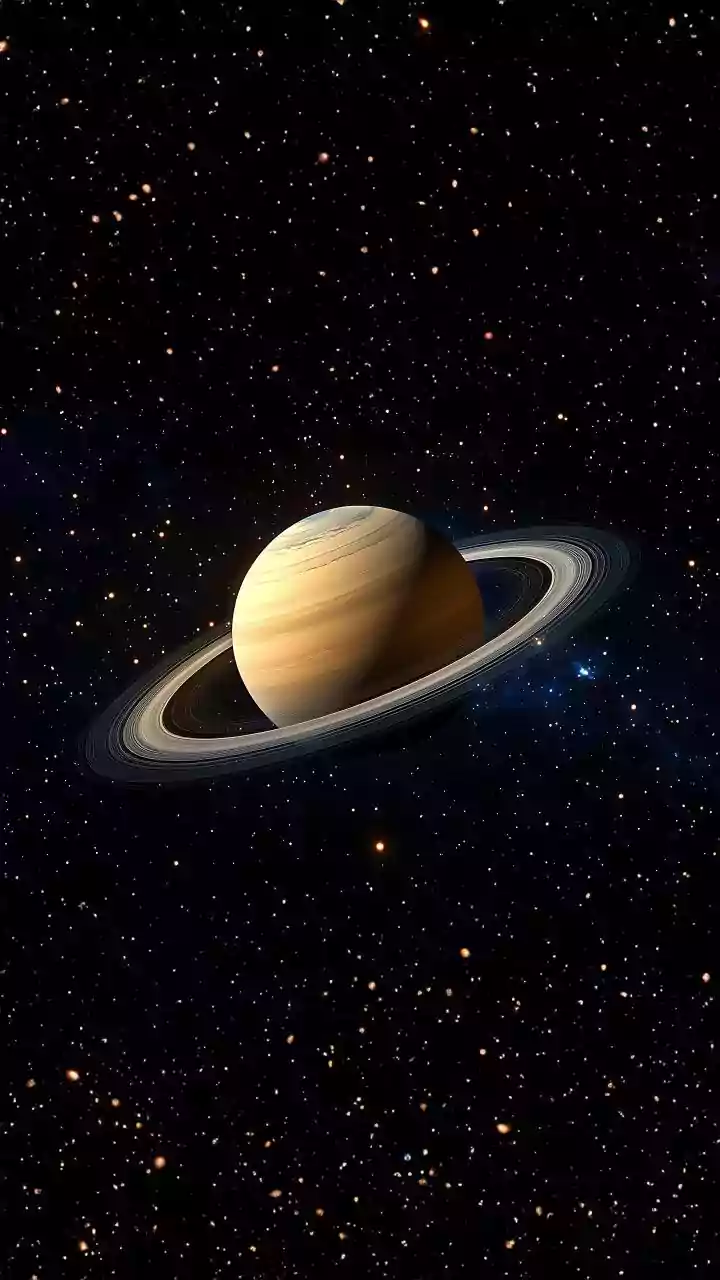
If you've glanced west after sunset recently, you've almost certainly seen it: a brilliant, steady beacon of white light that appears long before most stars. This is the planet Venus, often called the 'Evening Star'. While it's a constant presence in our
sky, this August is a particularly good time for viewing. In the middle of the month, on August 15, Venus reached what astronomers call its greatest eastern elongation. This simply means it appeared at its farthest distance from the Sun in our sky, making it visible for longer after sunset and positioning it perfectly for observation. Throughout the rest of August, it remains a dominant and dazzling feature of the early night sky.
When and Where to Look
Spotting Venus is incredibly simple and requires no special equipment. The best time to look is anywhere from 30 to 90 minutes after your local sunset. Find a spot with a clear view of the western horizon, free from tall buildings or trees if possible. As the brilliant colours of sunset fade, you will see Venus emerge as a powerful, unblinking light. It is so bright that it completely outshines every actual star in the sky, making it impossible to miss. You don't need to be in a dark rural area; Venus is bright enough to cut through the light pollution of most Indian cities and towns.
Why Is Venus So Incredibly Bright?
Venus's extraordinary brightness is due to a combination of two key factors. Firstly, its entire surface is shrouded in a thick blanket of clouds. These clouds are made of sulfuric acid and are highly reflective, bouncing a huge amount of sunlight back into space and towards our eyes. Secondly, Venus is our closest planetary neighbour. This proximity means that the reflected sunlight doesn't have as far to travel to reach us. Unlike the twinkling of distant stars, Venus shines with a steady, serene, and silvery light, making it easy to distinguish.
A Planet with Phases
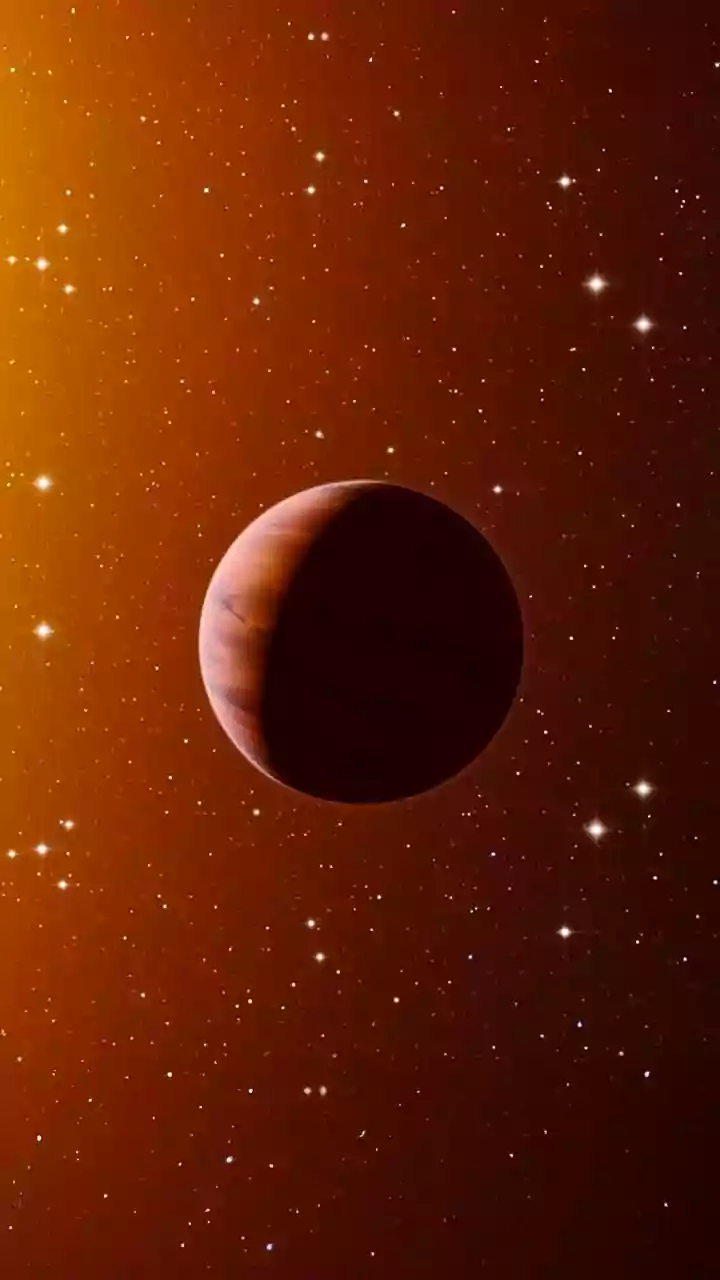
One of the most fascinating aspects of observing Venus is that, just like our Moon, it goes through phases. Because its orbit is inside Earth's, we see different angles of its sunlit side as it travels. In mid-August, around its greatest elongation, Venus was about 50% illuminated, appearing like a tiny half-moon through a telescope. As it continues its journey through late August and into September, it moves closer to Earth. This makes its apparent size in our sky grow, while the sunlit portion we see shrinks into a beautiful, thin crescent. Paradoxically, Venus can often appear at its most brilliant when it's a crescent, because it is so much closer to us at that point.
Do You Need a Telescope?
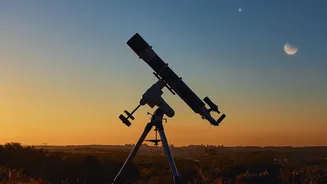
Absolutely not! The beauty of Venus is its accessibility. It is one of the most rewarding celestial objects for anyone to observe with just the naked eye. However, if you have a pair of binoculars or a small backyard telescope, you can certainly enhance your experience. Even basic binoculars will help stabilise the view and make the planet's light more defined. A small telescope will take it a step further, clearly revealing the current phase of Venus. Looking at it during twilight, rather than in a completely dark sky, can help reduce the planet's intense glare and make its shape easier to see.
A Celestial Dance with a Star
To make your sky-watching even more interesting, look for a companion near Venus. Throughout late August, Venus is visibly closing the gap with Spica, the brightest star in the constellation Virgo. Spica is a bright blue-white star, but you'll notice it is much fainter than the overwhelming brilliance of Venus. Watching night after night, you can track Venus's movement as it appears to draw nearer to Spica, heading for a close conjunction in early September. This celestial chase adds a dynamic element to your evening observations, showing the solar system in motion.