



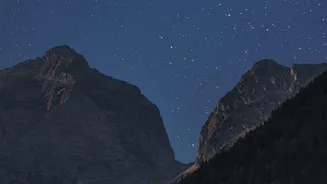
The Perfect Atmospheric Cocktail
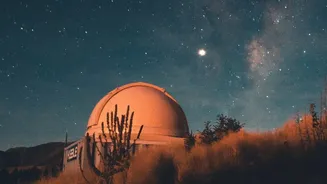
September ushers in a welcome change for sky-watchers. The post-monsoon atmosphere is significantly less hazy and humid than in the preceding summer months. This reduction in atmospheric moisture and pollutants means clearer, more transparent skies. The air
is more stable, causing less twinkling for stars and planets, which allows for sharper views. Furthermore, while the nights are growing longer after the summer solstice, the evening temperatures remain comfortable, making it an ideal time to linger outdoors without the chill of the coming winter.
The Autumnal Equinox: A Celestial Turning Point
On September 23, 2026, the Northern Hemisphere officially welcomes autumn with the autumnal equinox. On this day, the Sun shines directly over the Earth's equator, resulting in nearly equal hours of daylight and darkness across the globe. Astronomically, this marks the point when the nights begin to grow longer than the days, offering an expanding canvas for stargazing. For observers at higher northern latitudes, the period around the equinox is also known to be a prime time for potential aurora sightings, as the Earth's tilt creates more favourable conditions for interactions with the solar wind.
Venus Shines at Its Brightest
This September, Venus will put on a particularly stunning show. The planet, often called the 'Evening Star', reaches its peak brightness for the year on or around September 22. It will appear as a brilliant, unmissable beacon low in the western sky just after sunset. You don't need any special equipment to spot it; its luminosity makes it one of the easiest celestial objects to find, even from light-polluted cities. Keep an eye out on September 14, when a crescent Moon will have a close encounter with the dazzling planet.
A Parade of Planets and Moons
September 2026 is a busy month for planetary alignments. Early in the month, from around the 6th to the 8th, the waning crescent Moon will dance past both Mars and Jupiter in the pre-dawn sky. Look towards the east around 3 or 4 a.m. to see these celestial bodies grouped together. September 26 brings a double feature: Neptune, the distant blue giant, will be at opposition. This means it is at its closest point to Earth for the year, making it a great time for those with a good telescope to try and spot it. That same night is also the Full Harvest Moon.
The Harvest Moon Rises
The full moon that occurs closest to the autumnal equinox is famously known as the Harvest Moon. In 2026, this falls on September 26. This full moon is notable because for several evenings around its peak, the moonrise happens at nearly the same time shortly after sunset. This traditionally provided farmers with extra light to continue harvesting their crops into the evening. Look for it to appear large and golden as it climbs above the horizon. As a bonus, the planet Saturn will be following the Moon across the sky that night.
Farewell to Summer's Stars
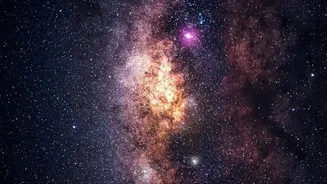
September provides a final opportunity to enjoy the glorious constellations of summer before they sink below the western horizon. The famous Summer Triangle, an asterism formed by the bright stars Vega, Deneb, and Altair, will still be prominent high in the evening sky. These stars mark the constellations Lyra, Cygnus, and Aquila. This is also one of the last chances of the year to get a clear view of the dense, star-filled core of our own Milky Way galaxy before it becomes less visible until the following spring.