






The Undisputed Blockbuster Blueprint
Look at the list of the highest-grossing Indian films and a clear pattern emerges. Whether it's the historical fantasy of the 'Baahubali' series, the patriotic fervour of 'Pathaan' and 'Jawan', or the raw power of 'KGF' and 'RRR', they all share two fundamental
pillars. These films are built on a foundation of jaw-dropping action sequences and soundtracks that capture the nation's imagination. This isn't a coincidence; it's a deliberate and powerful formula. Major production houses, from Yash Raj Films to the creators of pan-Indian spectacles, understand that to draw massive crowds, a film needs to be an 'event'. It must offer an experience that feels larger than life, and this is achieved by appealing to two primal cinematic desires: the thrill of the fight and the stir of the heart.
The Evolution of Cinematic Action
Indian cinema's action sequences have journeyed far from the simple fistfights of yesteryear. Today, they are multi-million-rupee, VFX-laden spectacles designed to compete on a global stage. Think of the stunning animal attack sequence in 'RRR' or the gravity-defying jetpack chase in 'Pathaan'. These are not just plot points; they are meticulously choreographed events that become a film's primary marketing hook. Directors like S.S. Rajamouli and Siddharth Anand have become masters of creating these 'mass moments'—scenes of such epic scale and creativity that they generate immense buzz and demand to be seen on the biggest screen possible. The goal is no longer just to depict a fight, but to create a visually stunning and emotionally charged experience that leaves the audience breathless.
Music as the Nation's Emotional Engine
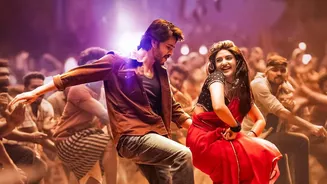
In Indian cinema, music is not just an accessory; it is the narrative's soul. Since the first talkie, 'Alam Ara', songs have been integral to storytelling, expressing emotions that dialogue alone cannot. The highest-grossing films leverage this power to its fullest extent. A film's success often hinges on the popularity of its soundtrack, which acts as a powerful promotional tool long before release. Chart-topping songs create familiarity and excitement, drawing audiences to theatres. Beyond the hit songs, the background score (BGM) is the unsung hero, amplifying every punch, every romantic glance, and every heroic entry. Composers are now stars in their own right, crafting scores that are as crucial to the film's identity as its lead actor.
The Pan-Indian Power Formula
The recent dominance of 'pan-Indian' films further proves the power of this formula. Grand visuals and powerful emotions are universal languages. A spectacular action sequence in 'KGF: Chapter 2' or an epic battle in 'Baahubali 2: The Conclusion' resonates just as strongly with an audience in Mumbai as it does in Chennai or Hyderabad. Music, too, transcends linguistic barriers, with dubbed versions of songs often becoming as popular as the originals. This strategy of combining high-concept action with universally appealing musical themes allows filmmakers to cater to a diverse national audience, breaking regional boundaries and, in turn, box office records.