







Policy Changes Fueling the Boom
The transformation of India's space ecosystem can be traced back to a series of foundational government reforms, culminating in the Indian Space Policy 2023. This policy effectively opened the entire space value chain to private participation. It established
a clear division of roles: ISRO would focus on research and development of advanced new technologies, while its commercial arm, NewSpace India Limited (NSIL), would handle strategic missions. The crucial change was the creation of the Indian National Space Promotion and Authorisation Centre (IN-SPACe). Acting as a single-window agency, IN-SPACe is responsible for authorizing, promoting, and regulating the activities of non-governmental entities (NGEs), from startups to established companies. This has provided a predictable regulatory framework, giving private players access to ISRO's world-class facilities and expertise, which was previously a major bottleneck. The liberalisation of Foreign Direct Investment (FDI) norms, allowing up to 100% in certain sub-sectors, has further signaled to global investors that India is open for business.
The Race to the Stars: Launch Vehicle Leaders
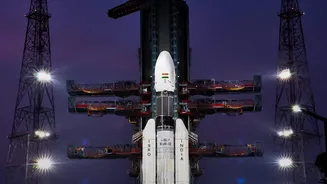
At the forefront of this new era are the launch vehicle startups. For years, the ability to put a satellite into orbit was a sovereign capability. Now, private Indian companies are building their own rockets. Skyroot Aerospace made history by becoming the first Indian private company to launch an orbital rocket, the Vikram-1, cementing its place as a sector leader and India's first space-tech unicorn. Close behind is Agnikul Cosmos, which specializes in customizable small launch vehicles and has pioneered 3D-printed rocket engines. These companies are not just replicating existing technology; they are innovating to bring down costs and provide on-demand launch services for the booming small satellite market. Their success has been a massive proof-of-concept for the entire ecosystem, demonstrating that complex space hardware can be developed and launched commercially out of India.
More Than Just Rockets
While launch startups grab headlines, the ecosystem's depth comes from its diversification. A large and growing number of companies are focusing on other critical parts of the value chain. In satellite manufacturing, companies like Dhruva Space are developing full-stack systems and satellite platforms. The downstream segment, which involves using satellite data for applications on Earth, is also exploding. Pixxel is a global leader in this area, building a constellation of hyperspectral imaging satellites that provide high-resolution data for agriculture, energy, and defense. Others like Digantara are focused on space situational awareness, creating a data infrastructure to track satellites and space debris. This diversification is crucial, creating a robust industry that spans everything from manufacturing components to providing sophisticated data analytics services.
Fueling the Final Frontier: Investment Soars
This rapid growth would be impossible without significant financial backing. The investment landscape has matured dramatically, with funding growing from just $43 million in 2021 to a record $200 million in 2025. The momentum has continued strongly in 2026. Initially dominated by domestic venture capital, the investor base now includes global institutional investors and sovereign wealth funds. Major funding rounds for companies like Skyroot, Pixxel, and Digantara have demonstrated strong market confidence. However, the funding is not evenly distributed. While late-stage funding for established leaders has increased, a financing gap persists for startups in the mid-technology readiness level, who are moving from prototype to commercial product. The government has also stepped in with initiatives like a Venture Capital Fund to support early-stage ventures.
Navigating the Hurdles Ahead
Despite the incredible progress, significant challenges remain. While the 2023 policy was a game-changer, the sector is still awaiting a comprehensive Space Activities Act to provide greater legal clarity on complex issues like liability and insurance. Infrastructure, though improving, is still a constraint; access to testing facilities and launchpads needs to expand to meet the growing demand from over 400 startups. Furthermore, Indian companies face intense global competition from established players like SpaceX and Rocket Lab, demanding constant innovation and cost-effectiveness. There is also a continued dependence on imported space-grade components for certain high-end technologies, a hurdle for achieving complete self-reliance. Navigating these issues will be key to sustaining the current trajectory.