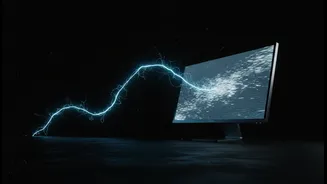









The Science of the Invisible Threat
We tend to think of lightning damage as the result of a direct hit on our house. While that is certainly catastrophic, it's also incredibly rare. The more frequent threat comes from nearby strikes. When lightning hits the ground or a power line, even
a kilometre or two away, it creates two powerful and dangerous effects. First, it can induce a massive power surge that travels through utility lines and into your home. Second, it generates a powerful electromagnetic pulse (EMP), a wave of energy that can fry sensitive electronics without any physical connection. This EMP can induce damaging currents in any conductive material, including the delicate circuits inside your unplugged devices.
How a Surge Travels Home
Think of the electrical grid as a network of rivers. A nearby lightning strike is like a dam bursting, sending a tidal wave of excess voltage down every connected stream. This surge can travel through your main power lines, but also through cable TV or internet coaxial cables, and even telephone lines. Standard voltage in India is around 230 volts; a lightning-induced surge can be hundreds of thousands of volts. Modern electronics, packed with tiny, sensitive microprocessors, are not designed to handle such a massive spike. The delicate internal components are instantly overwhelmed and can be destroyed in a nanosecond.
Your First and Best Defence: Unplug
The only 100% guaranteed way to protect a device from a lightning surge is to completely isolate it from incoming power. This means physically unplugging your expensive electronics from the wall socket when you know a major thunderstorm is approaching. It might seem like a hassle, but for your high-end TV, gaming console, computer, and sound system, it's the most effective protection available. Remember to also disconnect any other lines, like coaxial cables for your TV or an ethernet cable for your computer, as the surge can travel through these pathways as well.
The Role of a Good Surge Protector
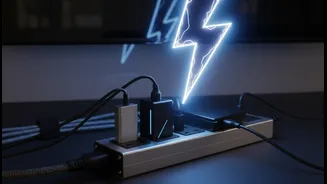
For moments when unplugging isn't practical, a good quality surge protector is your next best bet. It's crucial to understand that not all power strips are surge protectors. A surge protector is specifically designed to absorb and divert excess voltage away from your devices and safely to the ground. When buying one, look for a joule rating—the higher the number, the more energy it can absorb before failing. Keep in mind that these devices are sacrificial; after taking a major hit, they may no longer offer protection and need to be replaced. Many have an indicator light that shows if the protection circuitry is still active.
Considering Whole-Home Protection
For comprehensive peace of mind, especially in areas with frequent lightning, a whole-home surge protection device (SPD) is the ultimate solution. Installed by a qualified electrician at your main electrical panel, this device acts as a gatekeeper, stopping massive external surges from ever entering your home's wiring. This protects not just your plug-in electronics but also hardwired appliances like your air conditioner, refrigerator, and washing machine, which all contain sensitive electronic control boards today. While point-of-use surge protectors are good for a second layer of defence, a whole-home system is the first line of defence against powerful external surges. Indian standards now recommend the installation of SPDs, particularly where external lightning protection is present.