






The Challenge of the Urban Glow
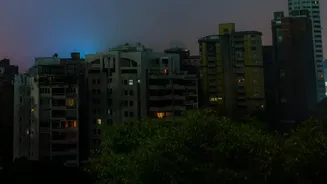
Anyone who has tried to stargaze from a city balcony or park knows the main obstacle: light pollution. The collective glow from streetlights, buildings, and advertising creates a phenomenon called 'sky glow,' which washes out all but the brightest celestial
objects. Where our ancestors saw thousands of stars forming a rich tapestry, a modern urbanite might only spot a dozen, along with the Moon and maybe a bright planet like Jupiter or Venus. This makes identifying constellations, the foundational skill of astronomy, nearly impossible for the unaided eye. The faint stars that form the shapes of Leo or Pegasus are simply invisible, lost in the luminous haze that blankets our cities.
A Planetarium in Your Pocket
This is where smartphone astronomy apps become indispensable. Applications like Star Walk, SkyView, and Stellarium have effectively democratized astronomy for a generation of city dwellers. These apps use your phone's built-in GPS, compass, and gyroscope to know your exact location and the direction the phone is pointing. They then generate an accurate, real-time map of the sky above you. It's like having a personal planetarium that fits in your hand, ready to reveal the secrets hidden behind the light pollution. Suddenly, the frustratingly blank urban sky becomes a navigable, understandable space.
Mapping the Invisible with Augmented Reality
The true magic of these apps lies in their use of augmented reality (AR). By activating the AR mode, the app overlays its star map directly onto the live view from your phone's camera. When you point your phone at a seemingly empty patch of sky, the screen reveals the constellations, stars, and planets that are there in reality, even if your eyes can't see them. The app draws the lines between the stars, displays their names, and shows the artwork of the constellations. This feature is not just a novelty; it's a crucial bridge. It connects the few bright stars you can see to the many you can't, allowing you to trace and learn the patterns in the sky with confidence.
More Than Just a Star Map
Modern astronomy apps offer a suite of features that go far beyond basic constellation mapping. Many can send you notifications for upcoming celestial events, like meteor showers, eclipses, or visible passes of the International Space Station (ISS). You can tap on any object on the screen to pull up detailed information about its distance, composition, and history. Some apps feature a 'Time Machine' function, allowing you to see what the sky looked like in the past or what it will look like in the future. For city observers, these features add layers of engagement, turning a quick glance at the sky into a rich learning experience and helping them plan the best times to look up.
Your First Night Under the City Stars
Getting started is simple. Find a spot with the clearest possible view of the sky, like a park or a rooftop, away from the direct glare of streetlights. Open your chosen app and give your eyes a few minutes to adjust to the darkness. Many apps include a 'night mode' that turns the screen red, which helps preserve your night vision. Point your phone towards a bright object you recognize, like the Moon, to orient yourself. From there, use the augmented reality overlay to explore outwards, discovering the constellations that share that patch of sky. You might be surprised to learn that the single bright 'star' you've seen every night is actually the planet Jupiter, or that the faint satellite moving steadily across the sky is the ISS.