






What is a Spectrum Deal Anyway?
Think of spectrum as invisible highways in the sky that carry data. Just as cars need roads, wireless signals need specific frequency bands to travel from a satellite to your phone. A spectrum deal gives a company like SpaceX the legal right to use a particular
set of these highways. Without this, they can't operate. The Indian government, through regulators like the Telecom Regulatory Authority of India (TRAI), controls who gets to use these airwaves. Starlink, along with competitors like Eutelsat OneWeb (backed by Bharti) and Jio's satellite venture, has already received initial licenses, but the final assignment of spectrum is a critical, separate step that is still in progress. This allocation will determine the exact 'lanes' Starlink can use for its direct-to-device service.
The Mountain of Regulatory Hurdles
Securing spectrum is like getting a learner's permit; you still have to pass the driving test. For Starlink, this means navigating a series of regulatory and security clearances from the Indian government. National security is a primary concern, as governments need to ensure they have oversight and control over communication networks operating within their borders. Every operator, including Starlink, must demonstrate compliance with strict security conditions before services can be commercially launched. This involves assessments to ensure user data is handled safely and that networks cannot be misused. According to the Ministry of Communications, this process is underway for all licensees, putting them at a broadly similar stage. This deliberate, multi-stage process ensures that any new service aligns with national interests.
Building the Ground Game for Space Tech
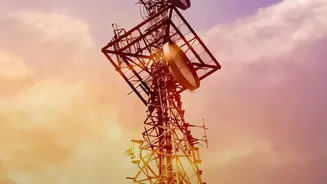
Ironically, a service that comes from space needs a surprising amount of infrastructure on the ground. Starlink's satellites, which orbit in Low Earth Orbit (LEO), need to connect to the global internet. This happens via ground stations, also known as gateways. These stations act as the bridge between the satellites and the terrestrial fiber optic cables that form the internet's backbone. SpaceX has stated it has already invested in building ground infrastructure in India, including 20 gateway sites with hundreds of antennas. This is a proactive step, but these gateways must be fully integrated and approved as part of the overall operational rollout before a single user can connect. Without this link, the satellites are just orbiting hardware with no connection to the wider web.
Does Your Phone Even Work With It?
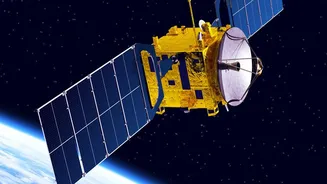
The promise of 'direct-to-cell' or 'direct-to-device' technology is that it will work with existing LTE smartphones without needing new hardware. Starlink's second-generation satellites are designed to act like floating cell towers in space, using spectrum that standard phones can already recognise. When a user is outside the range of a terrestrial tower from a partner like Jio or Airtel, their phone would theoretically connect automatically to a satellite overhead. However, the initial phase of this service globally has been focused on text messaging, with voice and data capabilities planned for later. So, even when the service launches, it may not immediately offer the full mobile broadband experience people are used to, starting instead as a crucial lifeline for texting in remote areas.
The Billion-Dollar Question: Price and Competition
India has one of the most competitive and price-sensitive telecom markets in the world, with mobile data plans being among the cheapest globally. Starlink's challenge will be to find a viable price point. Satellite technology is inherently more expensive than terrestrial fiber or mobile towers. This suggests Starlink won't compete directly with Jio and Airtel in cities, where fiber and 5G are widespread and affordable. Instead, its primary value is in connecting the unconnected — providing reliable broadband in remote, rural, and geographically difficult areas where terrestrial infrastructure is economically unviable. Interestingly, both Jio and Airtel have signed agreements to potentially distribute Starlink services, signalling a 'co-opetition' strategy where they see it as a complementary service for hard-to-reach customers rather than a direct threat to their urban user base.