



A strong back is the foundation of good posture and pain-free movement, yet many shy away from back exercises. The seated row is a perfect entry point, offering a safe and effective way to build strength exactly where you need it most.
Why a Strong Back Is Essential
We often focus on
the muscles we see in the mirror, like the chest and abs, but a strong back is crucial for overall health and function. The muscles of the upper and middle back are responsible for maintaining an upright posture, which can combat the slouched shoulders that come from hours spent at a desk or looking at a phone. Strengthening these muscles not only helps you stand taller but also provides stability for your spine, reducing the risk of injury during everyday activities like lifting groceries or playing with your kids. A well-developed back creates a balanced physique and supports shoulder health, making it a non-negotiable part of any well-rounded fitness routine.
Anatomy of a Seated Row
The seated row is a compound exercise, meaning it works multiple muscle groups and joints simultaneously. It is primarily a horizontal pulling movement that effectively trains the muscles responsible for pulling your arms and shoulder blades toward your body. The main players are the latissimus dorsi (the large, fan-like muscles that give your back width), the rhomboids (located between your shoulder blades), and the trapezius (the large muscle group spanning your neck, shoulders, and upper back). Your biceps and rear deltoids (the back of your shoulders) also get involved as assisting muscles, making it an incredibly efficient upper-body builder.
Perfecting Your Form: A Step-by-Step Guide
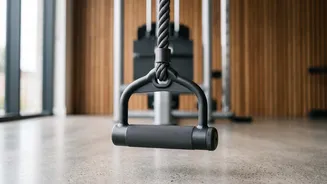
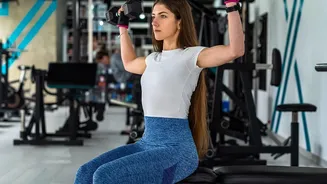
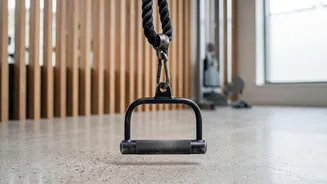
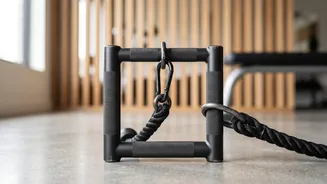
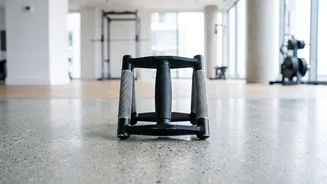
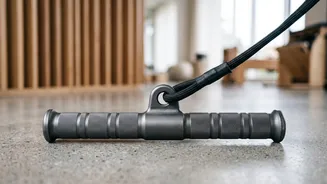
Proper form is key to maximizing benefits and preventing injury. Start by sitting on the machine's bench with your feet firmly on the platform and your knees slightly bent. Sit tall with your chest up and shoulders down, away from your ears. Grab the handle with your arms fully extended. Before you pull, retract your shoulder blades as if you're trying to pinch a pencil between them. Exhale and drive your elbows back, pulling the handle towards your torso until it's near your belly button. Keep your elbows tucked in close to your body. Squeeze for a second at the peak of the contraction, then inhale as you slowly extend your arms back to the starting position in a controlled manner.
Common Mistakes to Avoid
Many beginners make a few common errors that reduce the exercise's effectiveness. The most frequent is using momentum by leaning your torso back and forth. Your back should remain relatively still; the movement should come from your arms and shoulder blades. Another mistake is shrugging the shoulders up toward the ears, which places stress on the neck and engages the upper traps instead of the target midback muscles. Also, avoid rounding your back. Maintain a proud chest and a neutral spine throughout the entire set. If you find yourself making these mistakes, it's a sign that the weight is too heavy. Reduce the load and focus on a clean, controlled movement.
Beginner Friendly Variations
If you don't have access to a cable machine or find it too challenging, there are excellent alternatives. The simplest is the resistance band seated row. Simply sit on the floor with your legs extended, loop a resistance band around your feet, and pull the ends toward your torso, mimicking the same movement as the machine version. Another great option is the chest supported dumbbell row. By lying face down on an incline bench, your body is fully supported, which isolates the back muscles and removes any chance of using momentum. Both of these variations are fantastic for learning the proper muscle activation before progressing to heavier weights.