






Why Sitting Is a Strain
When you sit for prolonged periods, several things happen to your joints. The production of synovial fluid, which lubricates your joints and reduces friction, decreases due to a lack of movement. This can lead to stiffness and discomfort. Over time, the
muscles that support your joints, like your glutes and core, can weaken, while others, such as your hip flexors, can become tight. This imbalance puts extra stress on your joints, particularly in the lower back, hips, and knees. A sedentary lifestyle can also contribute to weight gain, which further increases the load on these weight-bearing joints.
Embrace 'Movement Snacks'
The solution isn't necessarily a gruelling hour-long workout after work. Instead, think of 'movement snacks'—short, frequent bursts of activity sprinkled throughout your day. Research shows that these small breaks, like a five-minute walk every half hour, can be more effective at combating the negative effects of sitting than a single, longer exercise session. The goal is to break up long periods of inactivity and remind your body to move. Setting a timer to stand up, stretch, or walk every 30 to 60 minutes is a simple but powerful habit to build.
For Your Neck and Shoulders
The 'tech neck' posture from looking at screens puts significant strain on your upper body. To counteract this, try simple chin tucks: sit tall and gently pull your chin straight back, as if making a double chin, hold for a few seconds, and repeat. This activates deep neck muscles. Also, perform shoulder rolls by lifting your shoulders towards your ears, rolling them back and down. Finally, ease tension with shoulder blade squeezes: sit or stand tall and gently draw your shoulder blades together and down, holding for a few seconds.
Mobilise Your Spine
A stiff back is a common complaint for desk workers. A seated spinal twist can provide immediate relief. Sit upright in your chair, cross your arms over your chest or place one hand on the opposite knee, and gently rotate your upper body to one side, then the other. This helps improve mobility in your mid_back, which often gets rigid from slouching. Another gentle movement is a seated cat_cow. Place your hands on your knees, and on an inhale, arch your back and look up. On an exhale, round your spine and drop your chin to your chest.
Wake Up Your Hips and Legs
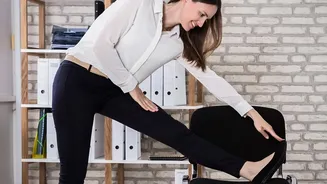
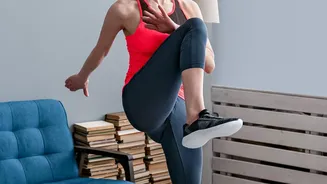
Sitting shortens and tightens your hip flexors. To stretch them out, you can perform a standing lunge during a break. While seated, you can also wake up your lower body. Try seated marching by lifting your knees one at a time as if you're marching in place. Ankle rotations and seated 'sit_to_stands'—standing up from your chair without using your hands and slowly sitting back down—are also great for activating the large muscles in your legs that are dormant when you sit.
Care for Your Wrists and Hands
Constant typing and mouse use can lead to repetitive strain. To protect your wrists, extend one arm in front of you with your palm down. Use your other hand to gently pull your fingers toward the floor to stretch the top of your forearm. Then, flip your palm up and gently pull your fingers back toward your body to stretch the underside. Hold each stretch for 15–20 seconds and repeat on the other side. Simply shaking out your hands and fingers periodically also helps relieve tension.