






The Great Monsoon Myth
One of the most persistent skincare myths is that cloudy skies offer complete protection from the sun. The reality is that clouds are not an effective shield. According to dermatologists and skin cancer foundations, up to 80% of the sun's harmful ultraviolet
(UV) radiation can penetrate through cloud cover. This means that even on the most overcast monsoon day, your skin is still being exposed to significant UV radiation that contributes to long-term damage. Adding to the risk, wet surfaces like rain-soaked roads and puddles can reflect these UV rays, potentially increasing your overall exposure. Thinking of sunscreen only on bright, sunny days is a misconception that leaves your skin vulnerable when you least expect it.
Your Invisible Adversary: UVA vs. UVB
To understand the risk, it's crucial to know the difference between the two main types of UV rays that reach us. UVB rays are shorter and are the primary cause of immediate skin damage like sunburn. While clouds do block a portion of UVB rays, they are far less effective against UVA rays. UVA rays have a longer wavelength, allowing them to penetrate deep into the skin's dermal layers. This is the radiation responsible for accelerating skin ageing, such as wrinkles and fine lines, and triggering hyperpigmentation and dark spots. Worryingly, UVA rays are consistently present year-round, regardless of the weather or season, and can even pass through window glass. During the Indian monsoon, you are still exposed to these ageing rays daily.
Choosing Your Monsoon Armour
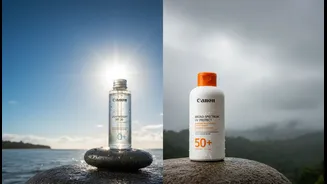
The challenge of the monsoon is not just the clouds, but the humidity. Heavy, creamy sunscreens that feel fine in winter can become sticky and uncomfortable in the damp air, leading many to skip this step altogether. For the Indian monsoon, the key is to choose a formula that works with the weather, not against it. Dermatologists recommend lightweight, non-greasy, and non-comedogenic (won't clog pores) sunscreens. Gel-based or aqua-gel formulas are often ideal, as they absorb quickly without leaving a heavy residue. Look for a "broad-spectrum" label, which ensures protection against both UVA and UVB rays. An SPF of 50 is recommended for Indian conditions, along with a high PA rating (like PA++++) for robust UVA protection. A water-resistant formula is also a smart choice to withstand sweat and drizzle.
Application for Humid Weather
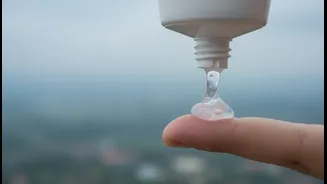
How you apply sunscreen is just as important as the product you choose. In high humidity, the right technique prevents the product from feeling heavy or pilling. A common recommendation is the "two-finger rule": dispense sunscreen along the length of your index and middle fingers and apply that amount to your face and neck. For your body, a general guide is about two tablespoons. Apply it at least 15-20 minutes before you step outside to allow it to form a protective layer. In the humid, sweaty conditions of the monsoon, reapplication is critical. The protection wears off, so plan to reapply every two to three hours, especially if you've been sweating or got caught in the rain. For those with oily skin, some modern hydrating sunscreens can even double as a lightweight moisturiser, simplifying your routine.
More Than Just Sunburn Prevention
The daily utility of sunscreen during the monsoon extends beyond preventing sunburn. Consistent use is one of the most effective tools against premature ageing and hyperpigmentation, issues that are a major concern for Indian skin tones. Many skincare treatments for dark spots or acne can make your skin more sensitive to the sun, making daily SPF non-negotiable to protect your investment and prevent further damage. Furthermore, if you are concerned about an uneven complexion or a 'white cast' from traditional sunscreens, consider a tinted formula. Tinted sunscreens often use iron oxides that not only help the product blend seamlessly into melanin-rich skin but also provide additional protection against visible light, another contributor to pigmentation.