





The Power of an Umbrella Species
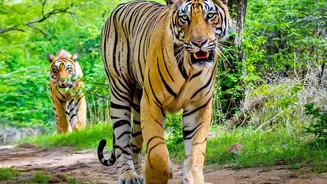
In conservation, the tiger is known as an 'umbrella species'. Because tigers require vast, healthy territories with a large prey base to survive, protecting them means safeguarding huge swathes of forest. This act of preserving a tiger's habitat provides
a protective umbrella for countless other species that live within it—from leopards and elephants down to birds, reptiles, insects, and native plants. Consequently, every measure taken to secure a future for tigers—like anti-poaching patrols and habitat restoration—automatically benefits the entire ecosystem they inhabit. The health of a tiger population is often used as a direct indicator of the health of the forest itself.
Restoring a Natural Balance
When an apex predator like the tiger is removed from an ecosystem, it creates a vacuum that can lead to ecological imbalance. One of the most significant effects of their reintroduction is the initiation of a 'trophic cascade'. This is an ecological process where the top predator's actions ripple down through the food chain. By preying on large herbivores like deer and wild boar, tigers control their numbers and change their grazing behaviour. With fewer herbivores overgrazing, vegetation begins to recover. This regrowth of grasses, shrubs, and young trees provides food and shelter for a host of smaller animals, leading to an increase in their populations and restoring the intricate web of life.
From Healthier Forests to Cleaner Rivers
The benefits of a trophic cascade extend beyond animal populations. The recovery of vegetation, spurred by controlled herbivore numbers, has a profound impact on the landscape itself. Healthier plant life stabilises the soil, reducing erosion and improving its nutrient content. This, in turn, helps maintain the health of water sources within the park. Forests protected for tigers are better at retaining water and preventing sediment runoff into rivers and streams. In southern India, for example, protecting the tiger's range along the Kaveri River has also helped preserve the riverine ecosystem, benefiting species like otters and the endangered Grizzled giant squirrel.
Proof in the Parks
India's conservation history offers powerful examples of this principle in action. Panna Tiger Reserve in Madhya Pradesh, which had lost all its tigers by 2009, launched a successful reintroduction program. The return of the tigers had a cascading effect, revitalising the forest and allowing prey species to flourish. Today, Panna is hailed as a global model for restoring large carnivores. Similarly, Sariska Tiger Reserve in Rajasthan, which also faced a local extinction, has seen a remarkable recovery since tigers were reintroduced starting in 2008. The park's biodiversity, which includes hundreds of bird and plant species, benefits from the restored ecological balance.
The Economics of Conservation
Protecting tigers also generates significant economic benefits that fuel broader conservation work. The allure of the tiger drives ecotourism, bringing in revenue that funds park management, anti-poaching units, and habitat restoration. Studies have shown that for every rupee invested in managing tiger reserves, the economic benefits returned can be worth thousands. This funding supports not only the tigers but the entire park infrastructure. Furthermore, a significant portion of tourism revenue is often shared with local communities living around the reserves, creating sustainable livelihoods and fostering a sense of shared ownership in conservation, which is crucial for long-term success.