






A New Gateway to Central Asia
In a move designed to strengthen ties and boost tourism, Uzbekistan has introduced a conditional visa-free entry rule for Indian citizens. The announcement, confirmed by the Embassy of India in Tashkent, allows eligible travellers to enter and stay in the country
for up to 30 days without needing a specific Uzbek visa. This policy came into effect at the beginning of September 2026, following a presidential decree. The initiative was first discussed during delegation-level talks between Uzbekistan's President Shavkat Mirziyoyev and Indian Prime Minister Narendra Modi, highlighting the growing strategic partnership between the two nations. This development makes it significantly easier for many frequent international travellers from India to explore one of Central Asia's most captivating destinations.
The Fine Print: Who Qualifies?
The key to this new travel privilege lies in the phrase "certain Indian passport holders." The 30-day visa-free stay is not open to all Indians, but specifically to those who are already seasoned international travellers. To be eligible, an Indian citizen must hold a valid multiple-entry visa—either for business or tourism—from a select list of developed countries. According to the official announcement, these countries are the United States, the United Kingdom, Schengen Agreement member states, Australia, Canada, Japan, New Zealand, and the Republic of Korea. Simply holding one of these valid multiple-entry visas in your passport makes you eligible for the visa-free entry into Uzbekistan. Indian citizens who do not hold one of these specific visas will still need to apply for an appropriate visa, such as an e-visa, through the standard channels.
What You Need at the Border
Qualifying for the rule is just the first step; travellers must also present the correct documentation upon arrival in Uzbekistan. Besides having a passport with one of the aforementioned multiple-entry visas, there is another mandatory requirement. Every eligible traveller must hold a confirmed air ticket for a return flight to their country of origin or an onward flight to a third country. This serves as proof of intent to leave Uzbekistan within the 30-day period. Airlines are required to inform Uzbekistan's border authorities about passengers travelling under this transit rule. Therefore, it is crucial to have your ticket details ready for inspection. Those who do not meet both the visa and the ticket requirement will not be granted visa-free entry.
Why Visit Uzbekistan Now?
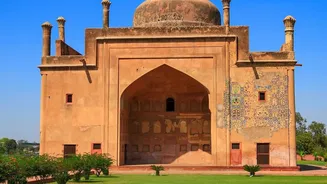
With the barrier of a separate visa process removed for many, the question becomes: why Uzbekistan? The country is a treasure trove of history and culture. It is home to four UNESCO World Heritage sites, including the fabled cities of Samarkand, Bukhara, and Khiva. These ancient stops along the Silk Road are famous for their breathtaking Islamic architecture, with intricate tilework covering majestic mosques, mausoleums, and madrasas. Beyond the historical sites, travellers can immerse themselves in vibrant bazaars, enjoy the local cuisine, and experience the nation's warm hospitality. This new rule comes as Uzbekistan is actively working to increase tourism from India, aiming to build on the nearly 81,000 Indian visitors recorded in 2025. The government is also promoting the country for family holidays and even as a destination for large Indian weddings.
Planning Your Trip
For those who do not qualify for the visa-free scheme, obtaining an Uzbek visa remains a straightforward process. India is on the list of countries eligible for Uzbekistan's e-visa system, which can be completed online in a few days. Air connectivity is also robust, with around 14 direct flights operating weekly between India and Uzbekistan, making the journey relatively short and convenient. As this new policy is conditional, it's always wise for eligible travellers to carry clear printouts of their qualifying multiple-entry visa and their confirmed onward or return flight ticket. Before making any non-refundable bookings, it is recommended to double-check the very latest regulations with your airline or an official government source.