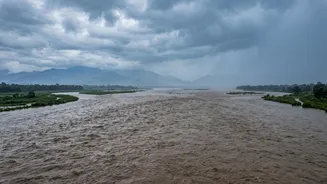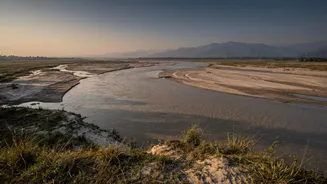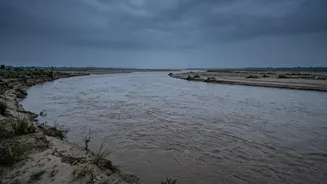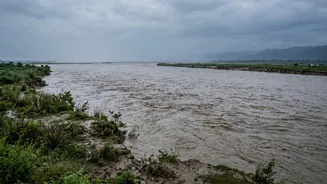





The ‘Sorrow of Bihar’
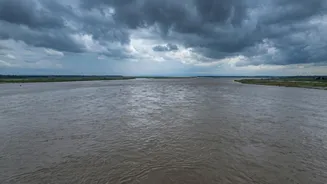
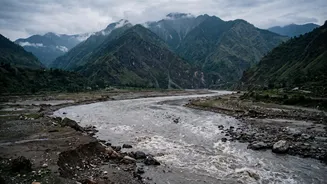
The Kosi river has earned the grim nickname, the 'Sorrow of Bihar', and for good reason. This powerful river system drains a vast area, including the Tibetan plateau and the steep slopes of the Himalayas, before descending into the flat, densely populated
plains of northern Bihar. During the monsoon, it swells dramatically, often causing widespread devastation to crops, homes, and infrastructure, perpetuating a cycle of loss for millions. This annual flooding is not a simple case of a river overflowing its banks; it's a complex story that begins hundreds of kilometres upstream in Nepal.
A River Heavy with Silt
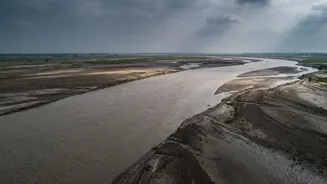
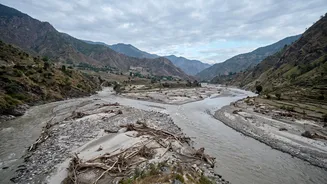
The heart of the problem lies in what the Kosi carries with it. As it tumbles down from the young, geologically fragile Himalayas, it erodes the mountainside, picking up one of the highest sediment loads of any river in the world. Annually, it transports an estimated 100 million cubic metres of silt. When the river leaves the steep Chatra Gorge in Nepal and hits the gentle slope of the Indian plains, its flow slows dramatically. Unable to carry the massive load of sediment any further, it deposits the silt onto its own riverbed.
The Embankment Paradox
To tame the volatile river and protect the plains, India and Nepal signed the Kosi Agreement in 1954. This led to the construction of the Kosi Barrage near the border and extensive embankments on either side to confine the river to a fixed channel. However, this solution has created a dangerous paradox. By trapping the river, the embankments also trap its silt. Year after year, the deposited silt has raised the riverbed, so much so that in many places, the Kosi now flows at a higher level than the surrounding countryside. The river is essentially flowing on a raised aqueduct of its own making, held in only by artificial walls.
A Constant Search for a New Path
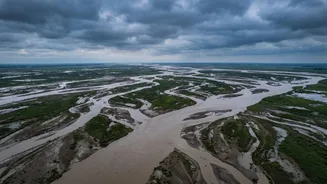
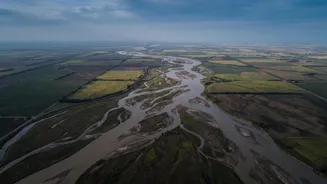
A river flowing high above its floodplain is inherently unstable. It constantly seeks a lower path, a phenomenon known as avulsion. The Kosi is notorious for this, having shifted its course westward by about 120 kilometres over the last 250 years, creating a massive alluvial fan. The embankments are designed to prevent this natural wandering, but the pressure is immense. When the water level rises during a heavy monsoon, the river pushes against these man-made barriers with incredible force. A breach in the embankment becomes a catastrophic event.
When the Levee Breaks
The devastating 2008 Bihar flood is a tragic case study of this entire process. An embankment breached not in India, but near Kusaha in Nepal. With its banks broken, the Kosi abandoned its established channel and violently carved a new path eastwards, reclaiming a course it hadn't occupied in over a century. The water surged into areas that were not prepared for flooding on such a scale, affecting over three million people in Bihar and displacing tens of thousands in Nepal. This single event starkly illustrated how a structural failure in Nepal could lead to a humanitarian crisis downstream in India, cementing the Kosi basin as a single, interconnected, and vulnerable system.