







The Foundation of Modern Technology
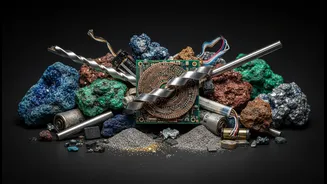
Critical minerals are the secret ingredients powering our modern world. They are elements like lithium, cobalt, nickel, graphite, and rare earths, which are essential for manufacturing everything from smartphones and laptops to electric vehicle (EV) batteries
and advanced defence systems. For decades, India has been heavily dependent on imports for these resources, making its supply chains vulnerable to global geopolitical shifts and price volatility. Recognizing this dependency as a risk to both economic growth and national security, the Indian government has launched initiatives like the National Critical Minerals Mission to bolster domestic capacity, reduce imports, and secure a stable supply for its booming manufacturing sector.
From Urban Waste to Valuable Resource
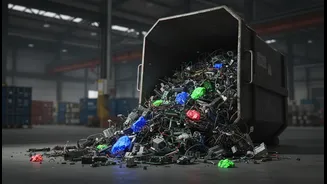
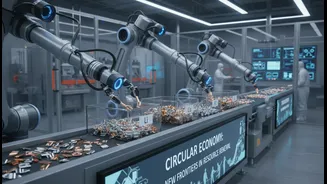
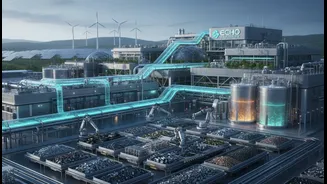
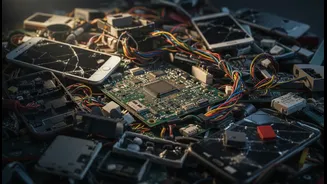
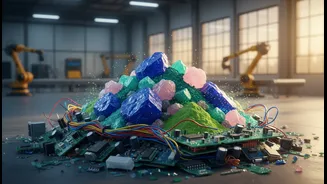
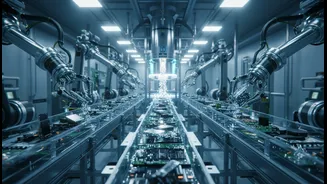
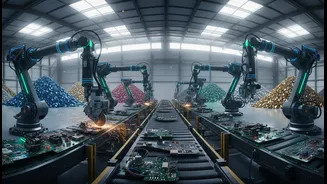
The solution lies not just in traditional mining, but in 'urban mining'—the process of recovering these valuable materials from discarded products. This is the core of a circular economy, which shifts away from a 'take-make-dispose' model to one where resources are kept in use for as long as possible. Instead of ending up in landfills, e-waste, end-of-life vehicle batteries, and industrial scrap are seen as valuable reservoirs of critical minerals. Government policies, including the Production-Linked Incentive (PLI) schemes and Extended Producer Responsibility (EPR) frameworks, are being designed to formalize and scale this sector, creating a robust ecosystem for recycling and material recovery.
The New Green-Collar Job Market
This burgeoning industry is creating a diverse spectrum of jobs, offering career tracks for various skill levels. At the grassroots, it involves roles in the organized collection, sorting, and dismantling of e-waste and batteries, a significant step up from the informal sector. Further up the value chain, there is growing demand for skilled technicians who operate advanced recycling machinery, plant operators, and maintenance engineers. At the highest level, the industry needs highly qualified professionals: metallurgists and chemical engineers who can design and oversee complex extraction processes like hydrometallurgy and pyrometallurgy, R&D scientists developing next-generation recycling technologies, and supply chain managers who can build efficient reverse logistics networks. Job listings now frequently feature roles like 'Circular Economy Consultant', 'E-Waste Plant Operator', and 'Battery Recycling Business Head'.
Skilling India for a Circular Future
To fill these new roles, India is focusing on building a skilled workforce. The Skill Council for Green Jobs (SCGJ), established under the National Skill Development Mission, is working to align training programs with the specific demands of green sectors, including waste management and recycling. These initiatives aim to develop nationally approved qualifications for roles across the circular economy. The effort involves collaboration between government bodies, academic institutions, and private companies to create specialized courses, from vocational training for recycling technicians to advanced degrees in materials science and sustainable engineering. The goal is to not only meet domestic demand but also to position India's workforce as a competitive force in the global green economy.
Overcoming the Hurdles
The path to a fully circular economy for critical minerals is not without its challenges. The high capital cost of setting up sophisticated recycling facilities, the logistical complexity of collecting and segregating waste streams, and the need to integrate a large informal workforce are significant hurdles. Effective policy enforcement and creating a commercially viable ecosystem are crucial to attract private investment and ensure long-term sustainability. NITI Aayog's recent reports on the circular economy for batteries, e-waste, and vehicles highlight these challenges and recommend steps like reducing GST on formal scrapping and improving traceability to make the formal sector more competitive.