



The Diplomatic Launchpad
The foundation for this new era is built on key strategic agreements. India's signing of the Artemis Accords in 2023 was a landmark moment, aligning the nation with a U.S.-led framework for peaceful and transparent lunar exploration. This was followed
by concrete action under the Initiative on Critical and Emerging Technology (iCET), now expanded into the TRUST initiative (Transforming the Relationship Utilizing Strategic Technology). These pacts are more than just handshakes; they create a formal channel for deep cooperation in civil, commercial, and security-related space activities. A prime example is the plan for ISRO astronauts to train at NASA's Johnson Space Center for a joint mission to the International Space Station, a first for the two nations. This move signifies a shift from a client-service provider relationship to one of equal partnership.
Defining the New Space Gold Rush
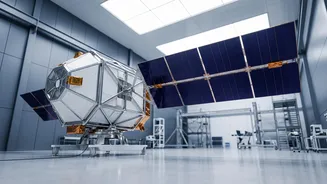
The 'next space economy' isn't about planting flags. It's a burgeoning commercial sector projected to be worth trillions globally. For India, the target is to grow its space economy from around $8.4 billion today to nearly $44 billion by 2033. This economy encompasses a vast range of activities: building and launching satellites for communication and Earth observation, in-orbit manufacturing, space tourism, and even future-forward concepts like asteroid mining and lunar resource utilisation. The joint NASA-ISRO Synthetic Aperture Radar (NISAR) mission, which launched in July 2025, exemplifies this. While a scientific mission to map Earth's surface in unprecedented detail, the data it generates on climate change, agriculture, and natural disasters will have immense commercial value.
Fueling India's Private Space Sector
Perhaps the most significant impact of the U.S. partnership is the boost it provides to India's private space industry. Policy reforms since 2020 have already opened the doors for startups, with the number growing from just a handful to over 400. The government has established IN-SPACe as a single-window agency to facilitate private participation and liberalised Foreign Direct Investment (FDI) rules, allowing up to 74% automatic investment in satellite manufacturing. The U.S. collaboration acts as a powerful accelerant. It offers Indian companies access to American capital, advanced technology, and a vast market. This integration into the global value chain helps Indian startups like Skyroot Aerospace and Agnikul Cosmos move faster, transforming them from domestic players into global contenders. The goal is to shift from relying solely on ISRO to creating a vibrant ecosystem where private firms drive innovation and commercialisation.
From the Moon to the Market
The collaboration extends to humanity's biggest space projects. In August 2026, NASA formally invited ISRO to participate in its Moon Base program, a major step beyond the Artemis Accords. This isn't just a scientific invitation; it's an economic one. Participating in building permanent lunar infrastructure means developing technologies for habitats, life support, and resource extraction—all of which have commercial applications. This positions Indian industry at the forefront of deep space exploration. By working on standardized systems that are interoperable with global partners, Indian companies can build for a global market, not just for domestic needs. The partnership effectively provides a pathway for Indian engineering and manufacturing prowess to become a key component of humanity's return to the Moon and beyond.
Challenges on the Horizon
The trajectory is promising, but not without challenges. Integrating seamlessly with the U.S. space ecosystem requires navigating complex technology transfer regulations and intellectual property concerns. While India's frugal engineering is a major asset, bridging the technological gap in areas like human spaceflight requires sustained investment and focus. Moreover, as India's role in space grows, so does its responsibility. Managing space debris and ensuring the long-term sustainability of outer space activities are critical challenges that come with being a major spacefaring nation. Building a skilled workforce to power this $44 billion ambition will also be crucial for sustaining momentum and turning potential into economic reality.