






A Triumphant Return to the Moon
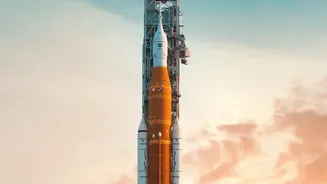
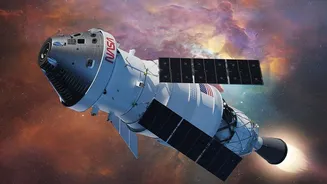
In April 2026, the world watched as NASA's Orion spacecraft, propelled by the powerful Space Launch System (SLS) rocket, carried its crew on a flyby of the Moon before returning safely to Earth. The crew—NASA astronauts Reid Wiseman, Victor Glover, Christina
Koch, and Canadian Space Agency astronaut Jeremy Hansen—traveled over 250,000 miles from Earth, completing the first crewed voyage to deep space since the Apollo era ended. The nearly 10-day mission was a crucial flight test, designed to push the spacecraft's systems to their limits and validate that the hardware was ready to support human life on the long journey to the Moon and back. Its success marks a pivotal moment, confirming the capabilities that will underpin humanity’s sustained return to the lunar environment.
Astronauts as Active Scientists
The Artemis II crew were far more than passengers; they were active scientific observers. During their flyby of the lunar farside, they became field geologists, using their own eyes and handheld cameras to document the lunar surface in ways robotic probes cannot. Their detailed observations of color variations in lunar rock, the strange phenomenon of dust levitating at the terminator, and the faint glow on the horizon provided a rich human perspective. Most dramatically, the crew successfully documented meteoroid impact flashes on the Moon's night side, capturing video that science teams on the ground confirmed were genuine impacts. This real-time human science is invaluable, helping researchers corroborate data from orbiters and better understand the dynamic lunar environment.
Health Science in Deep Space
One of the most critical parts of the Artemis II mission was to understand the effects of the deep space environment on the human body. Beyond the protection of Earth's magnetic field, astronauts are exposed to higher levels of space radiation. Several key experiments monitored the crew's health to gather this vital data. The 'Immune Biomarkers' study used blood and saliva samples to track changes in the astronauts' immune systems, while the 'ARCHeR' project used wearable devices to monitor sleep patterns and stress levels. This research is fundamental to developing effective countermeasures that will keep astronauts safe and healthy on the much longer and more demanding missions to the lunar surface and, eventually, to Mars.
Testing the Technology for Tomorrow
Ultimately, Artemis II was the ultimate stress test for the Orion spacecraft. Mission objectives included validating the life support systems under the strain of a full crew, testing the craft's navigation and communication capabilities in deep space, and proving its propulsion systems could handle the high-speed return to Earth. The crew even performed a proximity operations maneuver, using the rocket's spent upper stage as a practice target to test Orion's handling qualities. Every piece of data collected on how the vehicle performed—from managing trash and stowing equipment to executing emergency drills—was designed to reduce risk and build confidence for the missions to come.
Paving the Way for a Lunar Landing
The science and data from Artemis II are not just a record of a past achievement; they are the direct foundation for the next giant leap. The mission has now proven the viability of the SLS rocket and Orion spacecraft for crewed flight. The crew's detailed imagery will help mission planners refine potential landing sites for Artemis III. The human health data will shape the medical protocols for astronauts who will one day spend weeks or months on the lunar surface. By successfully testing both the hardware and the human element, Artemis II has provided the critical information and confidence needed to push forward with plans to land the first woman and the next man on the Moon, ushering in a new, sustainable era of lunar exploration.