

The Sun’s Turbulent Nature
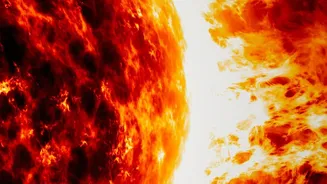
The Sun is not just a benign source of light and warmth; it has a dynamic and sometimes violent nature. It periodically releases immense bursts of energy and charged particles in events known as solar flares and coronal mass ejections (CMEs). When a powerful
CME is directed at Earth, it can interact with our planet's magnetic field, triggering a geomagnetic storm. These storms aren't a new phenomenon—the most famous, the Carrington Event of 1859, caused telegraph systems to spark and fail. However, in today's hyper-connected world, the potential consequences are far more severe, threatening to cripple the technological backbone of modern society.
A Modern World at Risk
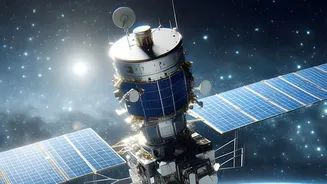
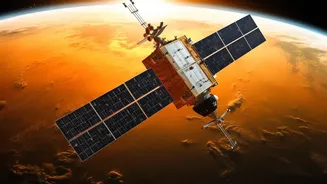
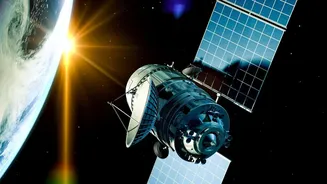
The infrastructure of the 21st century is uniquely vulnerable to space weather. Satellites, which are essential for everything from GPS navigation and financial transactions to global communications, orbit outside Earth's protective atmosphere. A blast of solar radiation can damage their sensitive electronics, degrade solar panels, and even alter their orbits due to increased atmospheric drag. On the ground, the threat is just as serious. Geomagnetic storms can induce powerful, uncontrolled currents in national power grids. These geomagnetically induced currents (GICs) can flow through high-voltage transmission lines, overloading transformers and causing them to overheat or fail, potentially leading to widespread and long-lasting blackouts. One major study estimated the daily economic damage from a Carrington-scale event in the U.S. could be as high as $2 billion.
The Power of AI in Forecasting
For decades, predicting the arrival and intensity of a solar storm has been a major challenge. Early warnings often provided only minutes of notice. But that is changing rapidly with the application of artificial intelligence. Scientists are now developing AI models that can analyze vast amounts of data from solar observatories to detect the faint precursors of solar eruptions. One such model, called DAGGER, combines AI with real-time data from NASA satellites to predict where a solar storm will strike anywhere on Earth with up to 30 minutes of advance warning. Another AI system can spot the subtle signs of emerging active regions on the sun's surface hours before they become visible, offering a much longer lead time. These AI tools are revolutionising the field by identifying complex patterns that were previously impossible for humans to spot, making forecasts faster and more accurate.
Shielding Satellites and Grids
This newfound predictive power is a game-changer for critical infrastructure operators. With an accurate forecast, satellite operators can take preemptive action to protect their assets. They can put spacecraft into a protective 'safe mode', shut down non-essential systems, or even adjust orbits to minimise exposure to the most intense radiation. Similarly, energy grid managers can use the warnings to prepare for impact. They might reroute power across the network to avoid overloading vulnerable transformers, reduce the overall load on the system, or ensure repair crews and replacement parts are ready for rapid deployment. This ability to prepare transforms the situation from a sudden crisis into a manageable event, significantly reducing the risk of catastrophic failure and long-term disruption.
India's Eye on the Sun
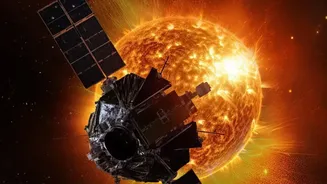
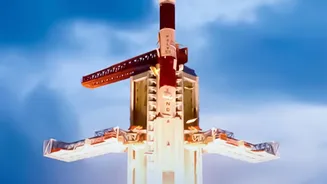
As a nation rapidly expanding its digital infrastructure and space-based assets, India has a significant stake in space weather preparedness. The Indian Space Research Organisation (ISRO) has positioned itself as a key player with its Aditya-L1 solar observatory. Launched in 2023, Aditya-L1 is stationed at Lagrange Point 1, a stable point about 1.5 million km from Earth, giving it an uninterrupted view of the Sun. The mission's instruments are already providing vital data, recently detecting small brightening events that precede major solar flares. This research enhances flare prediction models and provides crucial insights for protecting India's growing satellite constellations and national power grid. Aditya-L1's data contributes to a global effort, strengthening the defensive shield against solar tantrums for everyone.