






A Conservation Comeback Story
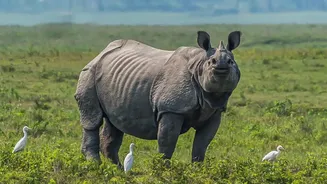
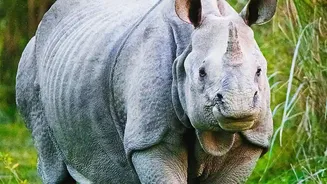
The greater one-horned rhinoceros is a marvel of resilience. Once pushed to the brink of extinction with only around 200 individuals remaining at the start of the 20th century, their population has rebounded dramatically. Thanks to decades of dedicated
conservation efforts in India and Nepal, the population has grown to over 4,000. Kaziranga National Park is the species' single most important stronghold, home to roughly 70% of the entire global population. This success is attributed to strict protection, habitat management, and community involvement, making every sighting not just a thrill, but a testament to successful wildlife preservation.
The Armoured Giant: Rhino Facts
The Indian rhino is the largest of the rhino species, with males weighing between 2,100 and 2,200 kg. Its most famous feature is its single horn, which is made of keratin—the same protein found in human fingernails—and can grow up to 60 cm. Contrary to popular belief, the horn is not used for fighting but for foraging for food and digging for roots. Their thick, folded skin gives them an 'armour-plated' appearance, but they are surprisingly agile, capable of running at speeds of up to 55 km/hr in short bursts. They are also excellent swimmers and spend a large part of their day wallowing in mud and water to stay cool and protect their skin. Primarily grazers, these megaherbivores consume up to 40 kg of vegetation daily, playing a vital role in shaping their grassland ecosystem.
Choosing Your Safari: Jeep vs. Elephant
Kaziranga offers two distinct safari experiences: the wide-ranging jeep safari and the intimate elephant-back safari. The jeep safari is the most common option, allowing you to cover more ground across the park's different zones. These safaris run in both morning and afternoon shifts. For an unparalleled, up-close encounter, the elephant safari is a must-do. Conducted only in the early morning, these rides take you off the main tracks and deep into the tall elephant grass where rhinos often rest, offering a unique and quieter perspective. Elephant safaris are available in the Central (Kohora) and Western (Bagori) zones. Many seasoned visitors recommend doing both: an elephant safari at dawn for the close-up experience, followed by a jeep safari to explore the park's broader landscape.
Navigating the Safari Zones
The park is divided into four main tourist zones, each with a unique character. The Central Range (Kohora) is the most popular, offering a balanced experience of grasslands and wetlands, making it ideal for first-time visitors. The Western Range (Bagori) is widely considered the best zone for rhino sightings due to its vast open grasslands and numerous water bodies that attract wildlife. The Eastern Range (Agaratoli) is a paradise for birdwatchers, with its large wetlands attracting numerous migratory species, though it also offers good sightings of elephants and other animals. The Burapahar Range has a hillier, more forested terrain, offering a quieter, more offbeat adventure and a chance to spot hoolock gibbons.
When to Plan Your Visit
The best time to visit Kaziranga National Park is from November to April, as the park remains closed from May to October due to monsoon floods. For the most comfortable weather and prime wildlife viewing, the winter months from December to February are ideal. During this period, the grass is shorter, making it easier to spot animals, and the pleasant climate is perfect for safaris. March and April can get warmer, but sightings remain excellent as animals tend to congregate around the shrinking water bodies. To make the most of your trip, it's highly recommended to book your safaris and accommodation well in advance, especially during the peak season from December to January.