



Plan Your Design and Size
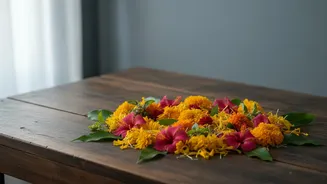
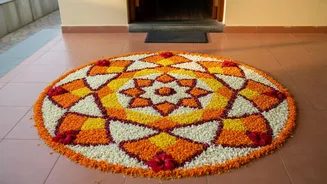
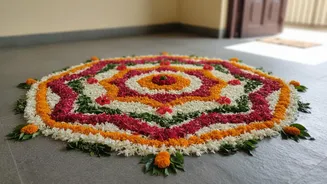
Before you even pick a petal, take a moment to plan. A beautiful pookkalam doesn’t need to be enormous to make an impact. Consider the space you have and opt for a smaller, more intricate design, which can be just as stunning while using fewer flowers.
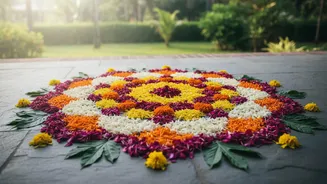
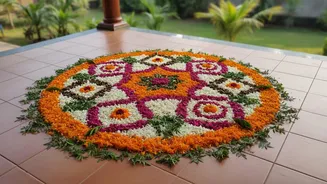
Sketch your design on paper first, starting with a simple circular pattern and adding layers of complexity if you wish. Traditionally, the pookkalam grows each day for the ten days of Onam. By planning your design, you can estimate the quantity of flowers needed and avoid over-purchasing.
Source Locally and Seasonally
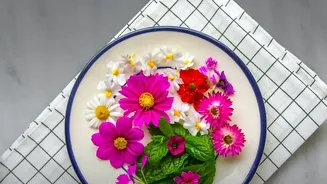
The most significant step toward a sustainable pookkalam is choosing the right flowers. Opt for locally and seasonally available flowers like marigolds (jamanthi), jasmine (mulla), globe amaranth (vadaamalli), and hibiscus (chembarathi). These flowers have a smaller carbon footprint compared to those transported from far away. Foraging for flowers and leaves from your own garden or local community adds a personal touch and connects you directly with the nature that Onam celebrates. This approach not only supports local economies but also ensures your pookkalam is fresh and fragrant.
Embrace a Natural Base and Colours
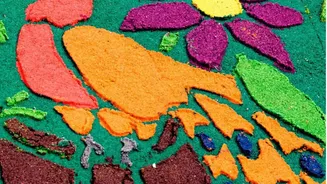
Modern convenience often suggests using plastic sheets as a base for the pookkalam, but this creates unnecessary waste. Instead, embrace traditional and eco-friendly alternatives. A clean, swept floor is the most classic base. You can draw your outline with chalk or rice flour. In some traditions, a base of cleaned cow dung was used for its antibacterial properties. For colours and fillers, look beyond just petals. Use colourful leaves, sawdust, and even coloured rice or pulses to create texture and variety without resorting to artificial dyes or glitter, which can contaminate the environment.
Avoid All Plastics and Synthetics
To truly create a pookkalam with less waste, a strict no-plastic rule is essential. This includes avoiding plastic glitter, synthetic colour powders, and thermocol shapes that are often mixed in with flowers. These materials are not biodegradable and complicate the disposal process. Instead of plastic tea lights, use traditional earthen or brass diyas to illuminate your design in the evening. The goal is to ensure that every element of your pookkalam can return to the earth without causing harm, aligning with Kerala's Green Protocol initiative which encourages reducing disposable materials during festivals.
Give Your Pookkalam a Green Farewell
The lifecycle of your pookkalam doesn't end when the celebrations are over. Instead of sweeping the flowers into the general waste, plan for their green disposal. All the natural flowers and leaves are perfectly suited for composting. If you have a compost bin, simply add the floral waste to it; it will decompose and enrich the soil. Alternatively, you can bury the petals in your garden, allowing them to decompose naturally. Some people also dry the petals to create fragrant potpourri for later use, extending the life of the beautiful flowers.