



The Silent Health Risk of Excess Salt
Most people don't realise how much salt they consume, as it's often hidden in processed foods. The World Health Organization (WHO) recommends that adults consume less than 5 grams of salt per day, which is about one teaspoon and equivalent to 2,000 mg
of sodium. However, studies show that the average salt intake in India is much higher, sometimes double the recommended limit. Over time, a high-sodium diet can lead to serious health issues, including high blood pressure, an increased risk of heart disease and stroke, kidney strain, and even osteoporosis. Because sodium is often masked by other flavours, it’s a 'hidden threat' that accumulates without you tasting it.
Become a Pro at Reading Nutrition Labels
The most powerful tool you have is the nutrition label on the back of the pack. Ignore the flashy claims on the front and turn the package over. Look for the 'Nutrition Facts' table and find the line for 'Sodium'. This will be listed in milligrams (mg). Pay close attention to the serving size mentioned at the top. A packet of noodles or a bottle of sauce contains multiple servings. If you consume the whole pack, you need to multiply the sodium per serving by the number of servings to know your total intake. As a general guide, a product with more than 1.5g of salt (or 600mg of sodium) per 100g is considered high in salt.
Learn Salt's Many Disguises
Salt doesn't always appear as 'salt' on the ingredients list. Manufacturers use various sodium-based compounds for flavour and preservation. When you scan the ingredients, be on the lookout for these common aliases for salt: Monosodium Glutamate (MSG), Sodium Benzoate, Sodium Nitrate, Sodium Citrate, and Disodium Phosphate. The ingredients are listed in order of quantity, from highest to lowest. If any of these sodium compounds appear near the top of the list, the product is likely high in sodium.
The Instant Noodle and Sauce Trap
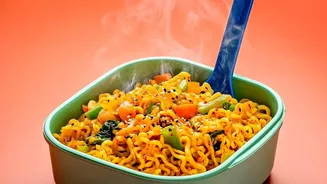
Instant noodles are a major source of hidden salt. A single packet can contain anywhere from 1,200 to 2,000 mg of sodium, which is 60% to 100% of your entire recommended daily intake. The main culprit is the seasoning sachet. To drastically cut down on sodium, consider using only half the sachet, or even less. Similarly, packaged sauces like soy sauce, ketchup, and chilli sauces are packed with salt for flavour and preservation. A restaurant dish like gobi manchurian, which uses these sauces heavily, can contain a shocking amount of sodium. When buying sauces, compare brands and look for 'low sodium' versions.
Simple Swaps for a Lower Sodium Diet
The easiest way to control your salt intake is to cook at home more often. This allows you to manage how much salt goes into your food. Instead of relying on pre-made seasoning mixes, flavour your meals with natural herbs and spices like garlic, ginger, turmeric, pepper, and fresh chillies. When you do buy packaged goods, make it a habit to compare the sodium content between different brands and choose the one with the lower amount. Rinsing canned vegetables or beans before use can also wash away excess salt. Even small, consistent changes in your shopping and cooking habits can lead to significant long-term benefits for your cardiovascular health.