







The Enemy Is Already Inside
During pollution season, the baseline for indoor air quality is already dangerously high. Outdoor pollutants, primarily fine particulate matter (PM2.5) from stubble burning, industrial emissions, and vehicle exhaust, don't just stay outside. They seep
into homes through every crack and crevice—around window frames, under doors, and through ventilation shafts. Even in a seemingly sealed apartment, a significant portion of outdoor pollution makes its way indoors, with indoor PM2.5 levels often tracking at 60-100% of outdoor concentrations. This infiltration means that even before you light a single candle, the air in your living room is already compromised, setting the stage for a much bigger problem.
The Indoor Pollution Bombs
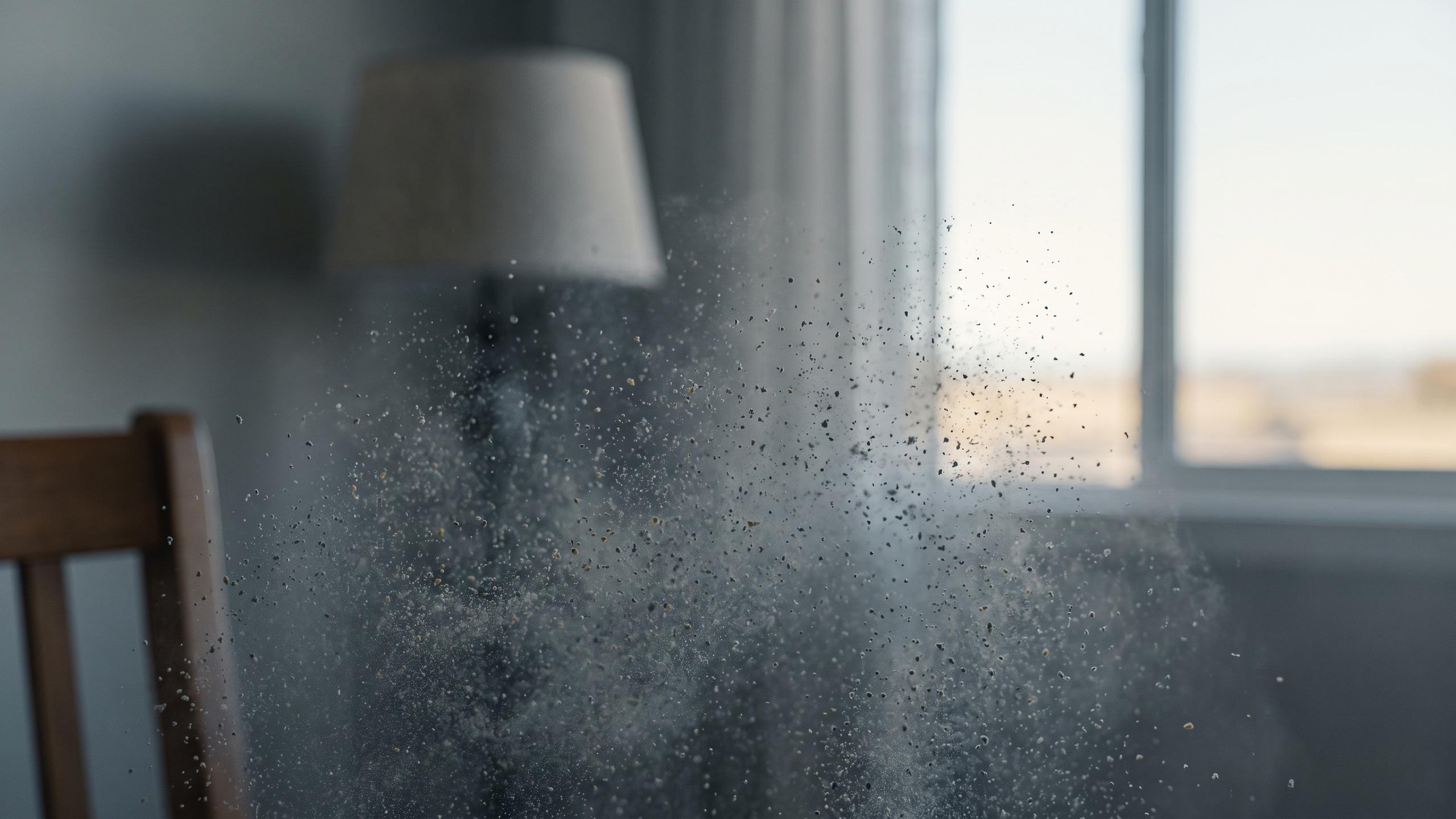
While outdoor air sets a high baseline, the truly rapid spikes in indoor PM2.5 are caused by activities happening within your four walls. These are 'indoor pollution bombs'—brief but intense events that can send particle counts soaring. The biggest culprit in most Indian homes is cooking. The simple act of preparing a tadka, frying, or even toasting bread on a gas stove releases a huge volume of PM2.5 into the air. Other major sources include burning incense (agarbatti) and diyas, which are designed to produce smoke and can generate PM2.5 concentrations several times higher than cigarettes. Even seemingly harmless activities like sweeping or dusting can resuspend settled particles back into the air you breathe.
The Trapping Effect of a Sealed Home
Here's the paradox: the very thing you do to protect yourself from outdoor pollution—closing all windows and doors—can make your indoor air quality far worse. When you seal your home, you're not just keeping outdoor pollutants out; you're also trapping all the pollutants you generate inside. Without ventilation, the PM2.5 from cooking, incense, and dust has nowhere to go. Its concentration builds up rapidly, creating toxic hotspots in your kitchen or living room. In a poorly ventilated home, PM2.5 levels during cooking can easily exceed the 'severe' category, far surpassing the already hazardous air outside. This lack of air exchange is why a room can feel stuffy and why health issues can arise even when you've spent the entire day indoors.
A Perfect Storm of Particles
The rapid rise in indoor PM2.5 is a compounding effect. You start with a high baseline of polluted air that has seeped in from the outside. Then, you add a massive, concentrated burst of new particles from an indoor source like cooking. Finally, you trap all of it in a poorly ventilated space. The result is a perfect storm that can lead to indoor PM2.5 levels becoming multiple times higher than outdoor levels for short, dangerous periods. Studies have shown that burning incense in a room can result in PM2.5 levels nearly three times higher than the air outside. This combination is what makes the pollution season so perilous, as the perceived safety of being indoors is often a dangerous illusion.
What You Can't See Can Hurt You
PM2.5 particles are smaller than 2.5 microns, which means they are invisible to the naked eye and can bypass your body's natural defenses. They are small enough to penetrate deep into your lungs and even enter your bloodstream. This is not just about a temporary cough or throat irritation. Chronic exposure to high levels of PM2.5 is linked to serious health issues, including asthma, bronchitis, chronic obstructive pulmonary disease (COPD), heart disease, and lung cancer. Children and the elderly are particularly vulnerable. Understanding that these dangerous particles are not just outside but can spike to extreme levels inside your home is the first step toward protecting your family's health.