




Mint (Pudina): The Gift That Keeps on Giving
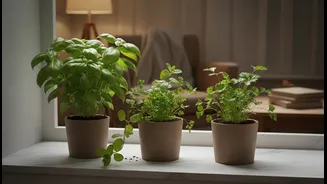
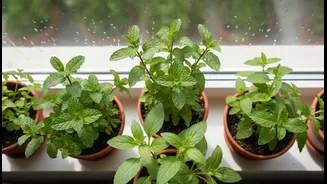
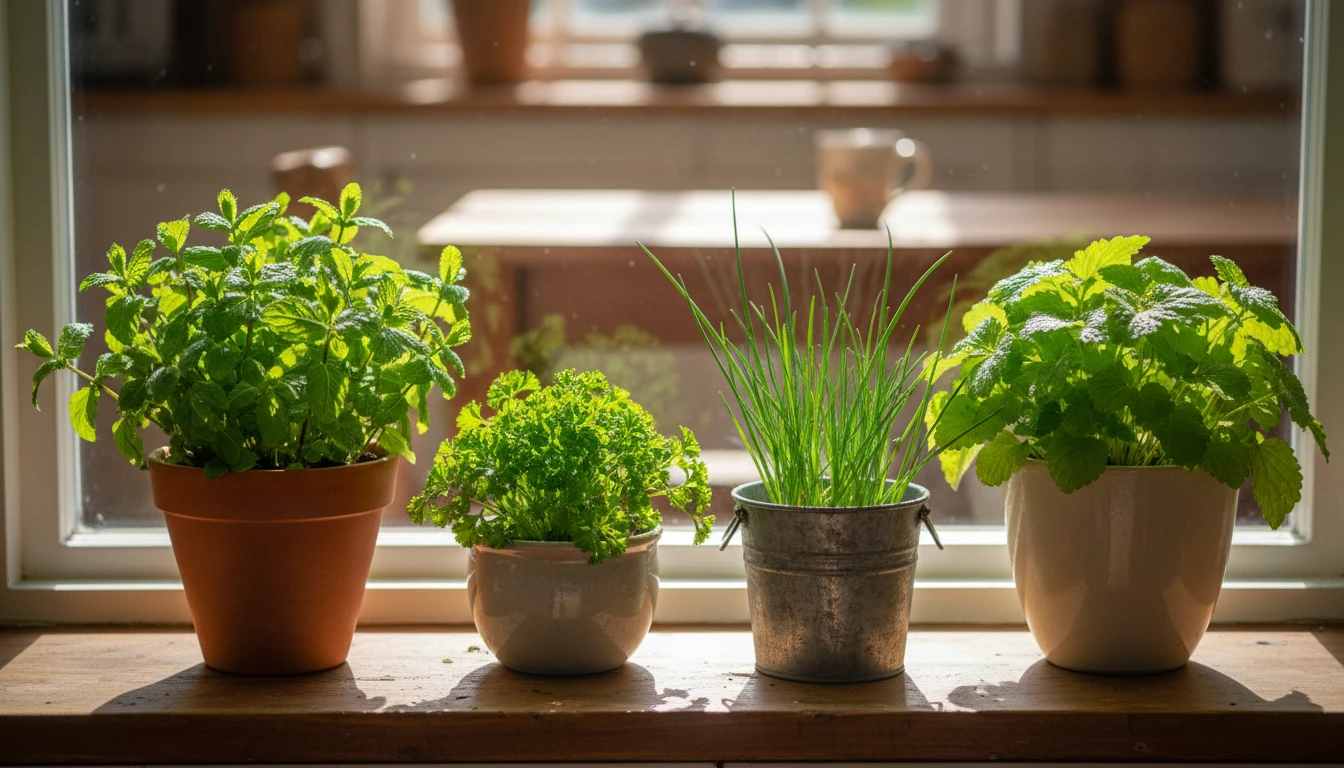
Mint is famously robust and one of the most forgiving herbs for a low-light environment. Its aggressive growth means you can harvest it often. The key to a bushy, healthy plant is to never just pluck individual leaves, which can weaken the stem. Instead,
use clean scissors to snip off whole stems. Trace a stem down from the top and cut just above a pair of leaves. You'll often see tiny new shoots forming at this junction; cutting here encourages those shoots to grow, effectively doubling the new growth from that spot. Aim to harvest regularly, as this promotes a fuller plant rather than a leggy one. Don’t take more than two-thirds of the plant at once to avoid shocking it. With this method, your mint pot will remain a dense, fragrant source for teas, chutneys, and garnishes.
Parsley: The Cut-and-Come-Again Classic
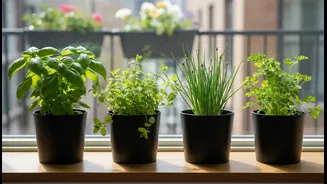
Whether you prefer flat-leaf or curly, parsley is another kitchen essential that performs well indoors. The secret to a long-lasting parsley plant is a harvesting technique often called "cut-and-come-again." Instead of cutting from the top or the dense center, always harvest the outermost stalks first. Follow the larger, more mature stems down to the base of the plant and snip them off close to the soil. This method allows the younger leaves in the center to continue developing and ensures the plant's energy is directed toward new growth. By working your way from the outside in, you can harvest from a single plant weekly. Avoid taking more than one-third of the plant at any given time to keep it healthy and productive.
Chives: The Subtle Allium Scissor Cut
Chives, with their delicate oniony flavour, are perfectly suited for pot culture in a less-than-sunny spot. Unlike herbs with branching stems, chives grow as individual green spears from a bulb. The best way to harvest is to give them a haircut. Using sharp scissors, snip the spears about one to two inches above the soil level. Don't just trim the tips, as this can leave you with tough, browning ends. Cutting near the base encourages the plant to send up fresh, tender shoots from the center. It's a good practice to harvest from the outer edges of the clump or to cut a small section of the plant at a time, rather than trimming the entire pot at once. This ensures you always have some chives ready for use while the harvested section regrows, which it does quite quickly.
Lemon Balm: The Zesty Stress-Free Herb
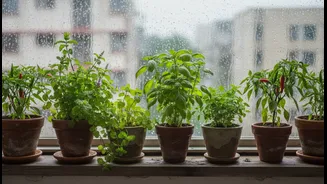
A member of the mint family, lemon balm shares its easy-going nature and tolerance for partial shade. Its fragrant, citrusy leaves are a delightful addition to teas and desserts. You can harvest lemon balm leaves at almost any time, but for the best flavour, it's ideal to do so just before the plant begins to flower. Similar to mint, the best method is to cut entire stems rather than picking off single leaves. Cut the stem just above a pair of leaves, which stimulates the plant to branch out and become bushier. You can begin harvesting small amounts once the plant is a few inches tall. As it grows, you can take larger cuttings, but a good rule is to never remove more than a third of the plant's total volume at once. Regular trimming not only provides you with fresh leaves but also keeps the plant compact and productive.