




A Visitor From The Great Unknown
Most comets we see are our neighbours. They are part of our solar system, orbiting the Sun from the distant, icy regions of the Kuiper Belt or Oort Cloud. But 3I/ATLAS is different. It is an interstellar object, only the third one ever detected passing
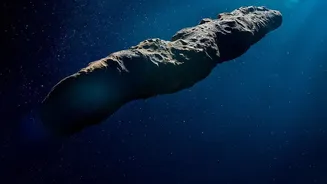
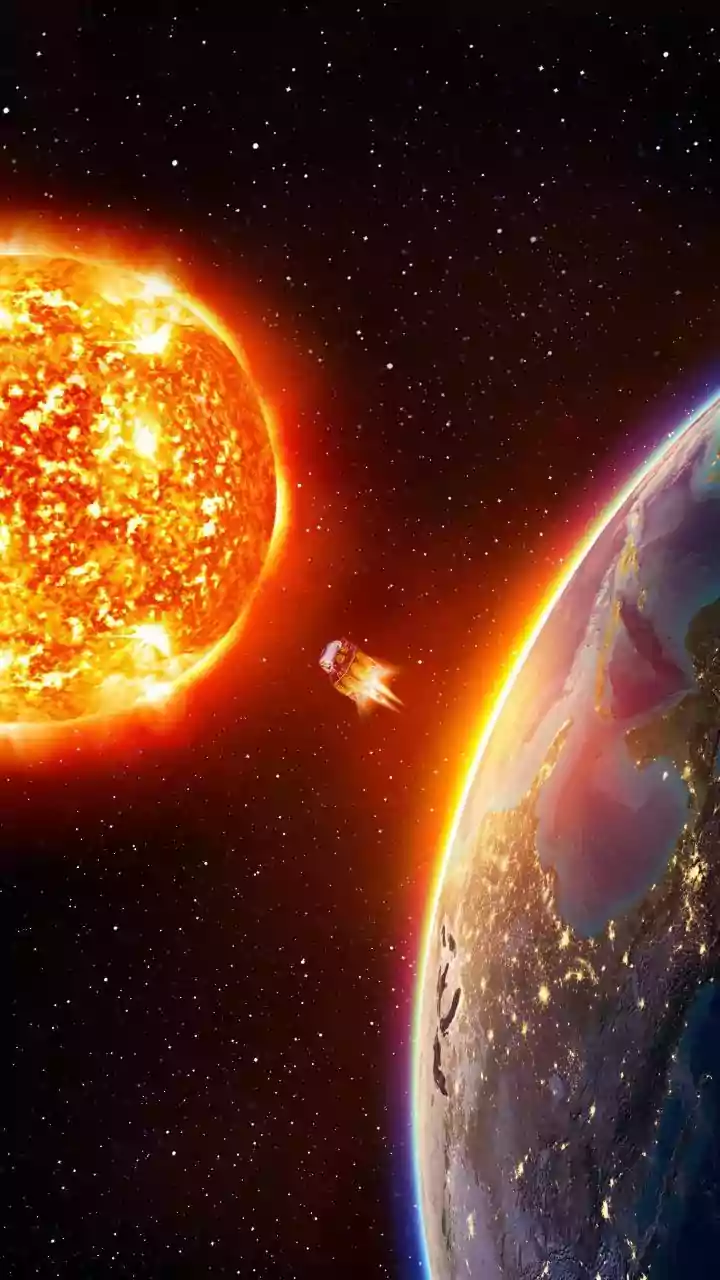
through our cosmic neighbourhood, after the mysterious 'Oumuamua in 2017 and the comet 2I/Borisov in 2019. The 'I' in its name stands for interstellar, signifying that its home is not our solar system but another star system far away. Astronomers know this because of its trajectory and speed. It entered our system at a velocity too high to be captured by our Sun's gravity, following a path known as a hyperbolic orbit. This means it was just passing through, a tourist on a galactic journey that offered scientists a precious, fleeting opportunity to study a piece of another world.
More 'Normal' Than Its Predecessors
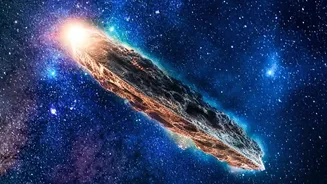
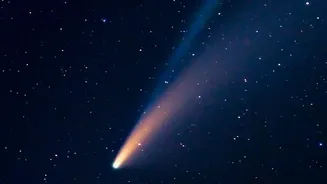
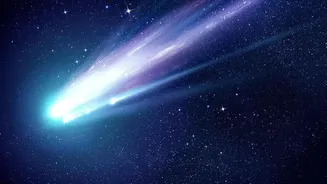
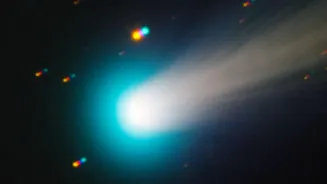
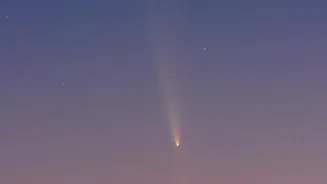
The first two interstellar visitors were peculiar in their own ways. 'Oumuamua was an enigma; it was rocky, shaped like a cigar or a pancake, and showed no visible tail or coma (the gas and dust cloud) typical of a comet. This led to wild speculation about its origins. The second visitor, 2I/Borisov, was clearly a comet, but it was found to have an unusually high concentration of carbon monoxide, suggesting it formed in a very cold place, perhaps around a small red dwarf star. What makes 3I/ATLAS so interesting is that, in many ways, it appears to be a more 'classic' comet. Discovered in July 2025 by the ATLAS survey telescope in Chile, it displayed a clear coma and tail as it approached the sun. Its composition, at first glance, seemed similar to comets from our own solar system, providing a fascinating point of comparison. This normality is itself a profound discovery, suggesting that comet-like objects may form in similar ways across different star systems.
A Messenger Carrying Alien Secrets
Studying 3I/ATLAS is like receiving a message in a bottle from another star. The light reflected from its surface and the gases boiling off its nucleus contain chemical fingerprints of its home system. By using powerful instruments like the James Webb Space Telescope, astronomers can analyze these fingerprints to understand what other solar systems are made of. Observations revealed that 3I/ATLAS was unusually rich in carbon dioxide, while also containing familiar substances like water ice and cyanide gas. Every element and compound tells a story about the specific conditions of the protoplanetary disk—the spinning cloud of gas and dust—where it was born billions of years ago. These objects are essentially planetesimals, the primitive building blocks of planets. Studying them helps us understand the diversity of planetary formation across the galaxy and provides clues about how common, or unique, our own solar system might be.
Why The Journey Matters As Much As The Destination
Part of what makes an interstellar object unique is not just where it came from, but the journey it took. A comet from our own Oort cloud spends billions of years in the deep freeze, but it is still gravitationally tied to our Sun. An interstellar wanderer like 3I/ATLAS, however, has spent millions or even billions of years in the void between stars. During this immense journey, its surface is exposed to different kinds of radiation, like cosmic rays, which can alter its chemistry and colour. It's also moving incredibly fast. 3I/ATLAS was clocked at speeds over 200,000 kilometres per hour as it rounded the sun. This high speed means its interaction with our star is brief and intense, a different kind of 'baking' experience than what our own long-period comets undergo. Understanding these differences helps scientists piece together the object's life story and distinguish its original characteristics from the changes it underwent while travelling through the galaxy.