



Understanding Living Architecture
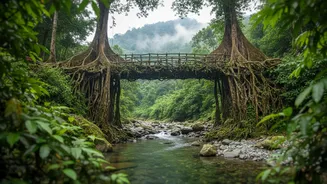
Living architecture involves shaping living plant systems to create functional structures. The most famous examples in India are the 'Jingkieng Jri', or living root bridges, crafted by the Khasi and Jaintia peoples of Meghalaya. For centuries, they have
guided the aerial roots of the Ficus elastica (rubber fig) tree across rivers and gorges, weaving them together to form sturdy, living bridges. This process is a testament to extraordinary indigenous knowledge, taking 15 to 25 years to establish a bridge that can then last for centuries, growing stronger over time. These structures are not just crossings; they are complete ecosystems, supporting other plants and insects and representing a deep, sustainable relationship between humans and nature.
The Threats: A Delicate Balance
Once built for necessity, these bridges now face modern pressures. Unregulated tourism is a primary concern. While visitor interest brings economic benefits, excessive footfall can compact the soil around the root systems, while careless behaviour can cause physical damage to the delicate structures. The appeal of modern concrete and steel bridges also poses a threat, leading to neglect of the traditional, slower method of bridge-growing. In some areas, the knowledge of how to create and maintain these bridges is fading with younger generations. Without active community involvement and a clear incentive for preservation, these bio-engineering wonders risk becoming relics rather than a living, evolving heritage.
The Power of Responsible Eco-Trekking
This is where responsible tourism becomes a powerful conservation tool. Unlike mass tourism, high-end eco-trekking focuses on low-impact, high-value experiences. It prioritizes small groups, expert guidance, and direct economic contributions to the communities that are the traditional custodians of the bridges. When managed correctly, tourism provides a sustainable income that incentivizes conservation. It creates local jobs for guides, homestay owners, and artisans, reducing the community's dependence on extractive activities and empowering them to protect their natural and cultural heritage. The Meghalaya government has even made hiring registered local guides mandatory for many treks, ensuring visitor safety and community benefit.
How to Choose a Truly Responsible Trek
Supporting protection schemes goes beyond simply booking a trip. It requires conscious choices. When planning your visit, seek out tour operators that are transparent about their conservation ethics and community partnerships. A responsible company will hire guides from local villages, utilize community-run homestays, and contribute a portion of its revenue to local development or conservation funds. Ask questions: How large are their groups? How do they manage waste? How do they ensure their presence benefits, rather than disrupts, the local ecosystem and culture? A 'high-end' experience should not just mean luxury accommodation, but a deeper, more meaningful engagement that is respectful of the place and its people.
Your Role as a Mindful Traveller
Once on the trail, your individual actions matter immensely. Always stay on marked paths to avoid damaging the fragile ecosystem and the bridge's root systems. Never leave any waste behind; practice a strict 'leave no trace' policy by carrying out everything you bring in. Be respectful of the local Khasi culture, which holds many natural sites like sacred groves as spiritually important. Always ask for permission before taking photographs of people or their homes. Buying handicrafts directly from artisans and eating at local establishments ensures your money directly supports the community. Your visit is a privilege, and approaching it with humility and respect is the most profound support you can offer.