







The Core Stability Question
For most beginners, kayaking offers a more stable and secure first experience on the water. The reason is simple physics: your center of gravity. When you're sitting down in a kayak, your body is low to the water, creating a wide and stable base that
is difficult to tip accidentally. In contrast, stand-up paddleboarding requires you to balance on your feet, placing your center of gravity much higher. This makes you more susceptible to wobbles caused by wind, small waves, or shifting your own weight. While modern paddleboards are designed for stability, kayaks generally provide more immediate confidence for those new to watersports.
Kayaking: A Lower Center of Gravity
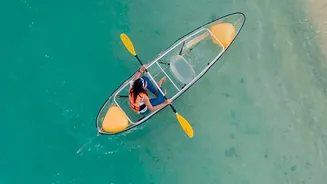
The design of a kayak is inherently forgiving for beginners. Sitting inside a cockpit or on top of a wide, recreational sit-on-top model keeps you close to the waterline. This position means you don't have to actively engage your core muscles just to stay upright on calm water. The primary balance challenge in a kayak comes from leaning, but most recreational kayaks have high 'primary stability', meaning they feel very steady when flat. Your main task is learning the paddling stroke, which you can do without the added mental load of constantly adjusting your balance. This makes kayaking a more intuitive entry point if your main goal is to start exploring without a steep learning curve.
Paddleboarding: Your Body as the Stabilizer
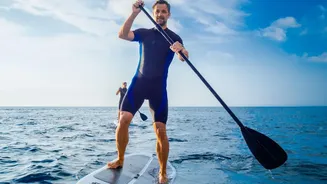
Stand-up paddleboarding presents a different and more dynamic balance challenge. It requires constant engagement from your legs and core to act as stabilizers. This is why SUP is often praised as a superior full-body workout. While it may be more challenging at first, many beginners are able to stand and paddle within their first hour. The key is learning the correct stance—feet shoulder-width apart near the board's center handle—and using your knees as shock absorbers. Don't be deterred by the learning curve; falling off a paddleboard is often part of the fun, and it's much easier to climb back onto a SUP than into a kayak.
The Learning Curve Compared
When it comes to learning, kayaking generally has a faster path to basic competence. Most people can get into a kayak and paddle around comfortably almost immediately. The double-bladed paddle also makes propulsion more straightforward. Stand-up paddleboarding has a steeper initial learning curve focused almost entirely on finding your balance. Once you master standing, however, the basic paddling technique is relatively simple. Many beginners start by paddling on their knees, which offers a stable, kayak-like experience, before progressing to standing. This allows you to build confidence at your own pace.
Factors That Affect Your Balance
Not all kayaks or paddleboards are created equal. For both sports, wider crafts are more stable and better for beginners. A recreational kayak with a flat bottom will feel much steadier than a long, narrow touring kayak. Similarly, a wide, all-around paddleboard (32 inches or wider) offers a much more forgiving platform than a sleek, narrow racing board. Water conditions also play a huge role. Starting on a calm, flat lake or canal is ideal. Tackling wind and choppy water is significantly harder on a paddleboard than in a kayak, as the kayak's lower profile is more aerodynamic.
Which Is Right for You?
Ultimately, the best choice depends on your personal goals and comfort level. If you want a relaxing day on the water with minimal fuss and a low chance of getting wet, a recreational kayak is likely your best bet. It’s ideal for leisurely exploration and building confidence. If you're looking for a great core workout, enjoy a bit of a challenge, and don't mind a swim, stand-up paddleboarding is a fantastic and rewarding option. It offers more versatility in movement—you can stand, kneel, or sit—and provides a better vantage point for seeing what's around you.