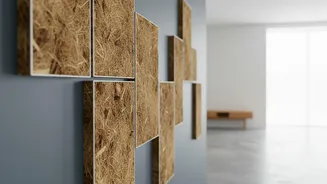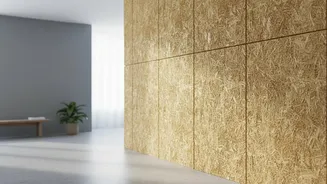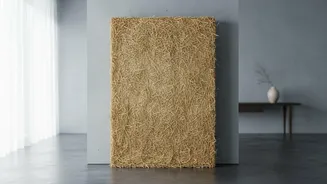







What Exactly Is Compressed Straw Insulation?
At its core, compressed straw insulation is a modern building material made from an age-old resource: the leftover stalks from grain harvests like wheat or rice. Instead of being burned or left to decompose, this agricultural byproduct is collected, cleaned,
and compressed under high heat and pressure. This process fuses the straw together using its own natural resins, creating dense, solid panels. These panels, sometimes called agri-fibre boards, are then typically faced with paper or cardboard liners. The result is a rigid, structural board that is surprisingly robust and ready for use in construction, not as loose-fill, but as a prefabricated panel that can be used for walls and ceilings.
The Eco-Friendly Advantage
The environmental benefits are a major part of its appeal. Firstly, it's made from a rapidly renewable resource that is often treated as waste. This upcycling aligns with the principles of a circular economy. Secondly, the production process has a very low carbon footprint. The embodied energy of straw is significantly lower than conventional materials like brick or mineral wool, meaning far less energy is used to create it. Furthermore, as a plant-based material, the straw sequesters carbon, effectively locking it into the structure of your home instead of releasing it into the atmosphere. These panels are also biodegradable and recyclable, offering a cradle-to-cradle solution that minimises landfill waste.
How It Quiets Your Studio Apartment
So, how does a panel of straw stop you from hearing your neighbour's television? It comes down to density and structure. The process of compressing the straw creates a very dense core. Sound waves, which are essentially vibrations, struggle to pass through this dense mass. In technical terms, this gives the material a good Sound Transmission Class (STC) rating, which measures how well a barrier blocks sound. Some manufacturers report that their panels can reduce noise levels by an average of 35 decibels (dB), while others have achieved ratings as high as 56 or 57 dB. This is more than enough to turn a disruptive noise into a faint murmur. The irregular, porous nature of the straw fibres also helps to absorb sound within the room, reducing echo and reverberation.
Safety, Practicality, and Other Concerns
The idea of putting straw in your walls might raise some eyebrows, particularly concerning fire and pests. However, modern compressed straw panels are engineered to be safe. Because the straw is so densely packed, there isn't enough oxygen within the panel to support combustion, making it highly fire-resistant. Many panels are also treated with natural, human-safe fire retardants like borate and undergo rigorous testing, with some achieving fire resistance ratings of up to two hours. As for moisture and pests, the panels are manufactured to be dry and are sealed, often within a timber frame and covered with plaster, which protects the core from unwanted elements.
Installation and Cost Considerations
For an apartment studio, compressed straw panels would typically be used to build non-load-bearing partition walls or to add an extra layer of insulation to existing walls. While some handy homeowners might tackle it, professional installation is generally recommended to ensure a proper fit and finish, which is crucial for both acoustic and fire performance. The cost can be competitive with other high-performance, eco-friendly insulation options like mineral wool or cork. While potentially more expensive upfront than basic fibreglass, the long-term benefits of superior soundproofing, thermal insulation, and the environmental advantages provide a compelling value proposition for those looking to create a healthier and more peaceful living space.