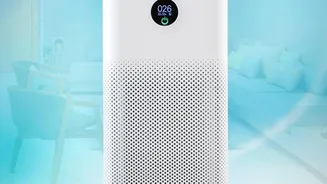








The Pollutants Your Monitor Is Watching
Most consumer air quality monitors track a few key culprits that impact the air you breathe at home. The most common is PM2.5, or fine particulate matter. These are microscopic particles from sources like cooking smoke, dust, and outdoor pollution that are small
enough to enter your lungs and even your bloodstream. Another common measurement is for Volatile Organic Compounds (VOCs). These are gases emitted from everyday items like cleaning products, new furniture, paint, and even scented candles. Finally, many devices measure Carbon Dioxide (CO2). Unlike the others, CO2 isn't a pollutant in the same way; rather, its level is an excellent indicator of how fresh the air in a room is. High CO2 levels, which build up simply from us breathing in a poorly ventilated space, can lead to feelings of stuffiness, fatigue, and headaches.
What the Readings CAN Tell You
A home air quality monitor is an excellent tool for spotting trends and identifying problems in real-time. Think of it as a smoke alarm for invisible threats. Its greatest strength is showing you the immediate impact of your activities. Did your PM2.5 reading spike? You probably need to turn on the exhaust fan while cooking. Are VOC levels suddenly high? It might be from the new rug you unrolled or the cleaning spray you just used. By tracking these patterns, you can learn the unique pollution profile of your home. This data empowers you to take simple, effective actions, like opening a window to lower CO2, running an air purifier during high-pollen days, or choosing low-VOC products to create a healthier living environment.
The Limits: What Your Monitor CANNOT Tell You
While useful, it's crucial to understand the limitations of consumer-grade devices. First, they are not as precise as the expensive, calibrated equipment used by government agencies. Their accuracy can be affected by humidity and temperature, and sensors can drift over time, meaning their readings become less reliable. Secondly, when a monitor detects VOCs, it typically reports the 'total' amount (TVOC) but cannot identify the specific chemicals present. It doesn't distinguish between the relatively harmless scent of a peeled orange and potentially harmful formaldehyde from new particleboard. Finally, most monitors don't detect every type of pollutant. Dangerous gases like carbon monoxide (CO) and radon, or outdoor pollutants like ozone, require specific, dedicated sensors that may not be included in your all-in-one device.
Putting It All Together: From Data to Action
The goal of monitoring your air quality isn't to fixate on achieving a perfect score, but to use the data to make smarter decisions. Don't panic over brief spikes; instead, look for sustained high readings or recurring patterns. If CO2 levels are consistently high in your bedroom overnight, it’s a clear sign you need to improve ventilation, perhaps by leaving the door ajar or opening a window slightly. If PM2.5 levels are frequently elevated, it might be time to invest in an air purifier with a HEPA filter or upgrade your HVAC filters. For high VOCs, try to pinpoint the source and increase airflow. Use your monitor as a guide to prompt action, not anxiety. It helps you ask the right questions about your indoor environment and take control of what you can.