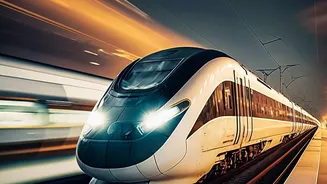






The tragic high-speed train collision in Spain is more than a national tragedy; it is a stark reminder of the complex technological web that underpins modern rail safety. How can this happen on one of the world's most advanced networks?
A Modern System Fails
On October 28,
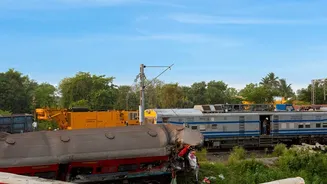
2026, a state-operated Renfe high-speed train collided with a stationary Iryo train near Urda, south of Madrid, resulting in a devastating loss of life. This was Spain's second fatal high-speed rail accident in the same year, shaking public confidence in a network long considered a global benchmark for excellence. Preliminary findings from Spain's transport ministry point to a catastrophic sequence of events: a computer communications failure disabled the primary automatic safety system along a 63-kilometre stretch of track, bringing several trains to a halt. Subsequently, a control centre manually authorised the Renfe train to proceed, an instruction the transport minister described as 'inexplicable' and 'erroneous', as it sent the train moving down a track that was not clear.
The Unseen Guardian of the Rails
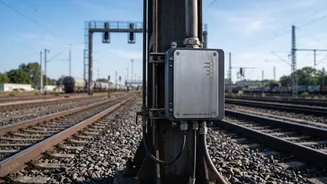
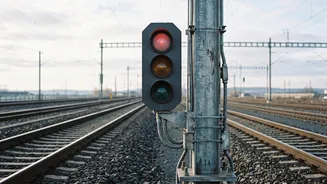
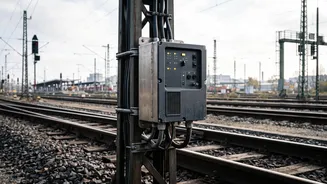
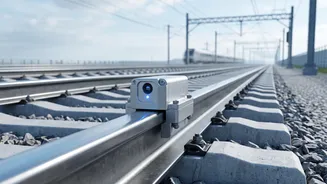
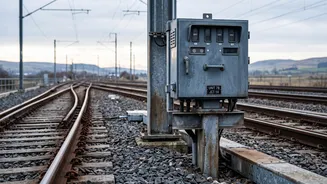
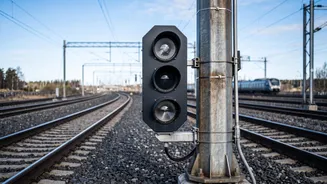
Train signalling is the nervous system of any railway. Far more than just red and green lights, modern automatic train protection (ATP) systems are designed to be a digital guardian angel. These systems constantly monitor a train's location and speed, enforcing speed limits and automatically applying the brakes if a driver fails to respond to a critical warning or exceeds the authorised speed. The goal is to create a fail-safe bubble around each train, making collisions virtually impossible. Spain's high-speed lines use sophisticated systems, including the German-designed LZB and the backup ASFA (Anuncio de Señales y Frenado Automático) system. When the primary LZB system failed, procedures reverted to manual control, where the fatal error appears to have been made.
Europe's Gold Standard and Its Limits
The Madrid-Seville line, where the crash occurred, was in the process of being upgraded to the European Rail Traffic Management System (ERTMS), the EU's unified standard for railway safety. ERTMS is designed to allow seamless and safe train travel across national borders, replacing the patchwork of over 35 different legacy signalling systems across Europe. Its main component, the European Train Control System (ETCS), provides in-cab signalling and continuous speed supervision via trackside transponders or radio links. While ERTMS represents the gold standard, the Spanish incident shows that any system is only as strong as its weakest link. When automated systems fail, the responsibility falls back on human controllers and drivers, and the potential for error, however small, re-emerges.
The Human and System Interface
Investigators will spend months untangling the precise technical and human factors behind the crash. Was the initial computer failure preventable? Was the 'inexplicable' manual override a result of flawed protocol, pressure, or a simple mistake with tragic consequences? Accidents are rarely the result of a single failure but rather a chain of small, cascading events. Even with a backup system like ASFA, which is designed to stop a train that passes a red signal, it works at fixed points on the track and does not continuously calculate the distance to a train ahead in the same way a fully active system like LZB or ETCS does. The incident highlights the immense pressure and responsibility placed on human operators when technology fails, and the critical need for robust procedures to manage such degraded modes of operation.
Relevance for Indian Railways
The tragedy in Spain offers vital lessons for India as it aggressively expands and modernises its own vast rail network. India is rolling out its indigenous ATP system, Kavach, with the ambitious goal of equipping its entire 68,000 km network. Kavach, which translates to 'Armour', is designed to prevent collisions by automatically applying brakes if a loco pilot disregards a danger signal. Like ERTMS, it is a SIL - 4 certified system, the highest level of safety integrity. The Spanish crash underscores that the deployment of advanced technology is only part of the solution. Equally important are rigorous maintenance schedules, comprehensive training for all personnel on handling system failures, and clear, infallible protocols for manual operations. As India invests heavily in Kavach, ensuring the robustness of both the technology and the human systems that support it will be paramount to preventing a similar tragedy on home soil.