



Why October is Prime Time for Saturn Spotting
October 2026 is a special month for astronomy enthusiasts in India. On October 4, Saturn reaches opposition, a celestial event where Earth passes directly between the Sun and Saturn. This alignment means the planet is at its closest point to Earth for the year,
making it appear bigger and brighter in our sky. Because it's opposite the Sun, Saturn will rise in the east around sunset, remain visible for the entire night, and set in the west around sunrise, offering a generous 12-hour window for observation. While the peak is on October 4, the planet will remain an excellent target for viewing throughout the month.
How to Find Saturn: A Simple Guide
You don't need to be an expert to locate Saturn. It will be visible to the naked eye as a bright, steady, pale-yellow point of light that, unlike stars, does not twinkle. Shortly after sunset, look towards the eastern sky. As the night progresses, Saturn will climb higher, reaching its highest point in the southern sky around midnight. For reference, it will be located in the constellation Cetus (the Whale), just below the prominent Great Square of Pegasus asterism. By dawn, you'll spot it sinking towards the west-southwest horizon.
Naked Eye, Binoculars, or Telescope?
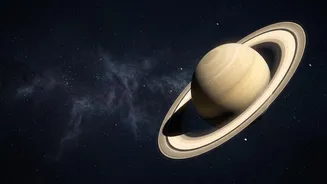
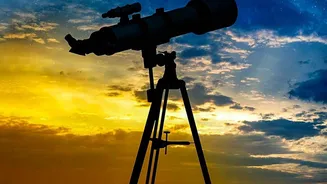
What you can see depends on your equipment. With just your eyes, Saturn will look like a bright, non-twinkling star. Binoculars will certainly help you spot it more easily and might give it a slightly elongated shape, but they aren't powerful enough to resolve its famous rings. To truly witness the magic, a telescope is required. Even a small amateur telescope with modest magnification is powerful enough to reveal the rings of Saturn, a sight that never fails to amaze. With a more powerful telescope, you might even glimpse the Cassini Division—the dark gap separating the main rings—or some of its brightest moons, like Titan.
Tips for the Best Viewing Experience
To make the most of your stargazing session, preparation is key. First, find a location away from bright city lights. Light pollution can wash out the night sky, making it harder to see celestial objects. Give your eyes about 20 minutes to fully adapt to the darkness; avoid looking at your bright phone screen during this time. Using a stargazing app can be incredibly helpful. Apps like Stellarium, SkyView, or Star Walk 2 can use your phone's location to show you exactly where to look for Saturn in real-time. Finally, check the weather forecast for a clear, cloudless night.
Patience and Comfort are Your Friends
Stargazing is an activity of patience. Once you've found your dark spot, get comfortable. A reclining chair or a blanket on the ground will save you from neck strain. Nights can get chilly, even in warmer regions, so it's wise to bring an extra layer of clothing. Using a red-light torch instead of a regular white one will help preserve your night vision while you check your star map or move around your equipment. The universe has been putting on this show for billions of years, so take your time, relax, and enjoy the serene beauty of observing another world from our own.