




The Myth of Maximum Flexibility
The Cat-Cow stretch, or Marjaryasana-Bitilasana, is a staple in yoga classes worldwide, used to warm up the spine and connect breath to movement. The instructions are simple: on all fours, you inhale to drop the belly and arch the back (Cow Pose), then
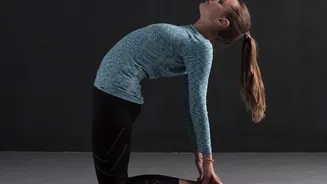
exhale to round the spine towards the ceiling (Cat Pose). For many, the goal becomes achieving the most dramatic 'U' shape in Cow and the highest dome in Cat. This drive for maximum range of motion is often rooted in the idea that more flexibility is always better. However, forcing your body to its absolute limit can be counterproductive and even lead to injury. Long-term practitioners and physical therapists warn that repeatedly pushing into your 'end range' can overstretch ligaments, the connective tissues that protect your joints. Unlike muscles, ligaments don't have a great blood supply and don't bounce back easily once overstretched, which can lead to joint instability over time.
The True Purpose of Cat-Cow
Cat-Cow isn't designed to be a feat of extreme flexibility. Its primary purpose is to promote gentle, controlled spinal mobility. Think of it as waking up each segment of your spine, from your tailbone to your neck, rather than just hinging from the most flexible parts of your back. The exercise is renowned for improving posture, activating core muscles, and increasing circulation to the intervertebral discs that cushion your spine. By moving rhythmically with the breath, it also serves as a mindfulness exercise, calming the nervous system and building a stronger mind-body connection. The focus should be on the quality and awareness of the movement, not the depth of the curve. It's about training your nervous system to control your spine through a healthy range of motion.
The Case for a Smaller, Comfortable Range
When you intentionally reduce the range of your Cat-Cow, you shift the focus from passive stretching to active, controlled movement. Instead of collapsing into your joints, you use your muscles to support and guide the motion. This builds what's known as mobility: flexibility combined with strength. A smaller movement encourages better core engagement; as you round into Cat, you actively draw your navel toward your spine, strengthening the deep abdominal muscles that support your lower back. In the Cow pose, a less extreme arch prevents you from 'crunching' your lower back, a common mistake that can cause pinching or discomfort. This mindful approach teaches your body stability. When you force a stretch, your nervous system can perceive it as a threat and tighten up to protect the joints, which is why aggressive stretching can sometimes lead to more stiffness, not less. A smaller, comfortable range feels safe, allowing your muscles to relax and your spine to move with more freedom and intelligence.
How to Practice Mindful Cat-Cow
To put this into practice, start in your classic tabletop position, with hands under shoulders and knees under hips. Before you move, find a neutral spine. As you inhale into Cow pose, initiate the movement from your tailbone, letting a gentle wave travel up your spine. Allow the belly to soften, but don't let it completely sag; maintain a light core engagement. Lift your chest and your gaze slightly, stopping well before you feel any compression in your neck. As you exhale into Cat pose, again, start by tucking your tailbone. Press the floor away with your hands and allow your spine to round, but focus on creating space between your shoulder blades rather than just jamming your chin to your chest. The key is to make the movement fluid and connected to your breath, exploring a range that feels nourishing, not straining. If you feel any pinching or sharp pain, you've gone too far.