



A Treat Fit for a God
The story of the Mathura peda is inseparable from the city’s identity as the birthplace of Lord Krishna. The Braj region, encompassing Mathura and its surroundings, is the landscape of Krishna's childhood, and tales of his love for milk, butter, and other
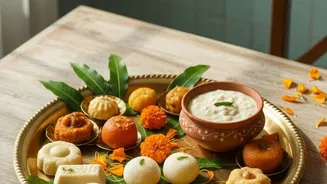
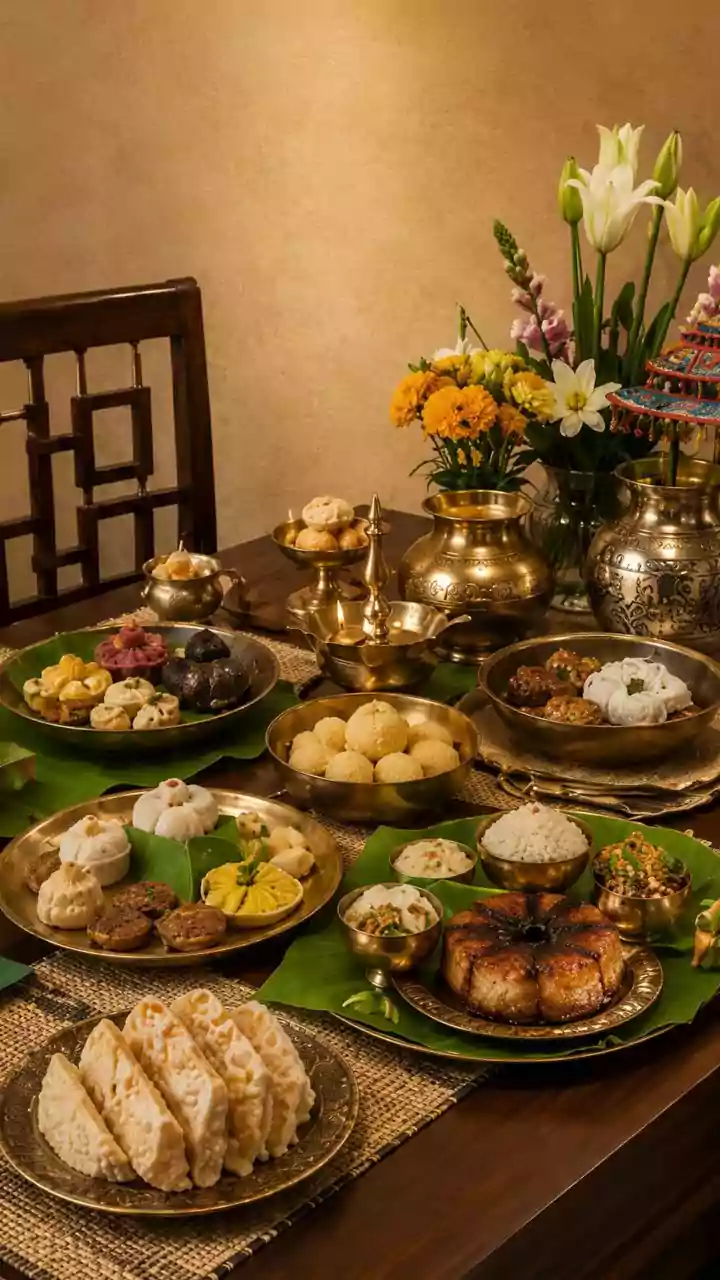
dairy products are central to local folklore. This deep-rooted dairy tradition created the perfect environment for milk-based sweets to flourish. The peda became a favourite offering, or 'prasad', for Krishna, especially during the festival of Janmashtami which celebrates his birth. This divine association elevated the peda from a simple sweet to a sacred offering, a practice that continues today in temples across the city and beyond.
The Art of the Peda
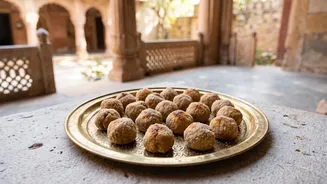
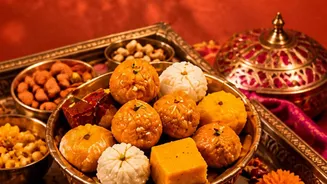
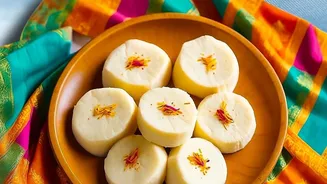
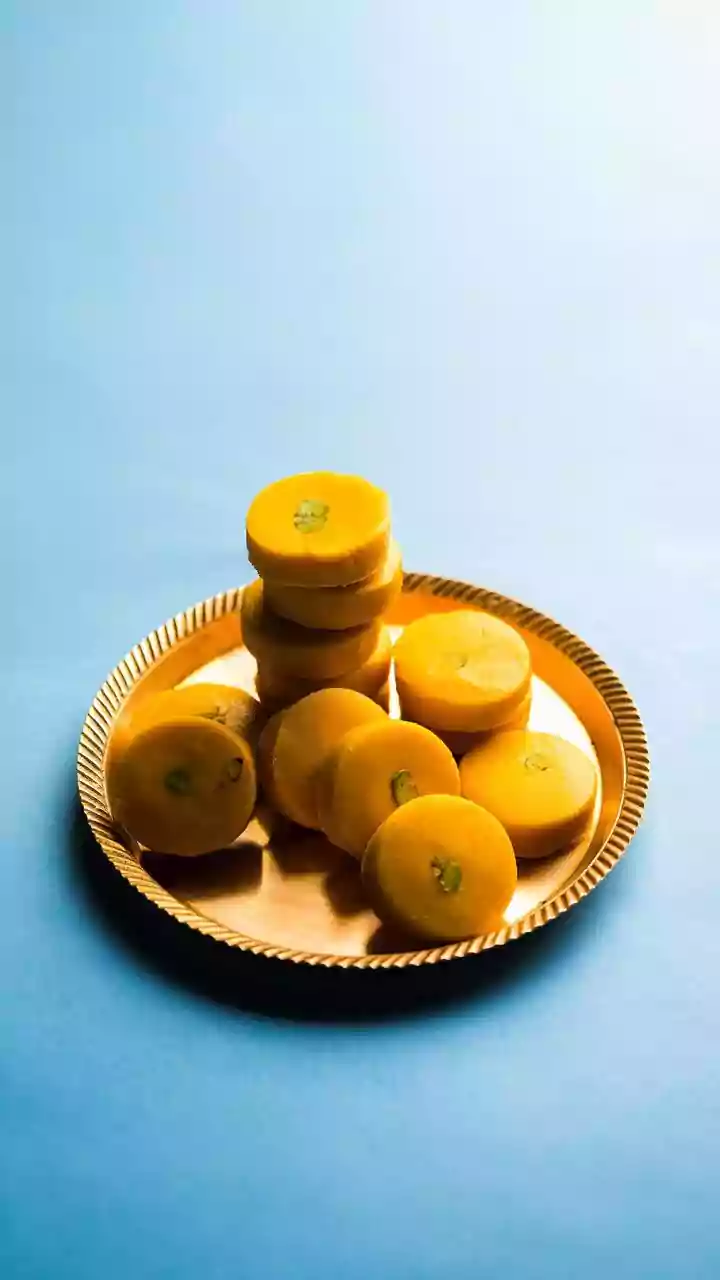
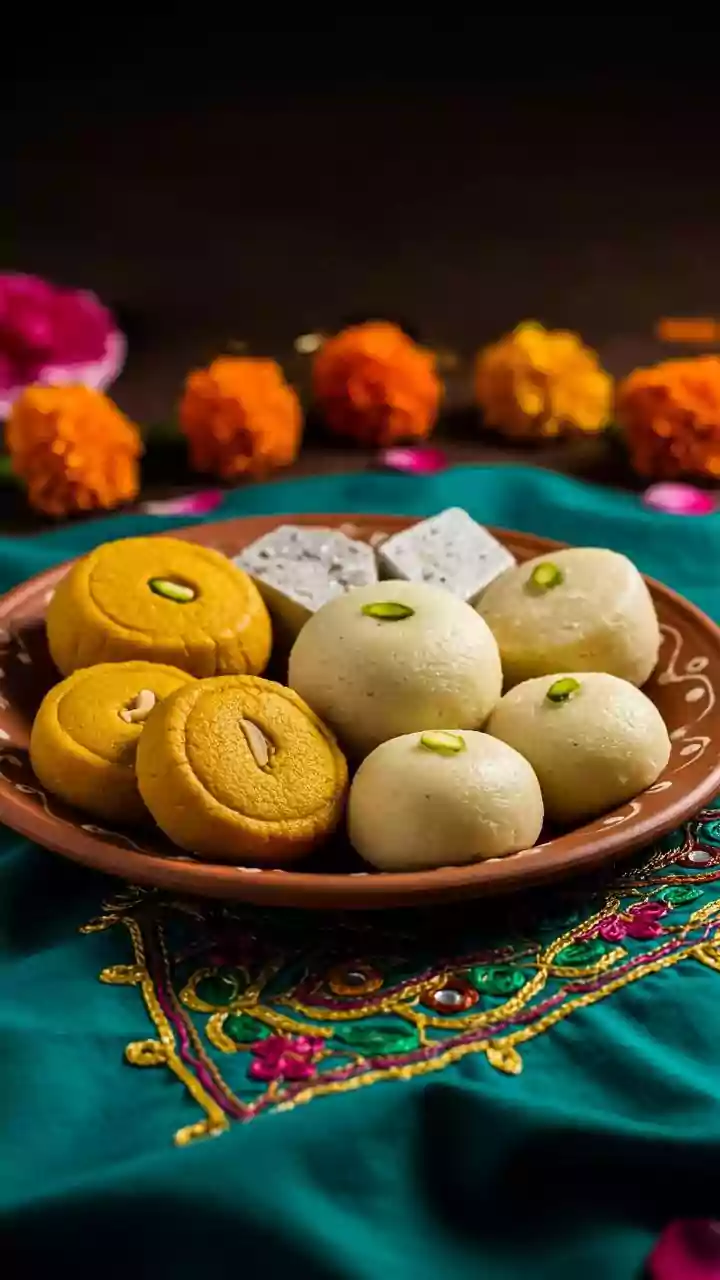
What distinguishes the Mathura peda from its paler cousins across India is its unique preparation and resulting characteristics. The process is a labour of love, starting with pure milk which is slowly reduced for hours in a large pan to create 'khoya', or milk solids. For the Mathura-style peda, this khoya is then roasted further until the milk sugars caramelise, giving the sweet its signature brownish colour, a slightly grainy texture, and a deep, rich flavour. This slow-roasting process is key. It's then mixed with a special type of powdered sugar called 'tagar' or 'boora', which has a fine, crystalline texture that contributes to the peda's melt-in-the-mouth quality. A hint of cardamom is often added for aroma before the mixture is shaped into its classic round discs.
From Prasad to a Pilgrim's Souvenir
While its origins are spiritual, the peda's fame grew as Mathura became a major pilgrimage hub. Millions of devotees visiting the city's temples began purchasing peda not only as a blessed offering but also as a souvenir to take home. Its robust preparation gives it a longer shelf life than many other milk-based sweets, making it ideal for travel. This transformed the peda from a purely religious item into a commercial specialty, with countless shops lining the streets, each with its own legacy. The phrase 'Mathura ka peda' became a brand in itself, a guarantee of authentic flavour that is now recognised across India and even abroad.
Protecting a Sweet Legacy
In the modern era, the reputation of Mathura's peda has become so widespread that it faces challenges from imitation and adulteration, particularly with the use of fake khoya. To protect this culinary heritage, efforts have been underway to secure a Geographical Indication (GI) tag for the Mathura Peda. A GI tag provides legal protection and certifies that a product originates from a specific geographical area and possesses qualities or a reputation due to that origin. The application was filed by the Mithai Association Mathura and is currently in process. This move, part of Uttar Pradesh's 'One District One Product' scheme, aims to preserve the authentic preparation methods and ensure that the legacy of this iconic sweet continues for generations to come, safeguarding the livelihood of thousands of local artisans and producers.