

Capturing the Fireball
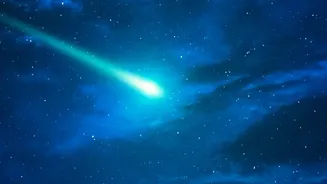
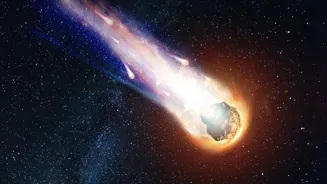
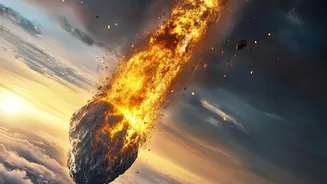
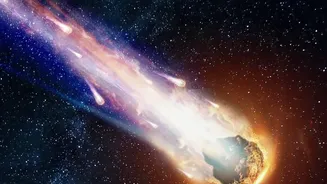
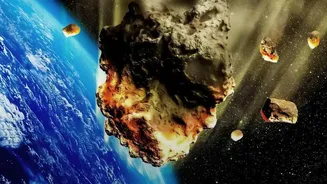
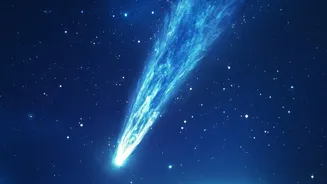
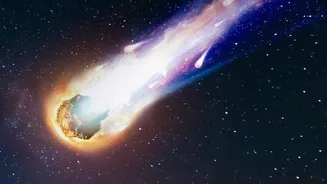
The first step in reconstructing a meteor's journey is to precisely record its brief, fiery passage through our atmosphere. This is done using networks of specialized cameras, such as NASA's All Sky Fireball Network and the Global Fireball Observatory.
These automated systems watch the sky all night from multiple locations. When a bright meteor, or fireball, appears, several cameras capture it simultaneously. By combining these different viewpoints, scientists can use triangulation—a method similar to how our brains perceive depth—to calculate the meteor's trajectory, speed, and how brightly it burned as it descended. This data helps determine if any pieces might have survived the intense heat of entry.
The Hunt on the Ground
If the fireball data suggests that fragments, now called meteorites, reached the ground, the hunt begins. The calculated trajectory is combined with weather data, especially wind speeds at different altitudes, to predict where the falling pieces might have been blown during their unlit descent, or "dark flight". This narrows the search area, known as a strewn field. In some cases, weather radar can even detect the cloud of falling meteorites. Increasingly, scientists are using modern tools like drones equipped with machine learning algorithms to scan large areas and identify potential meteorites on the ground, significantly speeding up the recovery process. Finding these rocks quickly is crucial to prevent contamination from Earth's environment.
Reading the Cosmic Story in a Lab
Once a meteorite is recovered, it becomes a priceless time capsule. In the lab, scientists begin with basic identification, checking for a fusion crust (a glassy outer layer from atmospheric burning) and testing for the presence of iron-nickel metal, which is common in meteorites but rare in Earth rocks. Deeper analysis involves examining the rock's chemical and isotopic composition. Isotopes are versions of elements with different weights. The specific ratios of isotopes, such as those of oxygen, act like a unique fingerprint, allowing scientists to identify the meteorite's parent body—whether it's from the asteroid belt, the Moon, or even Mars. These analyses reveal the rock's age and the conditions under which it formed billions of years ago.
Rewinding the Clock to Deep Space
The final step combines the data from the sky and the lab. With the precise trajectory through the atmosphere recorded by the fireball network, scientists can mathematically rewind the journey. They account for Earth's gravity and motion to calculate the meteoroid's original orbit around the Sun before it ever encountered our planet. When this calculated orbit is linked with the meteorite's known composition from lab analysis, scientists can pinpoint its likely origin in the solar system. For example, they can match a specific type of meteorite to a known family of asteroids in the main asteroid belt between Mars and Jupiter. This links a rock in their hand directly to a specific region of space.