
Why We Watch the Sun
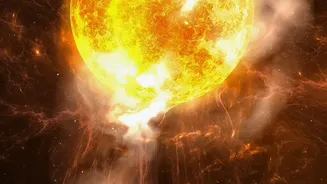
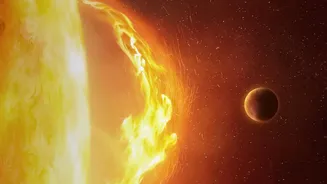
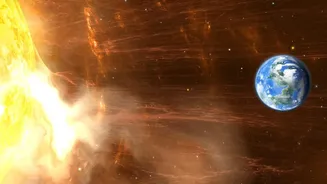
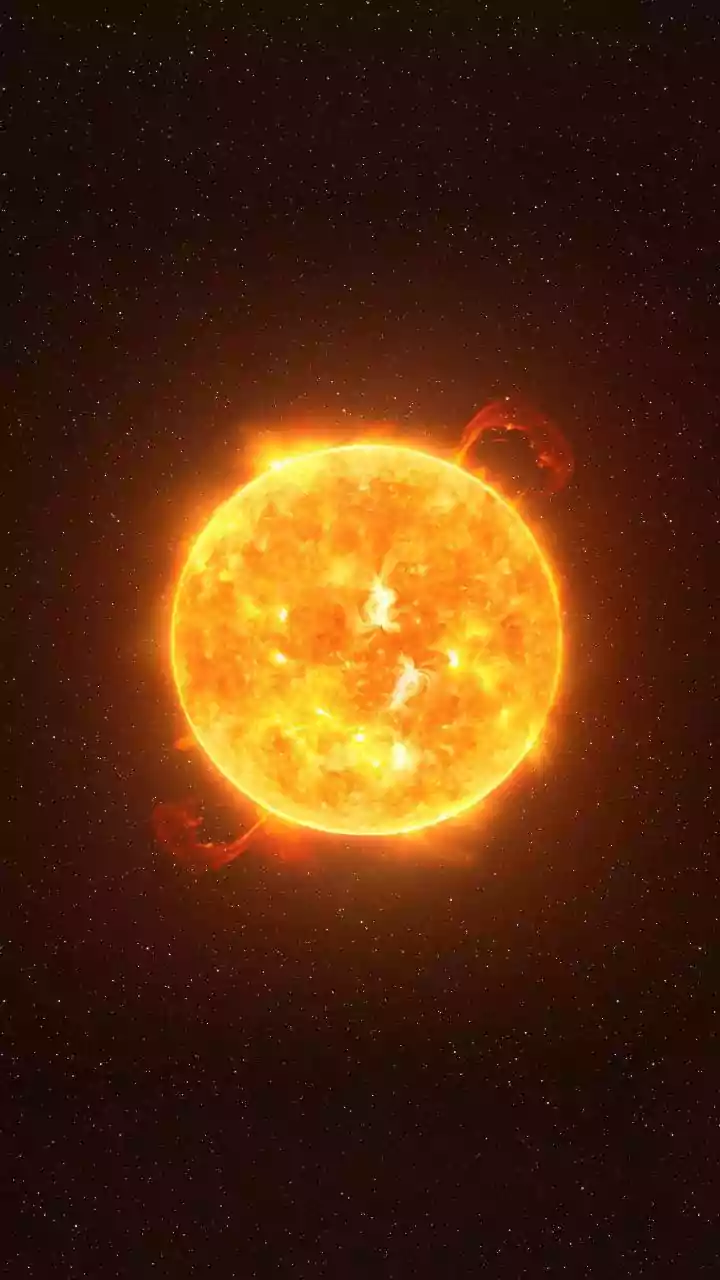
The Sun, our life-giving star, has a volatile side. It periodically ejects massive clouds of charged particles and magnetic fields, known as Coronal Mass Ejections (CMEs). When these eruptions are aimed at Earth, they can trigger powerful geomagnetic
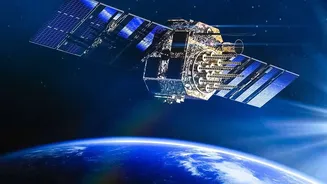
storms. While they pose no direct danger to humans on the ground, these storms can wreak havoc on our modern technological infrastructure. They can disrupt or damage satellites, interfere with GPS and communication signals, destabilise power grids, and pose a radiation risk to astronauts. As our reliance on this technology grows, so does our need to anticipate these events. Predicting when a solar storm will hit, and how powerful it will be, is no longer just an academic exercise; it's a critical part of our national resilience.
A Front-Row Seat to the Action
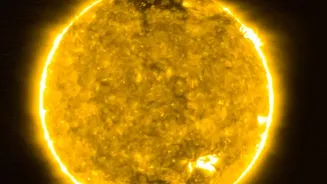
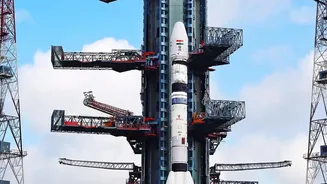
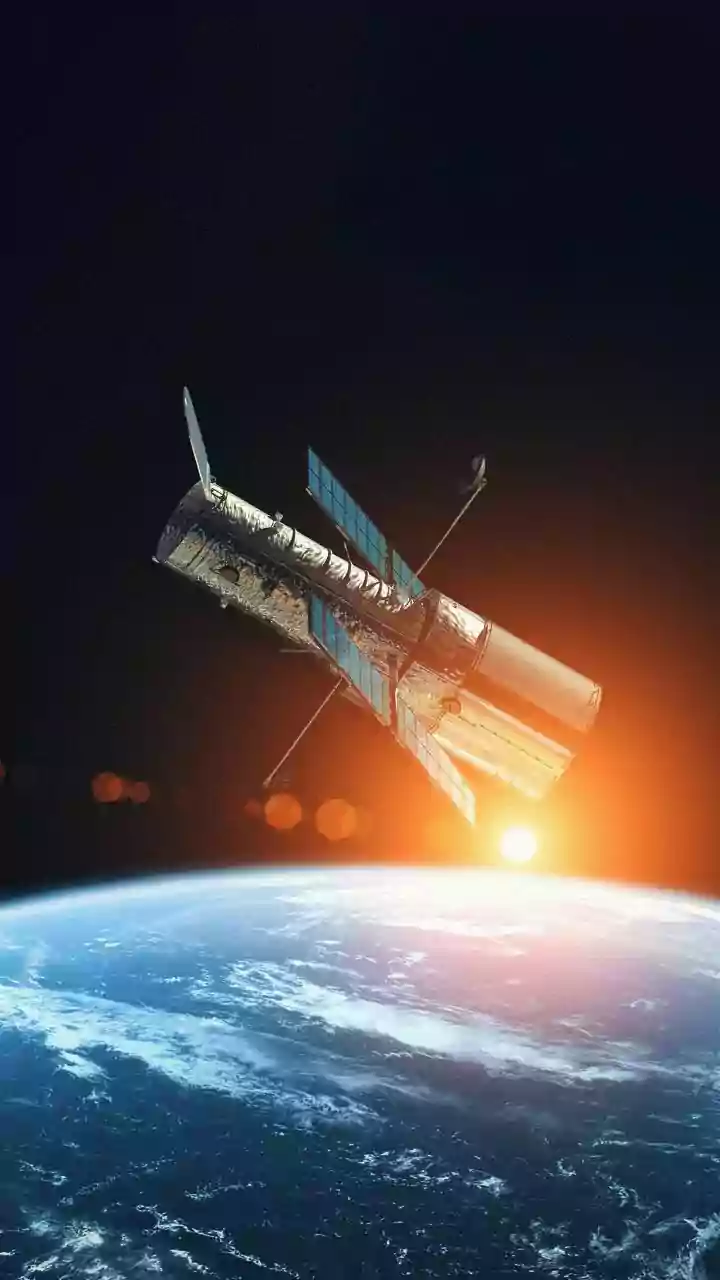
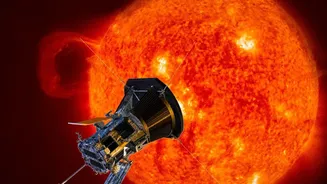
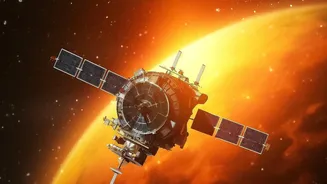
This is where ISRO's Aditya-L1 mission comes in. Launched in 2023, the spacecraft is positioned at a unique spot in space called the Lagrange Point 1 (L1), about 1.5 million kilometres from Earth. From this vantage point, Aditya-L1 has an uninterrupted, 24/7 view of the Sun, without being blocked by the Earth or the Moon. This constant watch is fundamental. When a CME erupts and travels towards Earth, Aditya-L1 can see it and analyse it long before it reaches our planet. Depending on the storm's speed, this can give us an early warning of an hour or more, providing valuable time to take protective measures, like putting satellites into a safe mode or preparing power grids for potential surges.
Beyond Just a Picture
Aditya-L1's most significant contribution comes from its primary instrument, the Visible Emission Line Coronagraph (VELC). Unlike a simple camera, VELC is a sophisticated tool that performs spectroscopy. It artificially blocks the Sun's blindingly bright disk to study the faint outer atmosphere, the corona. More importantly, it measures the physical properties of the erupting plasma, including its temperature, velocity, and density, right as it leaves the Sun. This is the difference between simply seeing that a storm is coming and understanding its fundamental character. It’s like a weather report that doesn’t just show clouds, but measures wind speed and humidity to predict the severity of a storm. This level of detail from the eruption's onset is something scientists have rarely had before.
Decoding the Data for Better Forecasts
The rich data from VELC and other instruments on Aditya-L1 is feeding a new generation of space weather models. Scientists are learning that not all CMEs are created equal. Recent studies using Aditya-L1 observations of major solar events in 2024 have revealed that a storm's internal structure, such as its turbulence, is a key factor in how much damage it can cause to Earth's magnetic shield. Another breakthrough finding suggests that the way a CME heats up or cools down as it travels through space can also predict its impact. By observing these properties at the source, Aditya-L1 is helping to add crucial new variables into predictive models, moving us from general warnings to more precise, actionable forecasts.
A Crucial Mission for a Turbulent Time
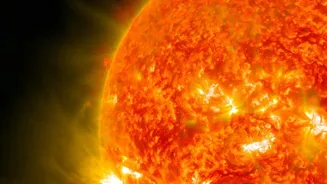
The timing of Aditya-L1's mission could not be better. The Sun operates on a roughly 11-year cycle of activity, and the year 2026 is predicted to be near the peak of this cycle, known as the solar maximum. This means we can expect a dramatic increase in the frequency and intensity of solar flares and CMEs. During this period of heightened solar activity, Aditya-L1's role as our primary solar observatory becomes even more vital. Its constant observations will provide an invaluable dataset, helping scientists to not only protect our vital infrastructure but also to unlock some of the deepest mysteries of the Sun, such as the long-standing puzzle of why its corona is millions of degrees hotter than its surface.