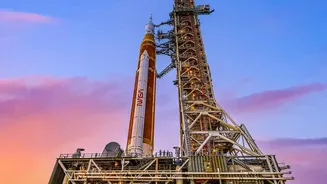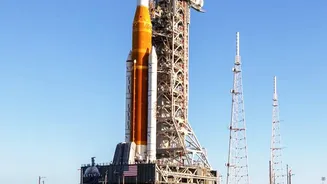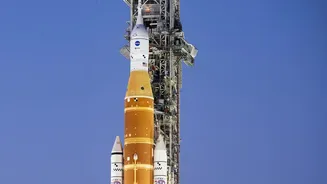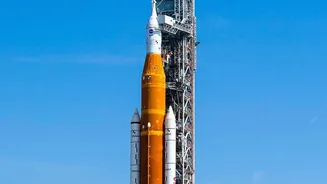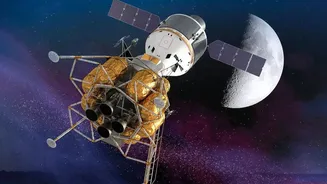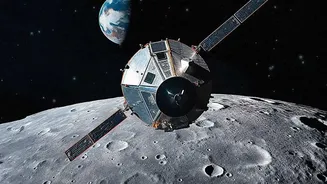


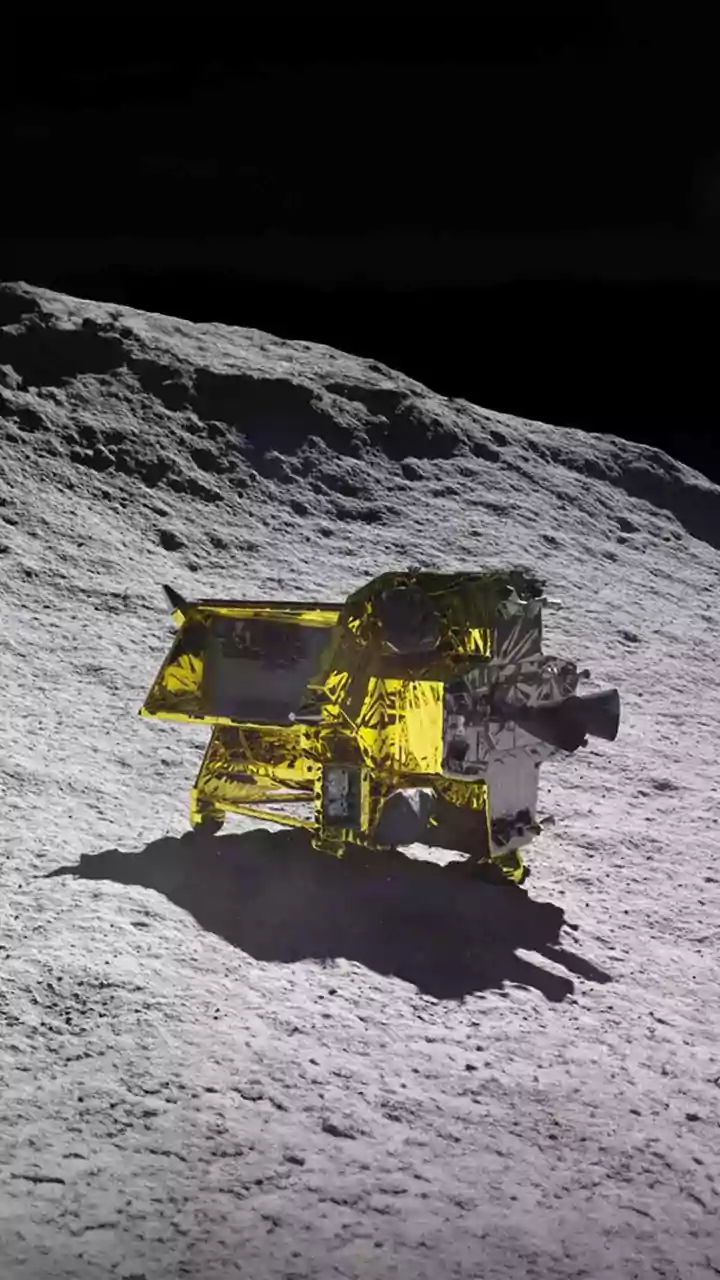



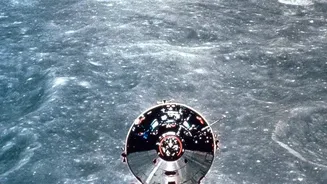

Humanity has once again touched the edge of the lunar frontier. NASA's historic Artemis II mission sent four astronauts on a daring flyby of the Moon, marking our farthest journey into space in over 50 years and a critical step for returning to the surface.
Meet the Trailblazing Crew
The 10-day mission was crewed by a history-making team: Commander Reid Wiseman, Pilot Victor Glover, and Mission Specialists Christina Koch and Jeremy Hansen. This crew represented a new era of exploration, with Glover being the first person of colour, Koch the first woman, and Hansen the first Canadian to venture on a lunar mission. Their journey, which launched in April 2026, was not just a flight but a testament to international collaboration and human ambition, taking them farther from Earth than any human before. Their primary task was to test the vehicle that would carry them: the Orion spacecraft.
Orion's Deep Space Stress Test
Artemis II was fundamentally a test flight, designed to validate that the Orion spacecraft and its supporting systems were ready for the immense challenges of deep space. The mission's main objective was to push Orion's life support, navigation, communication, and propulsion systems to their limits in the actual environment they were built for. This included testing manual piloting manoeuvres, reconfiguring systems for the journey away from Earth, and ensuring the upgraded European Service Module performed as expected. Engineers also closely monitored the heat shield during reentry, which protected the crew from temperatures of nearly 2,760 degrees Celsius, gathering data to refine its performance after unexpected char loss during the uncrewed Artemis I mission.
The Astronauts as the Experiment
Beyond testing the hardware, a major scientific focus was on the astronauts themselves. The crew served as research subjects to help scientists understand the effects of deep space on the human body. Through a series of experiments, NASA studied how increased radiation, microgravity, and the stresses of spaceflight impact human health. The crew collected saliva samples to track immune system changes and see if dormant viruses like shingles could reactivate—a phenomenon seen on the International Space Station. Tiny 'organ-on-a-chip' devices containing human cells were also flown to study the effects of space radiation at a cellular level, providing crucial data for protecting future lunar explorers.
A New View of the Moon
While testing was the priority, the crew also conducted valuable scientific observations of the Moon. As they flew around the lunar farside, the astronauts used their training to document surface features, colours, and textures. These human observations provide a unique perspective that complements data from robotic probes. The crew also successfully witnessed and documented phenomena like meteoroid impacts on the Moon's night side and the faint 'horizon glow' caused by electrostatically lifted dust. The data they collected is already helping scientists plan for future landing sites and understand the lunar environment in greater detail.
Paving the Way for Artemis III
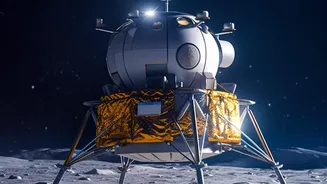
Every test, observation, and data point from Artemis II was gathered with the next mission in mind: Artemis III, which aims to land humans on the lunar surface for the first time this century. The successful demonstration of Orion's systems gives NASA confidence that the spacecraft can safely deliver astronauts to lunar orbit and bring them home. Furthermore, the health data collected is essential for developing countermeasures to protect crew on longer missions, not just to the Moon but eventually to Mars. The mission also tested advanced laser communication systems, proving that high-bandwidth data, including high-definition video, can be transmitted from deep space, keeping future explorers connected to Earth.