







The Foundation: Subjective Reports
The simplest way to gauge sleep quality is to ask. Researchers often start with subjective measures like sleep diaries and validated questionnaires. Participants log their bedtime, wake-up time, how long it took them to fall asleep, and how rested they
felt. Standardized surveys, such as the Pittsburgh Sleep Quality Index (PSQI), provide a consistent way to score sleep quality across different people. While these methods are easy to deploy and offer valuable personal insight, they rely on memory and perception, which can be inconsistent. They form a crucial baseline, but for objective data, scientists need to dig deeper.
Everyday Tech: Actigraphy and Wearables
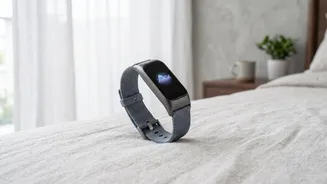
The fitness tracker on your wrist is a direct descendant of a research tool called an actigraph. Actigraphy uses a small, non-invasive device, usually worn on the wrist or ankle, to monitor movement. An accelerometer inside the device tracks activity levels, allowing researchers to estimate sleep patterns over days or even weeks in a person's natural environment. This method provides objective data on sleep duration, sleep efficiency (the percentage of time in bed that you're actually asleep), and how often a person wakes up during the night. While consumer wearables have become increasingly accurate, research-grade actigraphy offers more reliable, validated data specifically for scientific study.
The Gold Standard: Polysomnography (PSG)
For the most detailed and accurate picture of sleep, researchers turn to polysomnography (PSG), often referred to as an in-lab sleep study. This is the gold standard for sleep measurement. During a PSG study, sensors are placed on the body to monitor a wide range of physiological signals, including brain waves (EEG), eye movements (EOG), muscle activity (EMG), heart rhythm (ECG), and breathing patterns. This comprehensive data allows scientists to precisely map out the different stages of sleep, from light sleep to deep, restorative slow-wave sleep and REM sleep. By having participants exercise and then undergo a PSG, researchers can see exactly how physical activity alters the very architecture of sleep.
Beyond Movement: Temperature and Hormones
The connection between exercise and sleep isn't just mechanical; it's also biological. Researchers investigate this by measuring core body temperature and hormone levels. Exercise raises body temperature, and the subsequent drop in temperature a few hours later is a natural signal for the body to feel sleepy. Scientists can track this process to understand how the timing of exercise influences the body's readiness for sleep. Additionally, they may analyze blood or saliva samples to measure levels of key hormones. This includes melatonin, which regulates our sleep-wake cycles, and cortisol, the body's primary stress hormone. Studies show that regular exercise can help regulate these hormones in a way that promotes better, more consistent sleep.