
What Exactly Is Palm Jaggery?
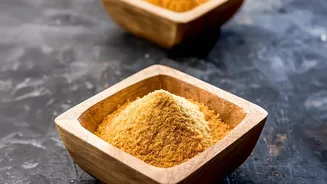
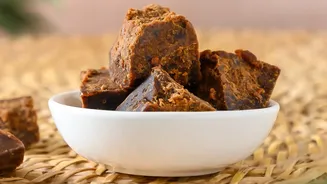
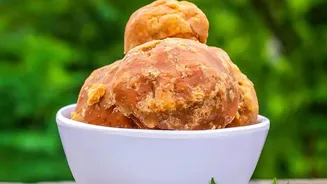
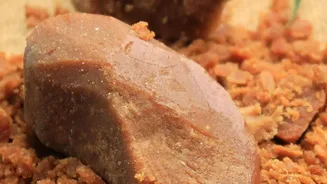
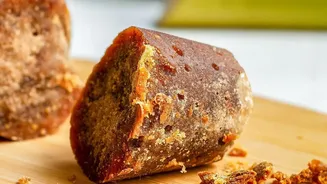
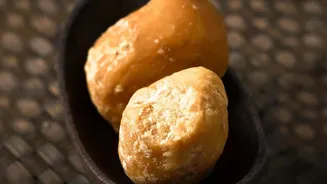
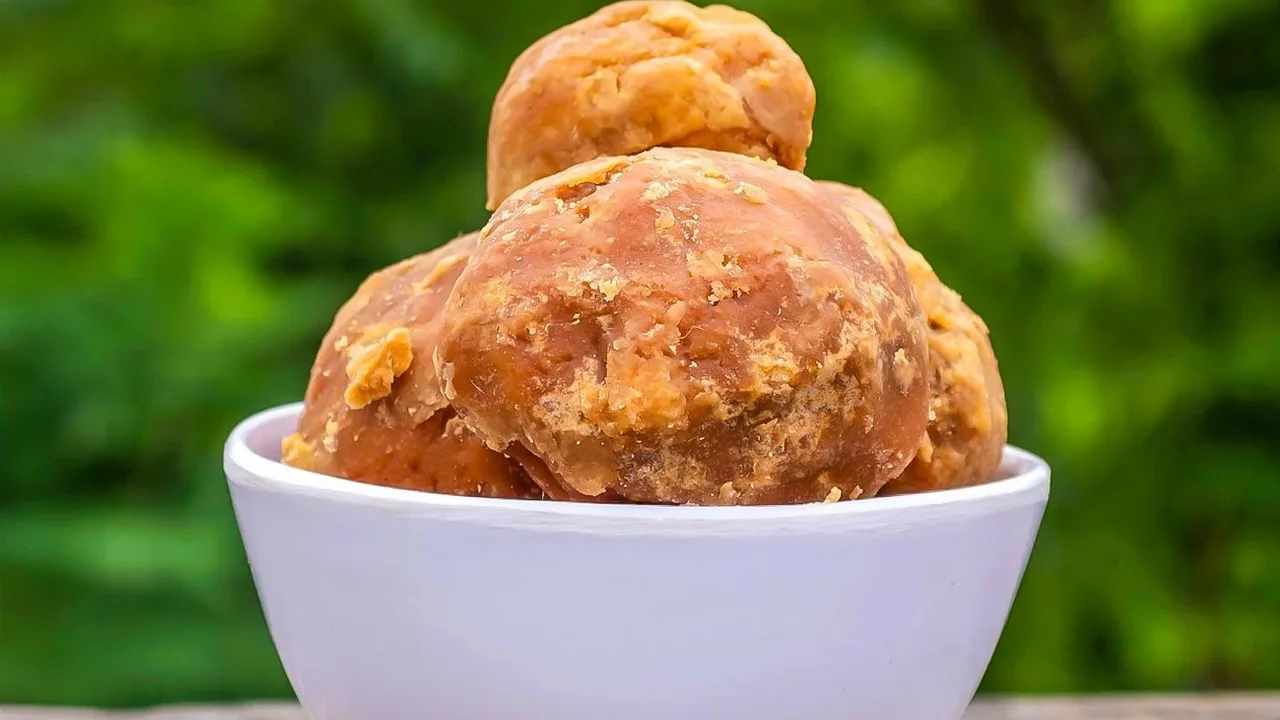
Palm jaggery is an unrefined natural sweetener made from the sap of palm trees like the palmyra, date, or toddy palm. Unlike refined white sugar, which is heavily processed with chemicals, palm jaggery production is simple and traditional. The collected
sap, known as 'neera', is boiled in large vats until it thickens and concentrates. It is then cooled and solidified into blocks, powders, or pastes. This minimal processing means it retains many of the minerals and vitamins present in the original sap. It has a distinctive dark brown colour and a complex flavour profile often described as earthy with notes of caramel and smoke.
The Sweet Benefits: Jaggery vs. Sugar
From a nutritional standpoint, palm jaggery presents a clear advantage over refined white sugar, which provides 'empty calories' with virtually no nutrients. Palm jaggery is a source of essential minerals like iron, potassium, and magnesium. It is particularly known for its iron content, which can help in managing anaemia. Furthermore, it has a lower glycemic index (GI) compared to white sugar, typically around 35-45, while white sugar's GI is about 60-65. This means it releases sugar into the bloodstream more slowly, preventing the sudden spikes and crashes in energy often associated with sugary treats. Ayurvedic traditions have long considered it a 'medicinal sugar' for its perceived benefits in aiding digestion and cleansing the body.
Your First Bake: How to Make the Switch
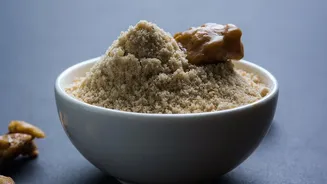
Swapping sugar for palm jaggery isn't always a straightforward one-to-one exchange. Because jaggery is generally less sweet than refined sugar, a common rule of thumb is to use about 1.25 cups of jaggery for every 1 cup of sugar to achieve a similar level of sweetness. However, it's always best to start with a 1:1 ratio and adjust to your taste. For baking, using powdered or finely grated palm jaggery is recommended to ensure it dissolves evenly into the batter. If you have solid blocks, it's often best to melt them with a small amount of water to create a syrup, then strain it to remove any impurities before adding it to your wet ingredients. Be sure to let the syrup cool before adding it to eggs to prevent them from scrambling.
Pro Tips for Perfect Results
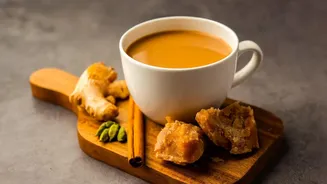
Baking with palm jaggery is an art that invites experimentation. Its natural moisture content means it acts as a humectant, resulting in cakes and muffins that are often denser, softer, and more moist than their sugar-based counterparts. This quality can be a wonderful advantage, keeping your bakes fresh for longer. The deep, molasses-like flavour of palm jaggery pairs exceptionally well with ingredients like whole wheat flour, oats, chocolate, coffee, and warm spices such as cinnamon, ginger, and cardamom. Start by substituting it in a familiar recipe, like a simple banana bread or a batch of oatmeal cookies, to get a feel for how it behaves. For milk-based desserts like kheer or payasam, a crucial hack is to melt the jaggery separately and stir it in after the milk has finished cooking and has been taken off the heat; adding it to boiling milk can cause curdling.
Managing Expectations: Colour and Texture
One of the first things you'll notice when baking with palm jaggery is the colour. It will impart a beautiful, rich brown hue to your cakes and cookies, which can look similar to using whole wheat flour or adding cocoa powder. Don't be surprised if your vanilla cake looks more like a caramel cake! The texture will also be different. Because jaggery is heavier and retains more moisture, it may not work well for very light, airy recipes like meringues or angel food cakes that rely on the structure provided by granulated white sugar. However, for most other bakes—from dense loaf cakes and chewy cookies to rich brownies and muffins—the resulting texture is wonderfully soft and satisfying.