





The Allure of the Window Seat
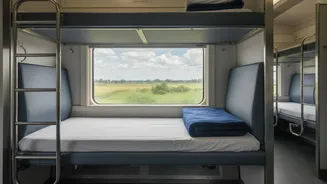
For many solo travellers and day-trippers, the side lower berth is the undisputed champion. Its biggest selling point is the unparalleled access to the window, offering an uninterrupted view of India’s diverse and ever-changing landscapes. Unlike the main
berths, where a window seat is a shared privilege, the side lower berth offers a personal, front-row seat to the world outside. Furthermore, it provides a sense of having your own little nook. In AC coaches, you can often draw the curtain and create a private space for yourself, separate from the main cabin's hustle and bustle. This feeling of having a semi-private zone is a major draw for those who value their personal space on a long journey.
The Numbers Don't Lie: A Question of Width
While the convenience is appealing, the headline holds true: side lower berths are indeed narrower than their main bay counterparts. While exact dimensions can vary slightly between older ICF coaches and modern LHB coaches, the difference is noticeable. For instance, in a 2-tier AC coach, a main lower berth can be around 67 cm wide, whereas the side lower berth might only be 55.5 cm wide. That’s a significant reduction in space, especially for taller or broader individuals. This is a crucial detail that first-time side-berth travellers often notice immediately. While the length is sometimes comparable or even slightly longer, the reduced width is the primary trade-off for the perceived benefits.
The Convenience Factor: Pros of Going Sideways
Beyond the window, the side lower berth has other advantages. Accessibility is chief among them. There’s no need to climb a ladder, making it an excellent choice for senior citizens, people with mobility issues, or families with small children. You can get on and off your berth without disturbing anyone. Another plus is legroom; since you are parallel to the aisle, you can often stretch your legs out, a luxury not afforded to those in the main bay. Access to your luggage, typically stored under the seat, is also much easier compared to climbing down from an upper berth in the middle of the night. This ease of movement and access is what makes it feel so convenient.
The Other Side of the Coin: The Drawbacks
The reduced width isn't the only downside. Being positioned right next to the aisle means you are exposed to all the foot traffic. People walking by, vendors selling their wares, and luggage being wheeled past can lead to frequent disturbances, especially for light sleepers. During the day, the side lower berth often becomes an unofficial seat for other passengers, meaning you might have to share your already limited space. In sleeper class, which tends to be more crowded, this can be a constant issue. While AC coaches offer more privacy with curtains, the constant movement and noise from the corridor remain a factor to consider.
Who Should (and Shouldn't) Pick This Berth?
So, who is the side lower berth for? It's an ideal choice for solo travellers on shorter journeys who prioritise a window view and easy access over sleeping space. It’s also great for people who love to observe the life of the train and interact with others. However, if you are a light sleeper, someone who values spaciousness while sleeping, or a person with a larger frame, you might find it uncomfortable. For overnight journeys where good sleep is the priority, an upper berth (either main or side) might be a better choice as it offers more privacy and fewer disturbances. The main lower berth offers a balance of accessibility and greater width, but comes with the responsibility of being a shared seating area during the day for two other passengers.